Fourth at the Fair, Part 3: A Sea of Patriots Floods the Fairgrounds
The Fourth of July at the 1893 World's Columbian Exposition in Chicago was the biggest day yet at the Fair.

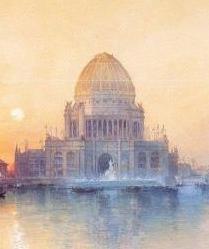
The Fourth of July at the 1893 World's Columbian Exposition in Chicago was the biggest day yet at the Fair.
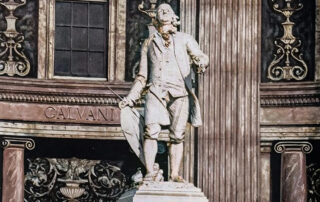
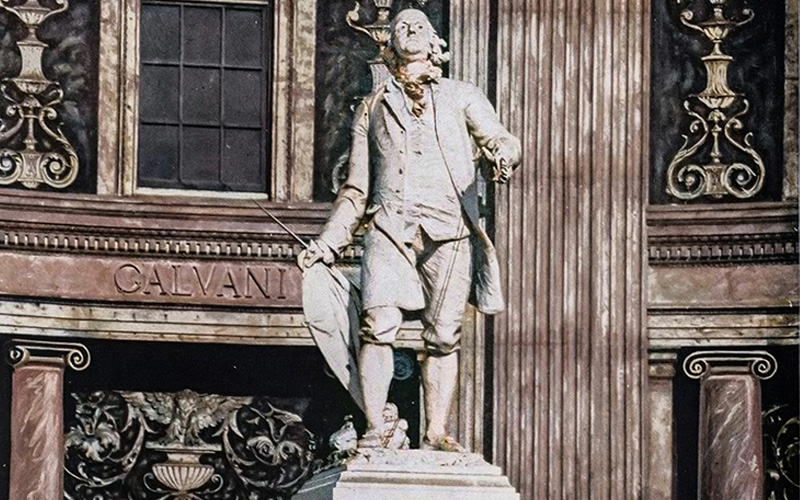
THE STATUE OF BENJAMIN FRANKLIN.— It was a natural idea and an appropriate one that the heroic statue of Benjamin Franklin should be the most conspicuous object in the main entrance to the Electricity Building. It was the first time in the history of expositions that a building had been devoted to a display of electrical inventions, and it seemed but right and proper that its approach should be overlooked by the statue of the great man who is [...]
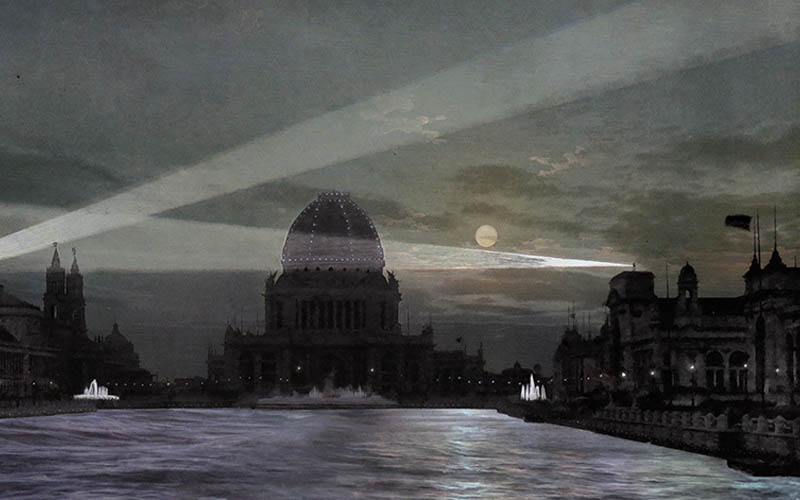
Many of the most effusive and eloquent descriptions of the fairgrounds of the 1893 World’s Columbian Exposition focus on the nightly illumination. This electrical spectacle, augmented with flame torches and fireworks, dazzled visitors in Chicago’s Jackson Park. Some cried. Others thought they were glimpsing the heavenly beyond. The luminous poetry seemed like magic, but was actually cutting-edge science. Ponderous steam engines generating some 17,000 horse power drove great dynamos that created the electrical current feeding the 8,000 arc lamps [...]
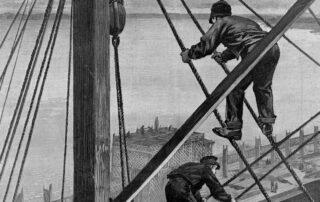
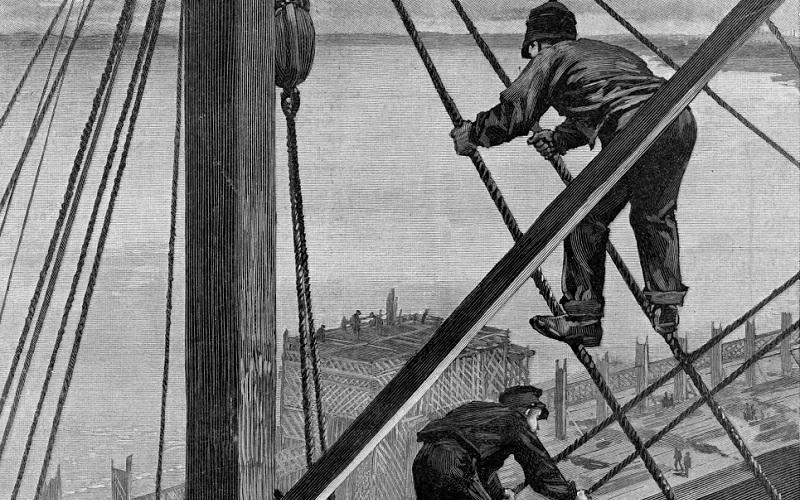
The excerpt below, from The Chicago Record’s History of the World’s Fair, reminds us of the dangerous work that thousands of laborers (mostly immigrants) faced as they built the White City of 1893. The Medical Bureau of the Columbian Exposition officially reported only thirty-two deaths during construction of the fairgrounds. Luckily, the workers mentioned below escaped that fate. [Note: Although the article mentions the first accident happening at the Manufactures and Liberal Arts Building, the location likely was the [...]
In the aftermath of World War II—facing staggering military casualties, the atrocities of the Holocaust, and the specter of nuclear weapons—some people sought solace in fond memories of better times. The following reminiscence of visiting the 1893 World’s Columbian Exposition in Chicago as a young boy appeared in the July 6, 1946, issue of the Windsor Star (Windsor, Ontario). The author had grown up in the small town of Morenci, Michigan. The "electric bulbs which outlined the dome [...]
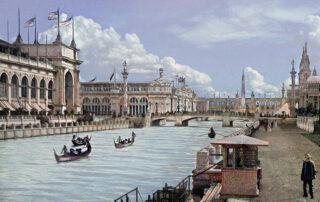
THE NORTH CANAL—LOOKING SOUTH —From a point near the west approach to the bridge connecting the Electricity and Manufactures Buildings a view was afforded southward down the South Canal, which had many interesting features. The always thronged bridge between the plaza in front of the Administration Building and the south front of the Manufactures cuts off, it is true, a portion of the view but adds in itself an interesting feature. The photograph from which the illustrations were made [...]
Toward the close of the 1893 World’s Columbian Exposition in Chicago, The Critic invited twenty-five notable scholars, writers, and leaders of the day to offer their brief impressions of the World’s Fair. At such a monumental event with so many novelties … what impressed them the most? It is interesting how frequently these contributors sing the same notes as they rhapsodize about the fairgrounds at night and the illumination of the Court of Honor, praise (except for Henry Fuller!) [...]
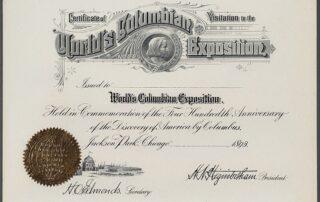
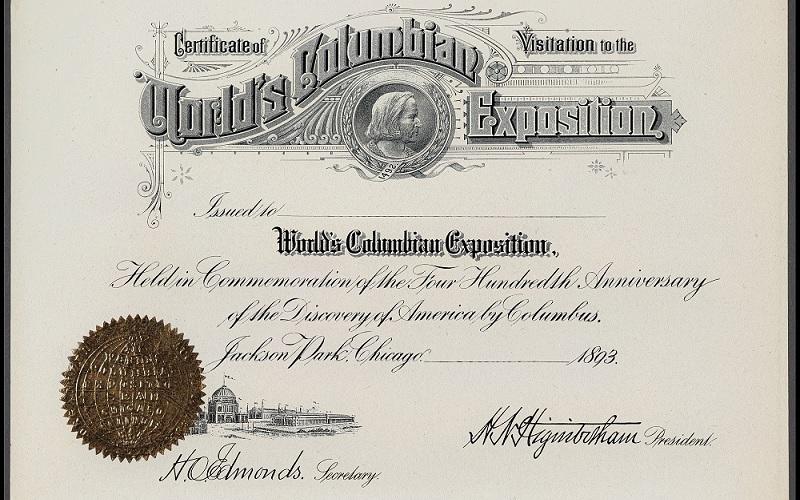
You bought your train ticket and booked your lodging in Chicago, traveled to Jackson Park and paid your fifty-cent admission. You’ve finally made it into the City of Wonders, the Dream City, the White City … the 1893 World’s Columbian Exposition fairgrounds. How will anyone believe you are here if you don’t purchase an official “Certificate of Visitation” to show friends back home? T. Dart Walker’s drawing “In the Rotunda of the Administration Building” depicts a busy ground [...]
Sally MacNamara Ivey "has read more than 10,000 unpublished diaries and spent 35 years collecting them.... Whenever MacNamara Ivey has had pocket change, it’s gone to purchasing diaries. Back in the late ’90s, when she and her husband were raising four kids with the money she brought in waiting tables and he made working at the local mill, she bought a diary on layaway for $500 (about $900 today). It was written by a woman who attended the 1893 [...]
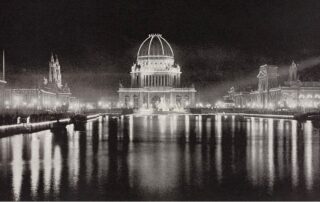
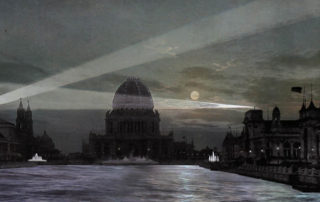
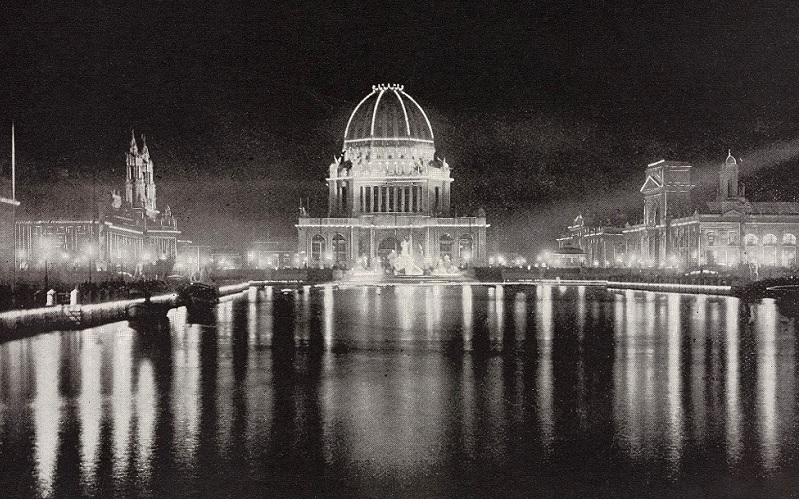
THE GRAND BASIN AT NIGHT—SHOWING SEARCH-LIGHTS.—One of the charms of the night view over the Grand Basin was that it was always new, atmospheric or other causes producing varied effects, and the scene on one occasion being entirely different from that presented on another. And not only were atmospheric conditions fluctuating, but the artificial ones produced were made still more so, a new experience to the sight-seer after dark being thus assured beyond all peradventure. Here the great element [...]
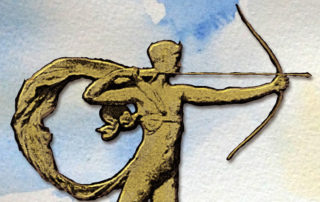
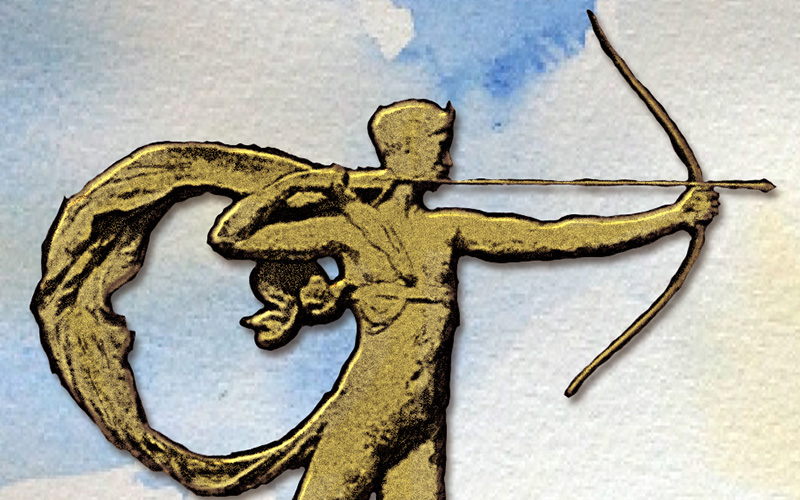
In late November of 1892, Moses P. Handy moved into his new office inside the Administration Building on the Columbian Exposition fairgrounds in Jackson Park. As Chief of the Department of Publicity and Promotion, Handy had a staff of between four and forty-five, including local newspapermen Paul Hull and Sam V. Steele, both well-known among Chicago’s writers. The Chicago Times (November 29, 1892) reported on the move-in and on the Publicity Chief’s impressive view of Augustus Saint-Gaudens’ marvelous statue [...]
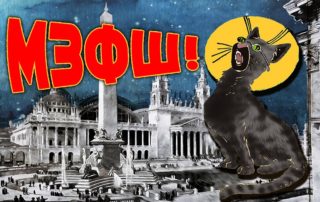
Several media outlets, including the Guardian and People, are reporting on Chicago’s use of feral cats to beat back our nationally recognized rat population. It’s old news. We’ve been relying on our feline friends since at least the 1893 World’s Columbian Exposition. “Not many people are aware that the World’s Fair has a cat,” wrote the Chicago Tribune in September 1893. “This ignorance on the part of visitors is largely due to the fact that the cat does not appear [...]
A visit to the 1893 World’s Fair inspired Penelope Gleason Knapp to pen a romantic and effusive love letter to the wonders of the White City. With Victorian flourish, she describes her rapturous experience in the Court of Honor, “where enchantment reigns supreme.” Her memoir offers a reminder that electric illumination on such a grand scale was an overwhelming experience for many visitors from small towns in America. Penelope Gleason Knapp In 1893, twenty-two-year-old Penelope Gleason Knapp was living [...]
Stuck in endless online conferences? Ready to escape from the confines of your home office? Try adding a background that situates you at the 1893 World's Fair. The Chicago History Museum offers several images from their collection to use as a Zoom background. Among them is a famous photograph by C. D. Arnold of the Administration Building surrounded by crowds on Chicago Day [CHM, ICHi-002201] You can download the image at https://www.chicagohistory.org/zoom/ and start "Zooming through history." [...]
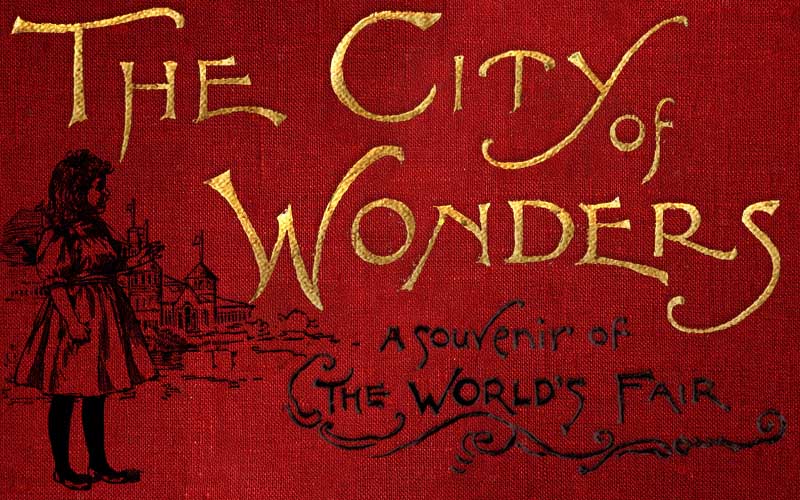
THE CITY OF WONDERS A SOUVENIR OF THE WORLD'S FAIR by Mary Catherine Crowley (1894)
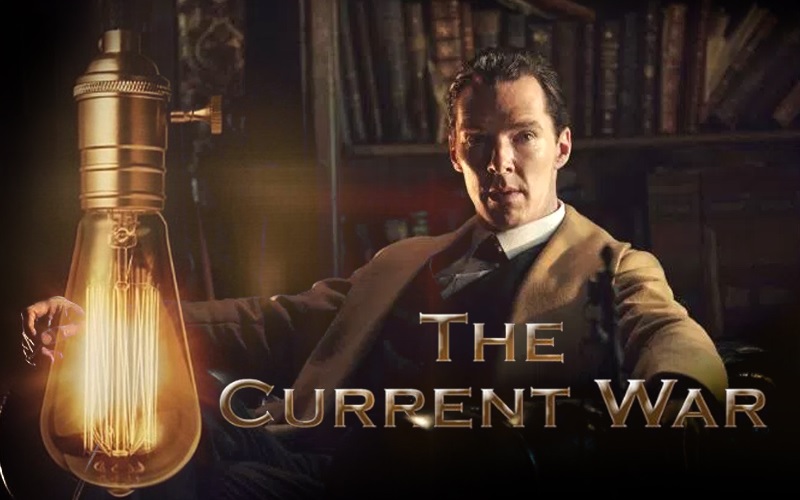
The 1893 World’s Fair in Chicago shines on the big screen, if only for a few minutes. The Current War (2017, released 2019) tells the story of the rancorous rivalry between inventor Thomas Edison (Benedict Cumberbatch), who adamantly championed direct current (DC) technologies to electrify and illuminate American cities, and George Westinghouse (Michael Shannon), who banked on alternating current (AC). The legendary “war of the currents” has these titans of the electrical industry setting their sights on powering the Columbian [...]
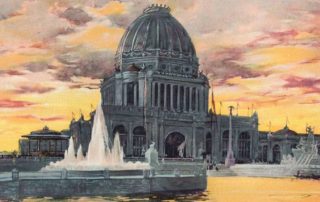
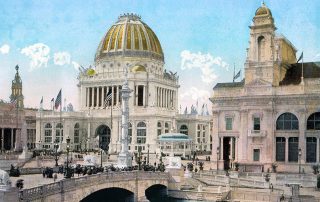
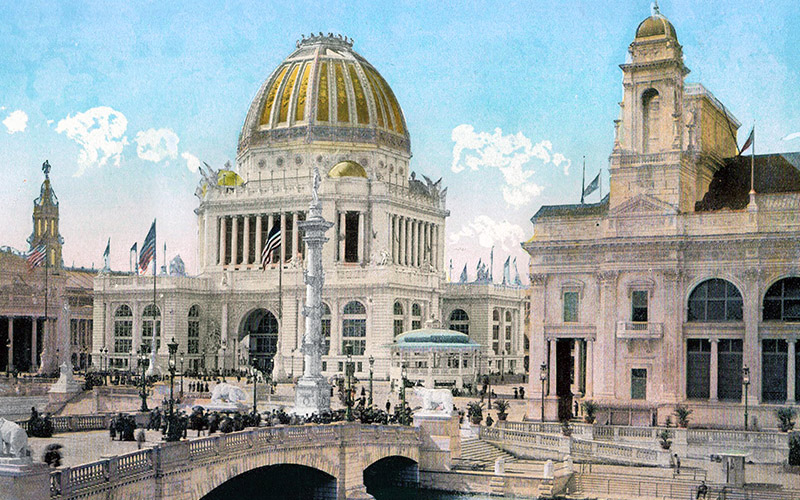
Today marks the anniversary of the death of Richard Morris Hunt, on July 31, 1895. Among the most revered architects working in the U.S. at the time of the World’s Columbian Exposition, Hunt was invited to contribute a design for the Administration Building, which stood in a position of honor at the west end of the Grand Basin. The magnificent classical Beaux-Arts building, capped by a gleaming gold dome, was considered one of the finest structures on the fairgrounds. [...]
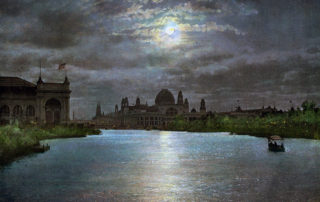
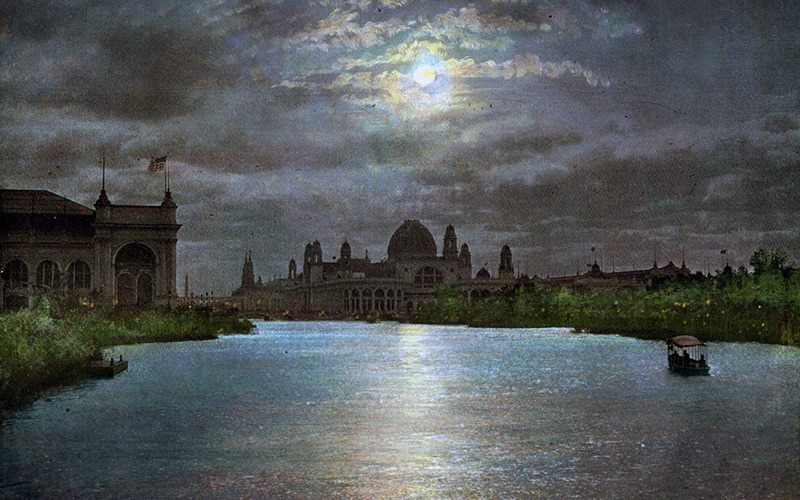
PICTURESQUE WORLD’S FAIR. AN ELABORATE COLLECTION OF COLORED VIEWS Page 77 – THE EAST LAGOON BY MOONLIGHT THE EAST LAGOON BY MOONLIGHT.— The night scenes at the Fair were undoubtedly the most beautiful for those who liked dreamy pictures, or half darkness contrasted with a blaze of glorious lights, better than unvarying white beauty. The fireworks, the illumination about the Court of Honor, the colored effects upon the Wooded Island were all charming and, in addition to these, was [...]
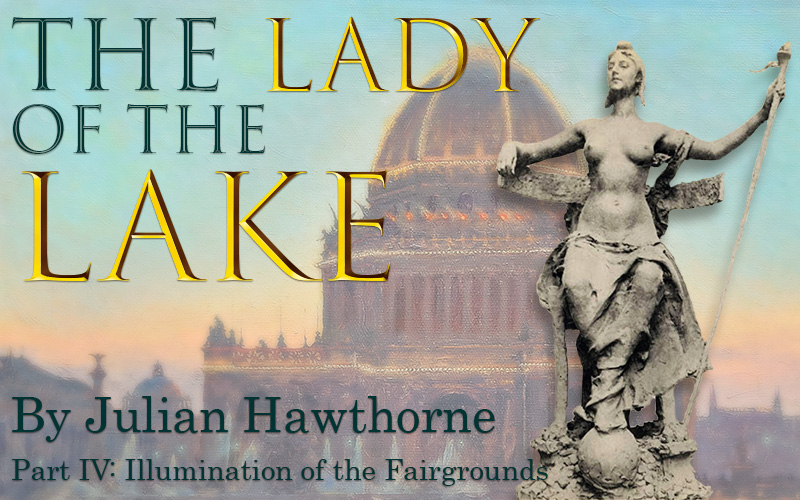
Author Julian Hawthorne visited the 1893 World’s Columbian Exposition in Chicago. Like so many other visitors who recorded their impressions of visiting the World’s Fair, he offered some of his highest praise for the electrical lighting of the night scene in the Dream City, a “banquet of royal beauty.” Reprinted below is the fourth and final part of Julian Hawthorne’s “The Lady of the Lake” about his June visit to the fairgrounds and published in the August 1893 issue [...]
Julian Hawthorne (June 22, 1846 – July 21, 1934) was the only son of novelist Nathaniel Hawthorne and himself a journalist and author. Julian Hawthorne’s biographer notes that “as an author, he far exceeded the literary production of his famous father, composing no less than twenty-six novels and romances, over sixty short stories, almost a hundred essays, and several lengthy works of history, biography, and autobiography.” [Bassan, Maurice Hawthorne’s Son: The Life and Literary Career of Julian Hawthorne. Ohio [...]