
[Continued from Part 15]
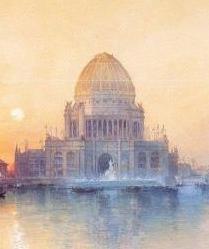
“The music will be one of the grandest features of the celebration,” promised the Chicago Evening Post on the eve of July 4th. From the joint bands and mass chorus of the morning exercises, to the musical mélange of the international villages on Midway Plaisance in the afternoon, through numerous band, orchestra, and chorus concerts before the evening fireworks show, patriotic songs filled the fairgrounds of the 1893 World’s Columbian Exposition on Independence Day. As visitors wended through the Court of Honor, the campus of state buildings, or the Midway Plaisance, they would have heard at every turn instruments and voices performing popular tunes such as “The Star-Spangled Banner,” “America” (“My Country ’Tis of Thee”), “Yankee Doodle,” and “Columbia, the Gem of the Ocean”—any one of which stood in as an unofficial national anthem. Exposition historian Rossiter Johnson described how music perfumed the air of the fairgrounds on the Fourth:
Bands of music played national airs in different parts of the grounds and buildings, gathering around them crowds who, from time to time, took up some well-known refrain, and launches and gondolas filled with singing parties floated around upon the water, carrying with them the inspiration of patriotic song.
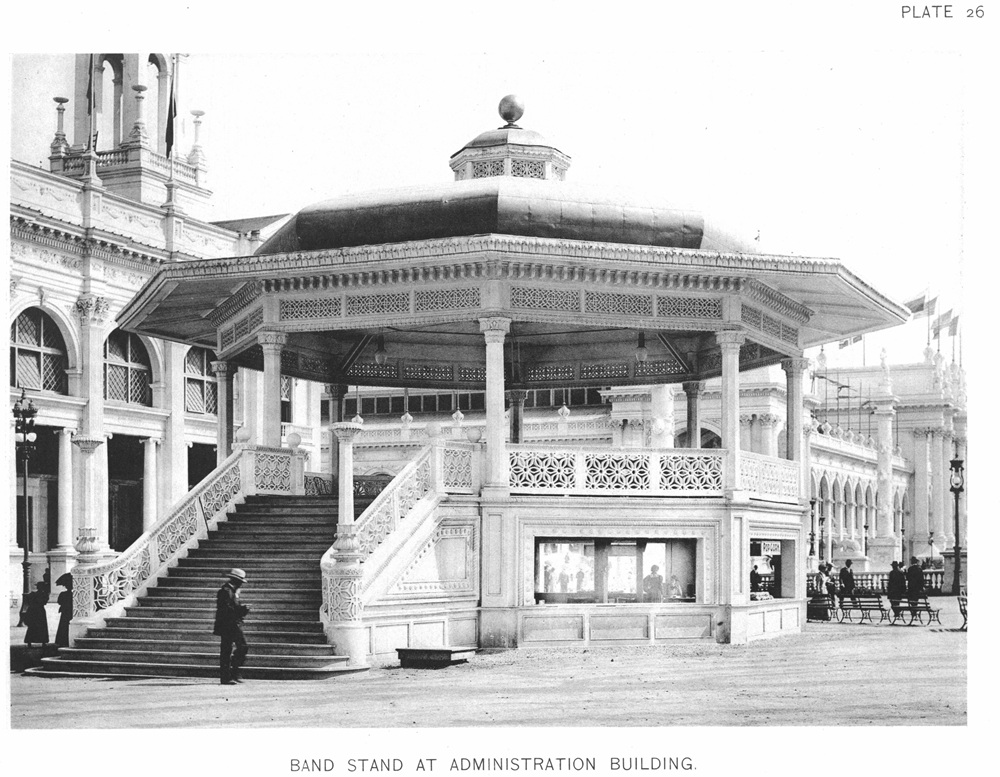
The north bandstand in Administration Plaza was located between the Electricity Building (left in photo) and the Administration Building. [Image from Arnold, C. D.; Higinbotham, H. D. Official Views of the World’s Columbian Exposition (Press Chicago Photo-gravure Co., 1893).]
Bands, bands, and more bands
No doubt, the Fourth of July could have been even more splendid had John Philip Sousa been on the fairgrounds. Unfortunately, the “March King” and his band departed Chicago on June 28, after more than a month of residency at the Exposition. Sousa wrote his famous march “The Liberty Bell” around the time of the 1893 World’s Fair, and the piece allegedly earned its name when he saw an inspiring Liberty Bell scene in a theatrical spectacle in Chicago that summer. However, “The Liberty Bell”—now closely associated with both the Fourth and the Fair—did not premiere until November 17, just after the Exposition closed, when Sousa returned to Chicago for a run at the Trocadero theater. Unfortunate timing all around.
Three resident bands—the Chicago Band, Iowa State Band, and Cincinnati Band—entertained visitors with Fourth of July concerts throughout the day. In addition, the Second Regiment Band and the Pullman Band announced performances in various locations of the grounds during the afternoon. These two bands may have united to accompany the mass chorus from the morning ceremony in a concert around the Grand Basin from 6 to 7 pm.[1]
Adolph Liesegang’s Chicago Band performed a concert from the south bandstand in Administration Plaza at 1:30 and again at 8 pm, just before the fireworks show. The New York Herald (Jul. 5, 1893) reported that some 10,000 people were entertained by their musical programs.[2]
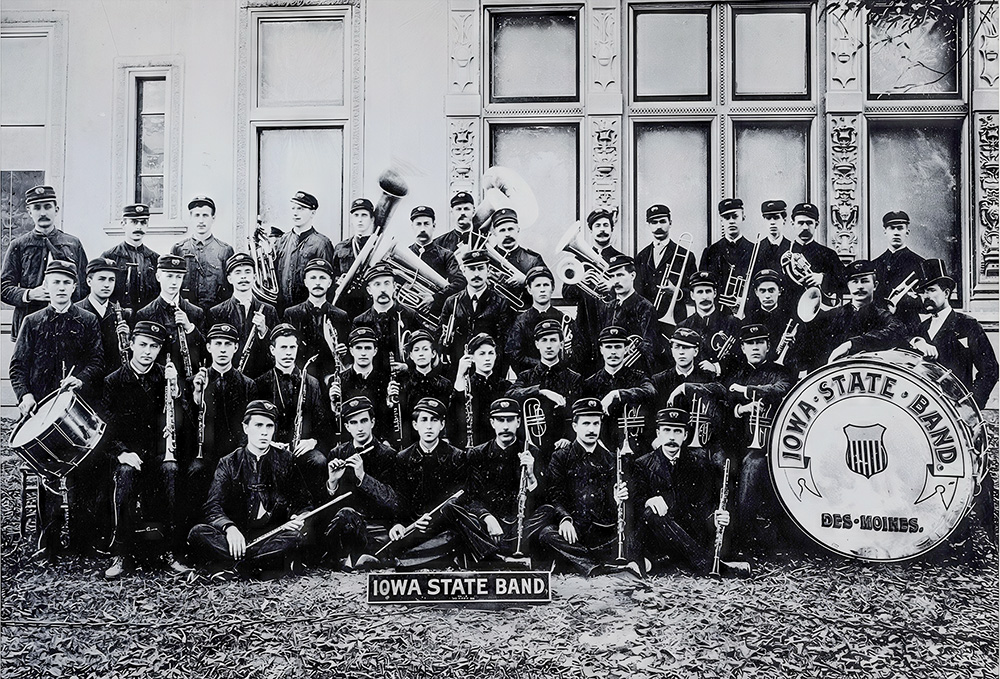
The Iowa State Band, under the Direction of Frederick Phinney, was a resident band for the full duration of the Columbian Exposition. [Image from Souvenir Program, Iowa State Days: September 20 and 21, World’s Columbian Exposition, Chicago, 1893. Iowa Columbian Commission, 1893.
The Cincinnati Band, under the baton of Michael Brand, provided two concerts from the lakefront band pavilion.[4] Their afternoon concert, scheduled for 2:30 pm, started an hour late. The evening concert ran from 8 to 10 pm and drew an enormous audience waiting for the fireworks show. The Chicago Herald (Jul. 4, 1893) reported on a melee caused by the throng:
The pressure of the crowds around the bandstand on the lakefront became so great that people who had filled every stair were pushed up into the stand. The Cincinnati band was right in the middle of “Hail Columbia” when an avalanche of people nearly crushed them to the floor. … To save themselves from possible danger the musicians clubbed with their fiddles and coronets and tried to beat the people back.
After a patrol wagon arrived and several Columbian Guard cleared an open space, the musicians “took their chairs and calmly finished the tune so unexpectedly interrupted.”
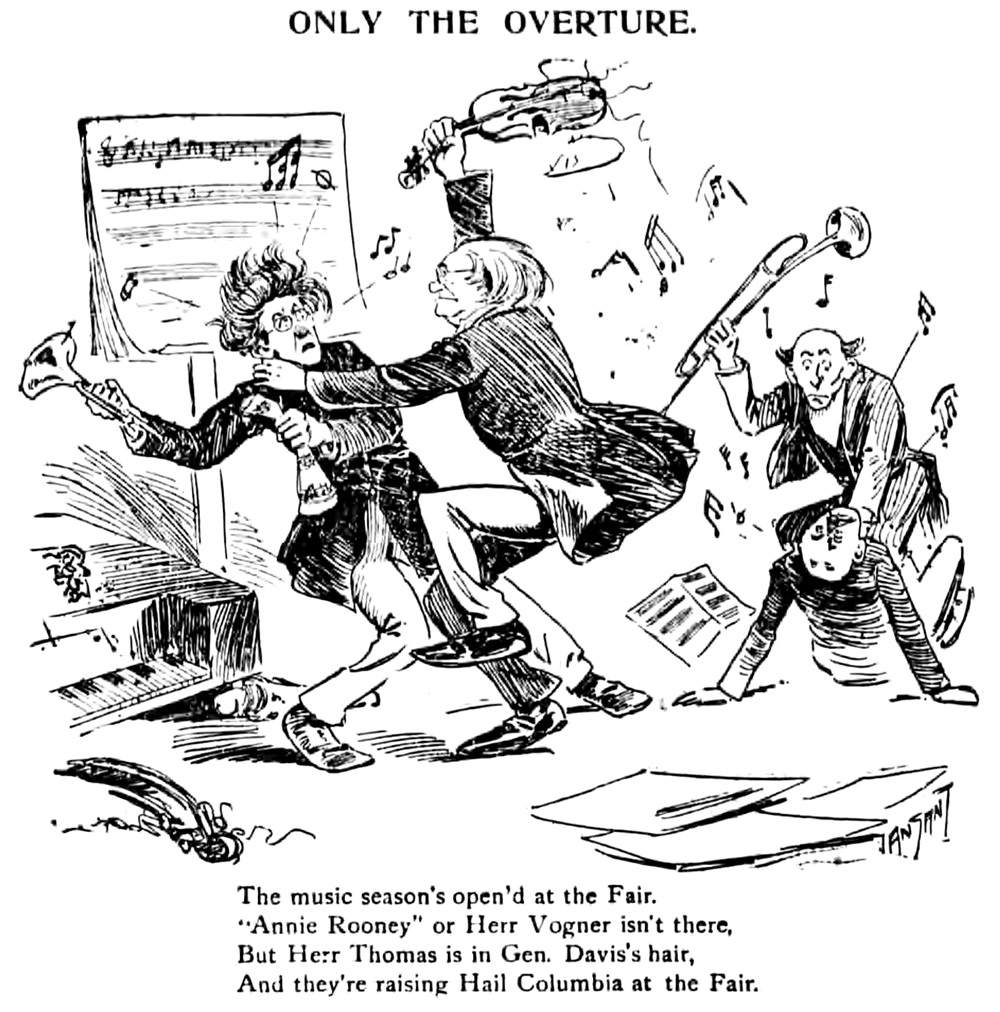
A cartoon lampooning the troubled Columbian Exposition Director of Music Theodore Thomas. [Image from the New York Evening World May 20, 1893.]
“Treat us to American music on this American Day”
Well before the Fourth of July, fireworks were going off in the Department of Music. Director of Music Theodore Thomas had his feet to the fire by the Exposition’s administration over several controversies. The most serious was very poor attendance at concerts by Thomas’ Exposition Orchestra since the Fair opened in May. Tickets to most orchestra concerts cost one dollar—twice the admission to the fairgrounds! With a financial panic unfolding and competition from free band concerts and countless other attractions on the fairgrounds, it’s little wonder why the concert halls were not full.
In addition, some of Thompson’s critics complained that he was resistant to programming American music. Thomas commissioned only two works by American composers for the Fair—John Knowles Paine’s “Columbian March and Hymn” and George Whitefield Chadwick’s “Columbian Ode” for the Dedication Day Ceremony. The Fourth of July would have been a most appropriate opportunity to champion more national works. “Is it to be doubted that the professor [Thomas], for the once, will treat us to American music on this American Day?” asked the Inter Ocean editor. “We shall not complain of a surfeit of German music on ordinary days. But the Fourth is not an ordinary day.” Seeming to flex his muscle, Thomas led an all-Wagner concert in Festival Hall on July 3rd. Precisely what constituted “American” music was not always clear among the complaints. The Tribune (June 28, 1893) pointed out to those “clamoring for American music” that the selections of “Doxology,” “America,” “Yankee Doodle,” and “Columbia, Gem of the Ocean,” are not actually American tunes.
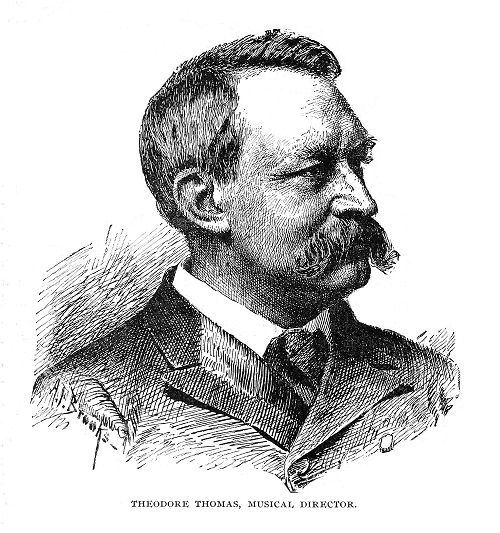
Theodore Thomas served as musical director of the Chicago Orchestra and in its expanded form as the Exposition Orchestra during the 1893 World’s Fair. [Image from White, Trumbull; Igleheart, William World’s Columbian Exposition Chicago, 1893. J. W. Ziegler, 1893.]
“Little difference did it make”
For America’s birthday, the German-American maestro barely complied with the call, serving up thick slabs of European music—Saint-Saëns, Schubert, Strauss—between two thin slices of Americana.[5] Under his baton, the 114-member Exposition Orchestra performed in a free concert (Popular Orchestra Series No. 36) in Festival Hall at 2 p.m. The grand hall offered seating for an audience of 5000.
The orchestra offered a second concert at the new lakefront music pavilion, located at the east entrance to the Manufactures and Liberal Arts Building. Although the Inter Ocean (Jul. 2, 1893) announced that the orchestra “will dedicate the new pavilion on the lake front,” Sousa’s Band already had given two inaugural concerts there on June 25. The Exposition Orchestra’s evening concert (Popular Orchestra Concert No. 1) was scheduled for 5:30 pm but delayed a half-hour until after the Cincinnati Band finished performing. The pre-fireworks audience politely listened to Thomas’ second course of European composers—Liszt, Wagner, Gounod, and Dvořák.[6] “Little difference did it make to the countless throng on the lake front whether Theodore Thomas’s musicians played the Hungarian Rhapsody or the vorspiel from Lohengrin,” observed the Chicago Herald (Jul. 5, 1893).
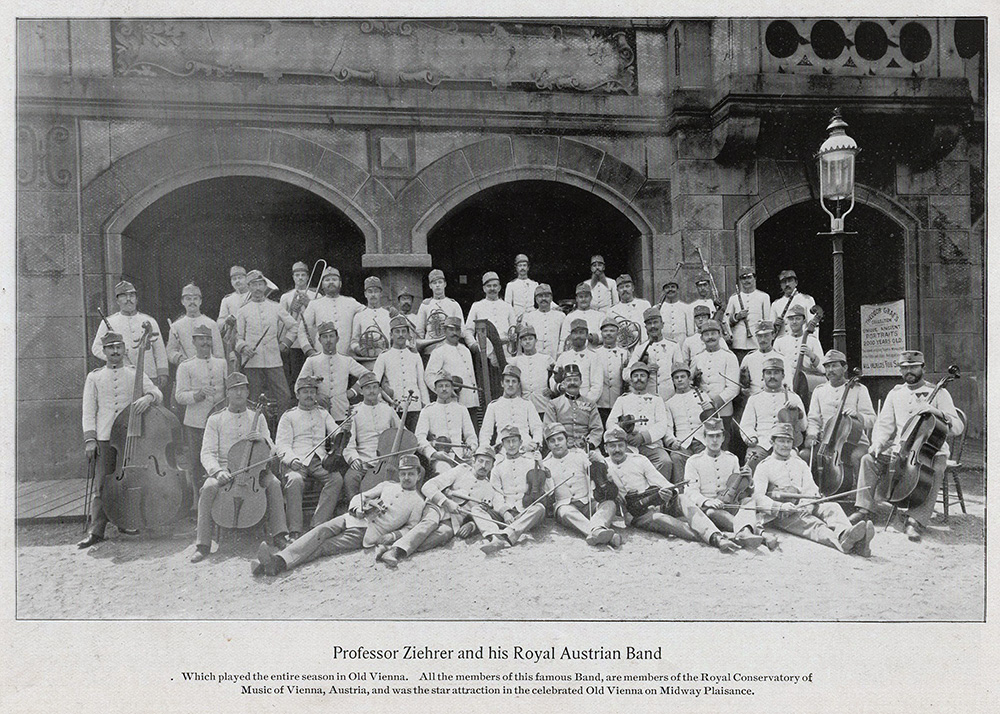
Carl Michael Ziehrer premiered his “Columbian March” on July 4th, 1893, performed by the Fourth Infantry Band, a resident musical group in the Austrian Village. [Image from Pictorial Album and History of the World’s Fair and Midway. Harry T. Smith & Co., 1893.]
“The applause of the multitude is simply deafening”
While Chicago’s own symphony orchestra made little effort to celebrate America on her birthday, a foreign band delivered a special musical gift. Under the direction of Hofkapellmeister Carl Michael Ziehrer, the Austrian Fourth Infantry Band of sixty musicians arrived in Chicago on June 2 and began offering Grand Military Concerts in the Midway’s Austrian Village each afternoon and evening. The royal military band quickly became one of Old Vienna’s chief attractions.
To commemorate his visit to America, Herr Ziehrer composed “The Columbian March,” (Opus 457) and dedicated the piece to President Grover Cleveland. The Fourth Infantry Band played it for the first time during their 5 pm concert on July 4th. Crowds swarmed to hear the premiere and demanded six encores. Figaro magazine (Jul. 20, 1893) noted that the military march quickly “made an impression upon the visitors to the fair, for it is demanded at each performance and is always enthusiastically received.” The song became a musical hit of the Exposition (though not quite displacing “After the Ball.”). “The Columbian March … is played in Old Vienna every evening and always arouses tremendous enthusiasm,” reported John R. Reavis, visiting from Washington State. “When rendering this now most popular piece of music,” wrote Frank H. Smith, “the applause of the multitude is simply deafening, so highly is it appreciated.” Two Austrian Village stores had the sheet music available for purchase, and Lyon & Healy published it as “Columbus March” around September 1894. A recording can be heard here.
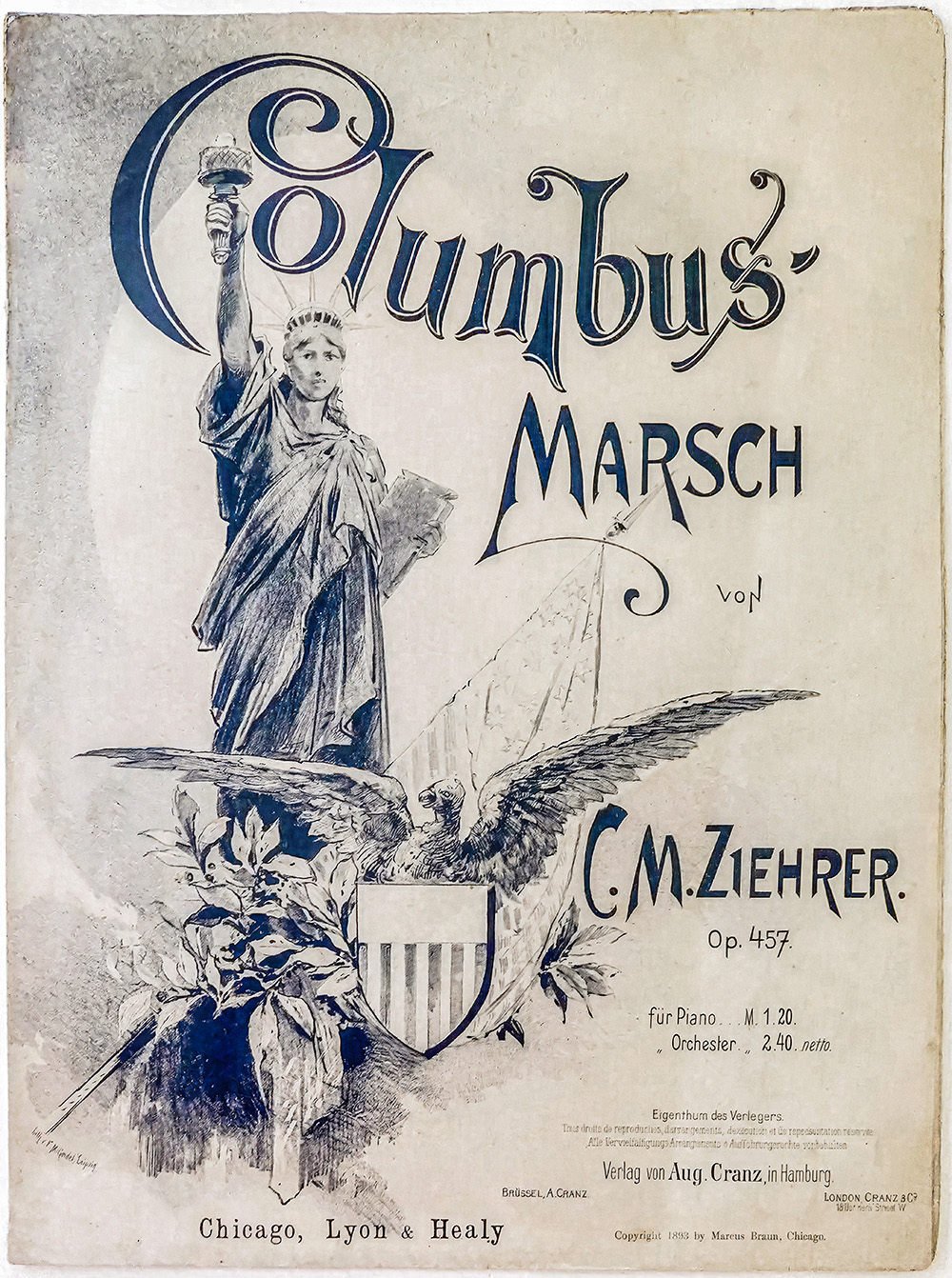
Carl Ziehrer’s “The Columbian March” was published as sheet music titled “Columbus March” by Lyon & Healy.
“Just plain American music”
Diverse singing groups from across the nation lifted their voices throughout the afternoon. At noon, the Dudley Buck Glee Club performed a concert in the Colorado State Building.[7] Named for American composer Dudley Buck (1839–1909), this new chorus of twenty male singers from Pueblo, Colorado, had Prof. C. S. Cornell as chairman and director. The group arrived in Chicago in late June for a three-week residency, offering daily noon concerts in the Colorado State Building. “It isn’t the kind of music that compels the domination of the intellect over the heart and the soul,” wrote a listener from New Orleans for the Times-Democrat (June 30, 1893). “It’s just plain American music rendered by manly voices.” On the evening of July 4th, the chorus sang from a float stationed in the Grand Basin near the MacMonnies Fountain.
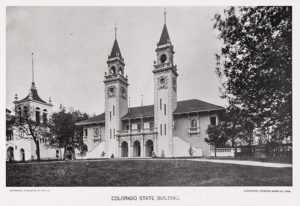
The Colorado State Building hosted a July 4th concert by the Dudley Buck Glee Club of Pueblo. [Image from Arnold, C. D.; Higinbotham, H. D. World’s Columbian Exposition: State Buildings Portfolio of Views (National Chemigraph Company, 1893).]
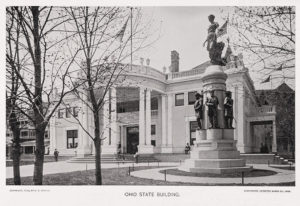
The Ohio State Building hosted a July 4th concert by the Columbian Quartet. [Image from Arnold, C. D.; Higinbotham, H. D. World’s Columbian Exposition: State Buildings Portfolio of Views (National Chemigraph Company, 1893).]
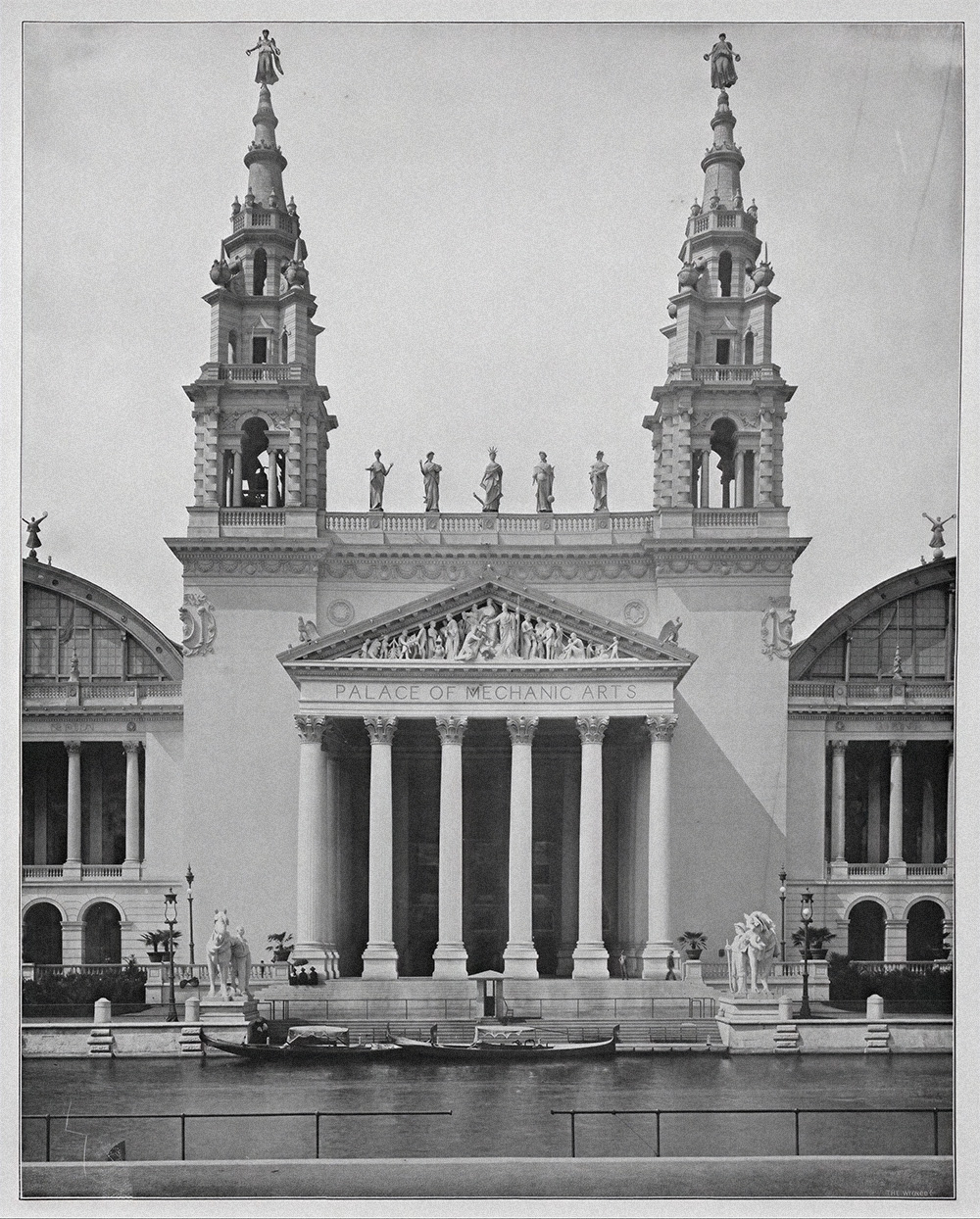
The southeast tower of Machinery Hall contained a set of chimes, played daily by Mr. C. E. Bredburg for the enjoyment of visitors. [Image from Photographs of the World’s Fair (Werner Co., 1894.)]
“Entertaining the immense concourse of people”
At 5:30 pm, the chimes of Machinery Hall rang out, enchanting many thousands of fairgoers gathered in the Court of Honor.[9] The chimes consisted of ten bells, forged by the Buckeye Bell Foundry of Cincinnati, Ohio, installed in the southeast tower of Machinery Hall. At a console in the east gallery, directly under the south tower, sat carilloner Mr. C. E. Bredburg. Sweet tones of these bells rang out several times daily with concerts to charm visitors.
As the July 4th chimes concert concluded, the evening illumination began, as described by a reporter for World’s Columbian Exposition Illustrated:
While the sun with its heat and brilliancy was disappearing in the west, the chime of bells on Machinery Hall was entertaining the immense concourse of people with soothing music, when suddenly the dome of Administration building is in a flood of light from thousands of electric burners, quickly followed by the lighting up of the surrounding buildings and the Court of Honor.
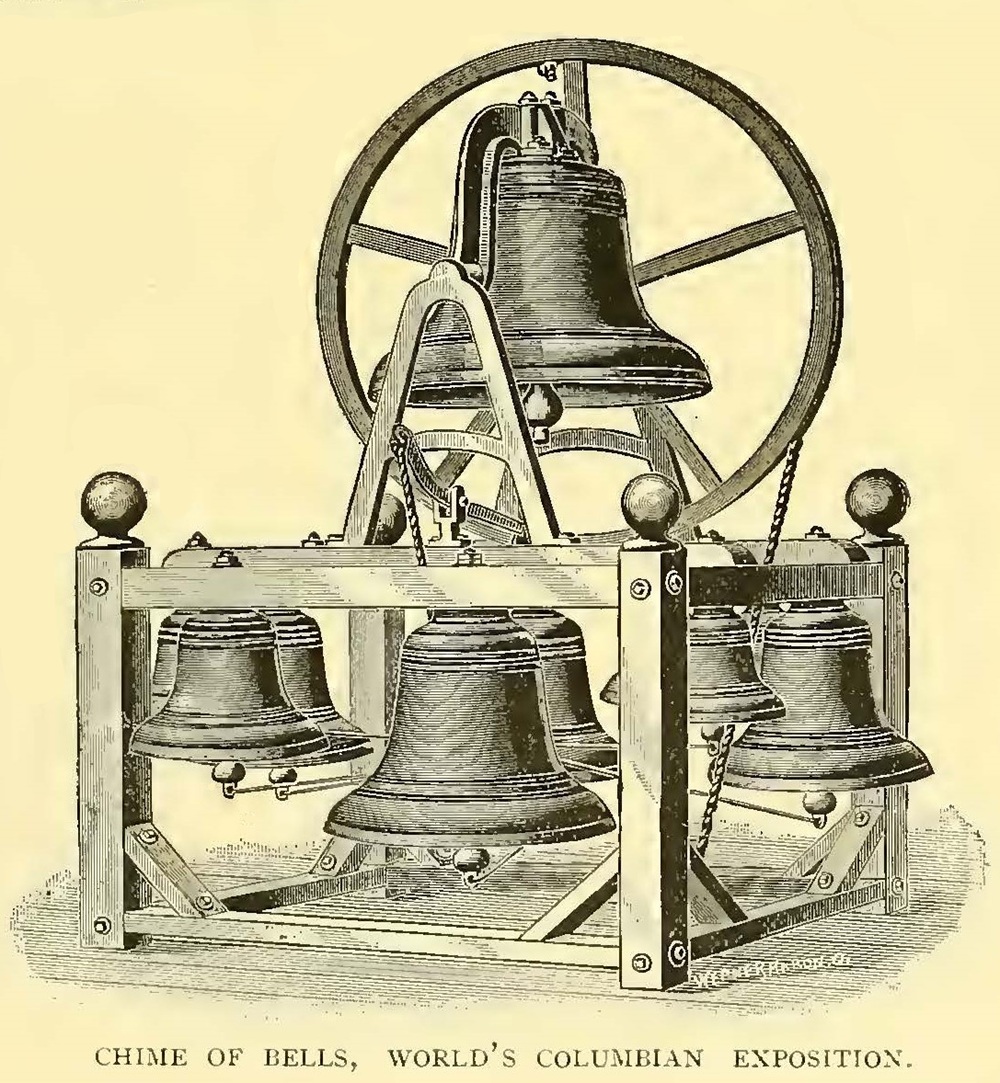
The Buckeye Bell Foundry chimes in the tower of Machinery Hall were played daily by Mr. C. E. Bredburg. [Image from Frank D. Abbott’s Musical Instruments at the World’s Columbian Exposition (Presto Co., 1895).]
“America’s half-dozen national anthems”
Such an outpouring of patriotic songs on the fairgrounds prompted one music critic to consider the dilemma that, after 117 years, the United States still had no official national anthem (and would not until March 3, 1931). Carl S. Sanborn, a writer for Chicago’s Figaro magazine, had these thoughts about the musical horses in the race:
The Fourth of July on the main grounds and the Midway Plaisance, had been arranged for by the music department and the various band-masters so skillfully that one could not turn anywhere and get away from the strains of any one of America’s half-dozen national anthems. “The Star-Spangled Banner,” “Yankee Doodle,” “Marching Thro’ Georgia,” “Columbia, the Gem of the Ocean,” “My Country ’Tis of Thee,” were the prominent features of every musical programme offered on Independence Day.
The most careful observer could not have detected the least bit of partiality on the part of the populace, for anyone of the six hymns, and the question now arises as to what really is the American National anthem.
“My Country ’Tis of Thee” and “Columbia, the Gem of the Ocean,” should be forever banished from the list, not but that the former is as well suited for the purpose as any we may ever have, but both of these songs by right of possession and general consent belong to England and if we cannot find the genius who will give us just the right thing we had much better pin our faith on “Yankee Doodle” which, despite its decidedly unmusical make-up, is the most fitted of any we now possess. “Marching thro’ Georgia” and the inspiring “Dixie” would either of them do especially the latter, were it not for the fact that they were written at a time when our country was divided, which makes it impossible for either to be accepted now. This leaves only “The Star-Spangled Banner,” which, as everyone knows, is too difficult for any but experienced singers to render correctly.
At nightfall, visitors’ ears and eyes shifted from the bandstands to the skies above the fairgrounds.
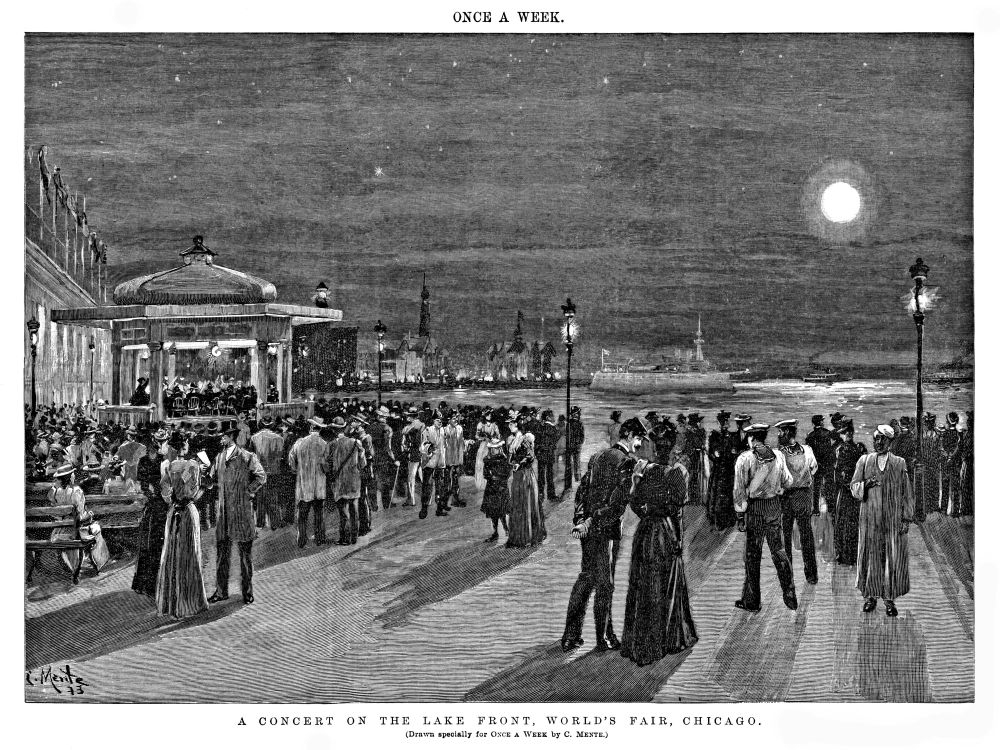
Concerts on the lake front took place in a band pavilion inaugurated by John Philip Sousa’s Band on June 25. [Image from Once a Week Aug. 26, 1893.]
NOTES
[1] The united bands performed:
“Prayer” by von Weber (united bands)
“The Old Folks at Home” (chorus and populace)
A medley of national airs (united bands)
“Nearer, My God, to Thee” (chorus and populace)
“Sweet Spirit, Hear my Prayer” (united bands)
“Love and Liberty”
“Home, Sweet Home”
“Grand March” (united bands)
[2] The Chicago Band performed:
“American Republic March” by Henry H. Thiele
“Poet and Peasant Overture” (“Dichter und Bauer”) by Franz von Suppé
“Wedding Songs” waltz by Philipp Fahrbach
“Recollections of War” by E. Beyer
“La Belle Creole” tropic dance by Andrew Herman
“Pretty as a Picture” medley by Edward Noble Catlin
“A Musician Astray in the Forest” by Andrew Herman
“Sleigh Ride” (“Petersburger Schlittenfahrt”) gallop by Richard Eilenberg
“America Overture” by Edward Noble Catlin
“Schmetterlingsjagd” by Kéler Béla
“Southern Plantation Songs” by Luciano Conterno
“Jolly Fellows” waltz
“Albion” national airs by Reeves
“Short and Sweet” polka by Thomas V. Short
“Nearer, My God, to Thee”
[3] The Iowa State Band’s program consisted of:
“Poet and Peasant Overture” (“Dichter und Bauer”) by Franz von Suppé
“Jolly Fellows” waltz by Griessenger
“The Vacant Chair” by G. F. Root?
baritone solo sung by Mr. Frank Kendall
“Recollections of War” medley by E. Beyer
Grand selections from “Columbus” by Theodore Moses Tobanni
“The Forge in the Forest” by Gustave Theodor Michaelis
“The High School Cadets” by John Philip Sousa
“A Trip to Coney Island” by Theodore Moses Tobanni
[4] The Cincinnati Band’s musical program consisted of:
“Union March” [possibly “Literary Union March”] by [John A.?] Schehl
“A Night in Granada Overture” by Conradin Kreutzer
“Espana Waltz” by Emmanuel Chabrier
Selections from “Old Hundred,” “Old Folks at Home,” “My Skiff is on the Shore,” “My Lodging is on the Cold Ground,” “Jenny Jones,” “Light of Other Days,” “Glory, Glory, Hallelujah” (“Battle Hymn of the Republic”), “Robin Adair,” “What Can the Matter Be,” “Katie Darling,” “Auld Lang Syne,” and “Yankee Doodle”
“Zampa Overture” by Ferdinand Hérold
“Awakening of the Lion” (“Reveil du Lion”) by Anton de Kontski
“My Maryland” (traditional)
“Albion” fantasia on Scotch, Irish and English Airs by Charles Baetens
“American Republic March” by Henry H. Thiele
“Jubilee Overture” by Carl Maria von Weber
“Gaite” waltz by Émile Waldteufel
American airs: “Our Nations,” “Red, White and Blue,” “Hail Columbia,” “Washington’s March,” “America,” “American Hymn,” “The Land of Washington,” “The Star Spangled Banner,” and “Yankee Doodle”
“William Tell Overture” by Gioachino Rossini
“Southern Plantation Songs” by Luciano Conterno
“Robert Bruce” by Bonnisseau
“Racket” by Michael Brand
[5] Their Exposition Orchestra’s afternoon musical program consisted of:
“Columbian March and Hymn” by John Knowles Paine
Overture “Hail Columbia” by Charles Crozat Converse
Divertissement from Henry VIII by Camille Saint-Saëns
1. Introduction “Entrance of the Clans”
2. “Scotch Idyl”
3. “Gypsy Dance”
4. “Rustic Jig and Finale”
“Ave Maria” by Franz Schubert
Selections from Act III of Lohengrin, by Richard Wagner
1. Introduction
2. Nuptial chorus
3. March
Waltz “Wine, Woman and Song” by Johann Strauss
Suite “The Nations” by Moritz Moszkowski
1. Russia
2. Italy
3. Germany
4. Spain
5. Poland
6. Hungary
“The Star-Spangled Banner”
“America”
[6] Their Exposition Orchestra’s evening musical program consisted of:
Overture “Jubilee” by Carl Maria von Weber
Ballet music from Sylvia by Léo Delibes
1. Prelude, “Les Chasseresses”
2. Intermezzo et Valse Lente
3. Pizzicati
4. Cortege de Bacchus
“Ave Maria” by Charles Gounod
“Hungarian Rhapsody No. 2” by Franz Liszt
“Vorspiel,” scenes from Act I of Lohengrin by Richard Wagner
“Persian March” by Johann Strauss
Polka Francaise “’S gibt nur a Kaiserstadt” by Johann Strauss
Waltz “On the Beautiful Danube” by Johann Strauss
“Slavonic Dance” third set by Antonín Dvořák
Overture “Hail Columbia” by Charles Crozat Converse
[7] For their July 4th performances, the Dudley Buck Glee Club sang:
“Comrades in Arms” by Adolphe Adams
“To Thee, Oh Country” by Julius Eichberg
Serenade by Neola
“On the Sea” by Dudley Buck
“On the March” by Becker
“Vintage Song” by Felix Mendelssohn
[8] The Columbian Quartet offered a program of patriotic songs consisting of:
“God of Our Fathers” quartet
“Red, White and Blue” solo and chorus
“March of the Men of Columbia” quartet
“Wearing of the Green” Irish ballad
“The Whistling Regiment” recitation
“Dixie’s Land” song and chorus
“The Star-Spangled Banner” solo and quartet
“My Country, ’Tis of Thee” national anthem
[9] For the Fourth of July, Prof. Bredburg performed these selections:
“America”
“Hail Our Natal Morn”
“Red, White and Blue”
“How It Marches, the Flag of Our Union”
“The Sword of Bunker Hill”
“Washington and Lincoln”
“Hail Columbia”
“Brave Battery Boys”
“The Battle Cry of Freedom”
“The Land of Washington”
“Hurrah for Old New England”
“O, Wrap the Flag Around Me, Boys”
“The Vacant Chair”
“Marching Through Georgia”
“Unfurl the Glorious Banner”
“My Old Kentucky Home”
“Centennial Hymn”
SOURCES
“All Nations Join In” Chicago Tribune Jul. 5, 1893, p. 9.
“American Music on the Fourth” Chicago Inter Ocean Jun. 25, 1893, p. 28.
“Decorations on the Buildings” Chicago Tribune Jul. 4, 1893, p. 2.
“The Fair in All Its Glory” New York Herald Jul. 5, 1893, p. 2.
“Flag and Bell Met” Chicago Herald Jul. 5, 1893, p. 2.
“Fourth at the Fair” Chicago Record Jul. 4, 1893, p. 1.
“In Letters of Light” Chicago Herald Jul. 5, 1893, p. 1.
Johnson, Rossiter A History of the World’s Columbian Exposition Held in Chicago in 1893, Volume 1: Narrative. D. Appleton and Co., 1897.
“Jubilee of Liberty” Chicago Inter Ocean Jul. 2, 1893, p. 2.
“Music” Figaro Jul. 20, 1893, p. 353.
“Music a Feature of the Day” Chicago Tribune Jul. 4, 1893, p. 2.
“A Night at the Exposition” World’s Columbian Exposition Illustrated Jan. 1894, p. 287.
“Old Glory’s Big Day” Chicago Evening Post Jul. 3, 1893, p. 1.
Reavis, John R. “Night in ‘Old Vienna’” Spokane (WA) Spokesman Review Aug. 3, 1893, p. 5.
Sanborn, Carl S. “Music” Figaro Jul. 6, 1893, p. 321.
Smith, Frank H. Art, History, Midway Plaisance and World’s Columbian Exposition. Foster Press, 1893.
“Songs for the Day” Chicago Inter Ocean Jul. 3, 1893, p. 1.
“Thomas Was Not Appreciated” Chicago Herald Jul. 5, 1893, p. 3.
“Those who have been clamoring…” Chicago Tribune Jun. 28, 1893, p. 12.
“Will Join in a Patriotic Chorus” Chicago Tribune Jul. 3, 1893, p. 1.
“The World’s Fair” New Orleans Times-Democrat Jun. 30, 1893, p. 10.

Leave A Comment