
[Continued from Part 10]
The main Fourth of July exercises held in the Administration Plaza involved six speakers; all were men. The only women participating were Mrs. Stafford, who silently raised the “John Paul Jones” flag, and Mrs. Wagner and Miss Mickley, who silently pressed the telegraph key to signal the ringing of the Columbian Liberty Bell. The Board of Lady Managers held separate exercises in their home at the same 11 o’clock hour. The Chicago Herald wrote that the Fourth of July ceremony held in the Woman’s Building “was appropriately patriotic, and the exercises were listened to by an assembly that filled the hall,” while the Chicago Times noted that the women celebrated “decorously, quietly, almost without enthusiasm.” There were no cannons fired or battle swords waved. The voices of women filled the hall.
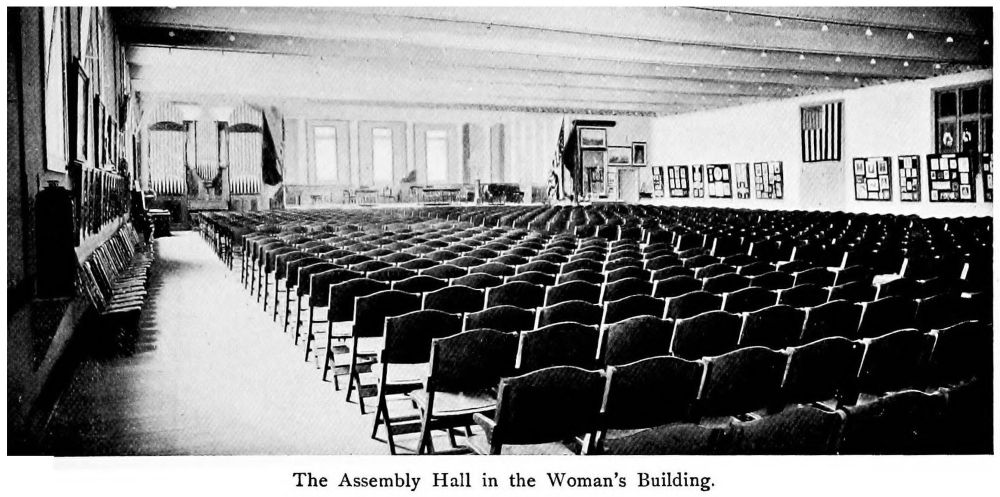
Assembly Hall in the Woman’s Building, showing the speaker’s stage and the organ at the left rear. [Image from Johnson, Rossiter A History of the World’s Columbian Exposition Held in Chicago in 1893, Volume 3: Exhibits (D. Appleton and Co., 1897).]
“Full of inspiration”
From every arch of the women’s home floated gay bunting, and the national colors wound around the columns inside. An audience of women and men filled the Assembly Room on the north end of the second floor for the morning exercises. On a stage decorated with palms and flags, the a platform party assembled. The speakers were joined by Henry Hamilton Honoré (1824–1916), father of the Board of Lady Managers President Bertha Palmer; Lady Manager Mrs. Rollin A. Edgerton of Arkansas, Commissioner-at-Large Mrs. Mary Cecil Cantrill from Kentucky, and several others.
Preceding the exercises, Miss M. A. Henry performed several pieces on the vocalion organ, including Édouard Batiste’s “Offertory in F” and “Communion” and Charles Gounod’s “Serenade.”
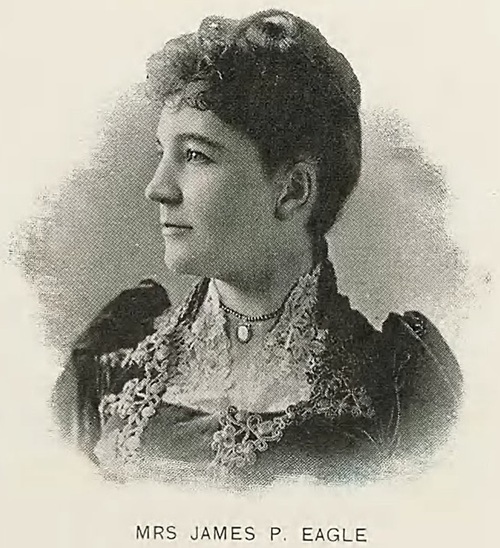
Mary Kavanaugh Eagle (Mrs. James P. Eagle), representative from Arkansas to the Board of Lady Managers. [Image from Hubert Howe Bancroft’s The Book of the Fair (The Bancroft Company, 1893).]
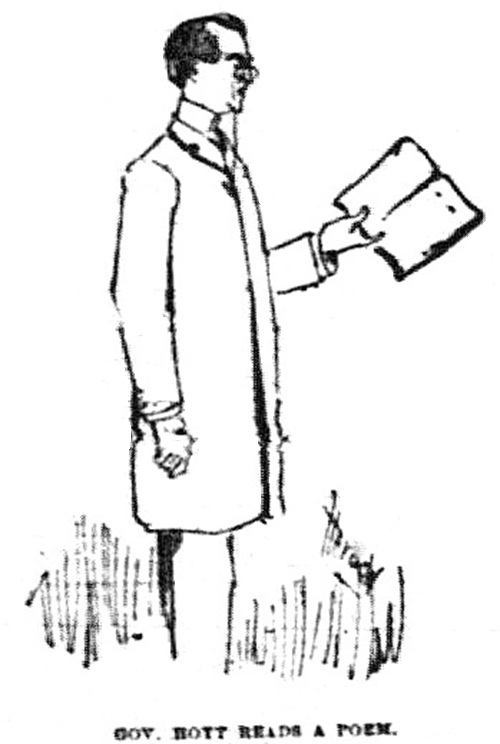
Former Wyoming Territory Governor John W. Hoyt reads a poem. [Image from the Chicago Times July 5, 1893.]
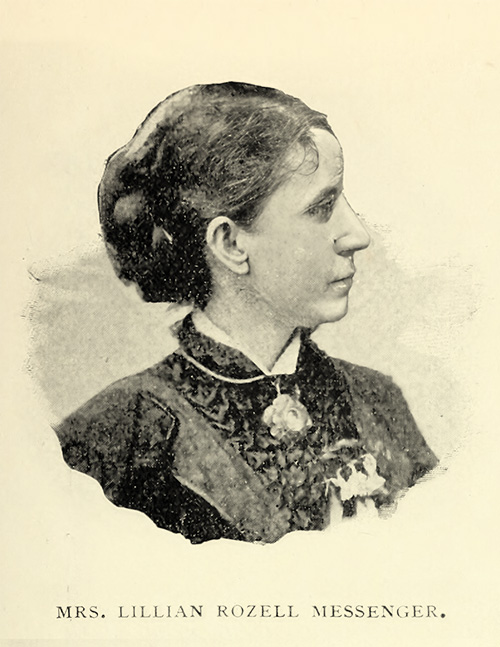
Lillian Rozell Messenger, author of the poem “Columbus—Or ‘It Was Morning’” that was read in the Woman’s Building on July 4, 1893. [Image from The Congress of Women (Monarch Book Company, 1894).]
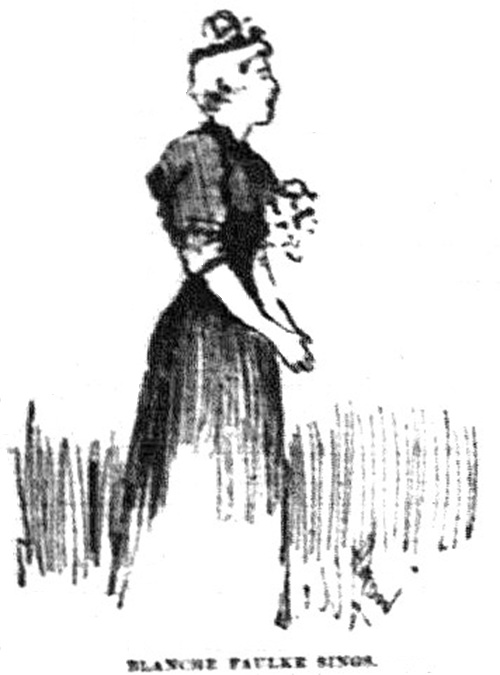
Miss M. Blanche Foulke sings for the Fourth of July. [Image from the Chicago Times July 5, 1893.]
“The Land We Love” Address by Mary L. Gaddess
Miss Mary L. Gaddess, a writer and lecturer from Baltimore, then delivered the keynote address, titled “The Land We Love.” Her lengthy paper, about Columbus’ 1492 voyage and the progress of America, was embedded with a poem entitled “America.” The Inter Ocean praised Miss Gaddess’ speech:
It was filled with historical incidents and tributes to heroes known and unknown; to the thousands whose names are deeply graven on the pages of history, and yet others whom we will never know until the great roll call on the other side of the river, who have worn no laurel wreaths and who lie in nameless graves.
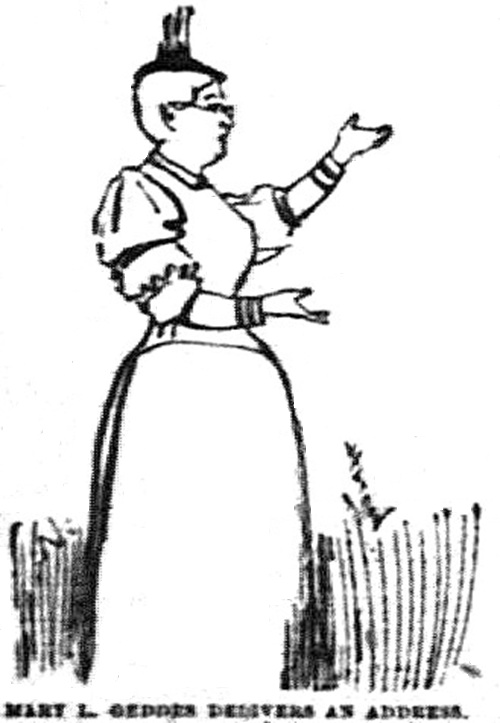
Miss Mary L. Gaddess delivered the address on “The Land We Love” for the July 4th exercises in the Woman’s Building. [Image from The Congress of Women (Monarch Book Company, 1894).]
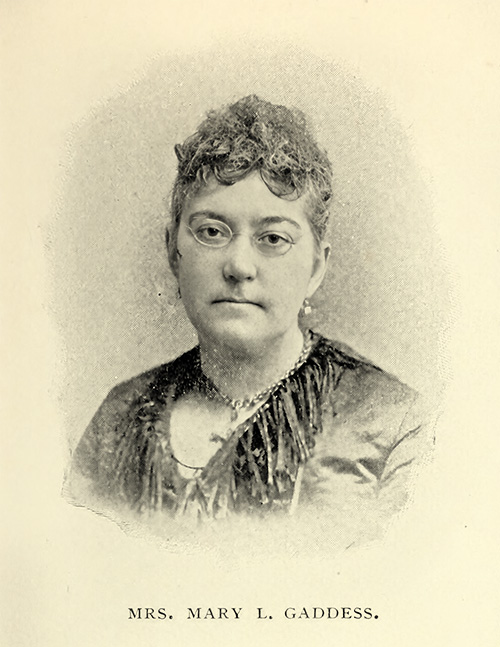
Miss Mary L. Gaddess delivered the address on “The Land We Love” for the July 4th exercises in the Woman’s Building. [Image from The Congress of Women (Monarch Book Company, 1894).]
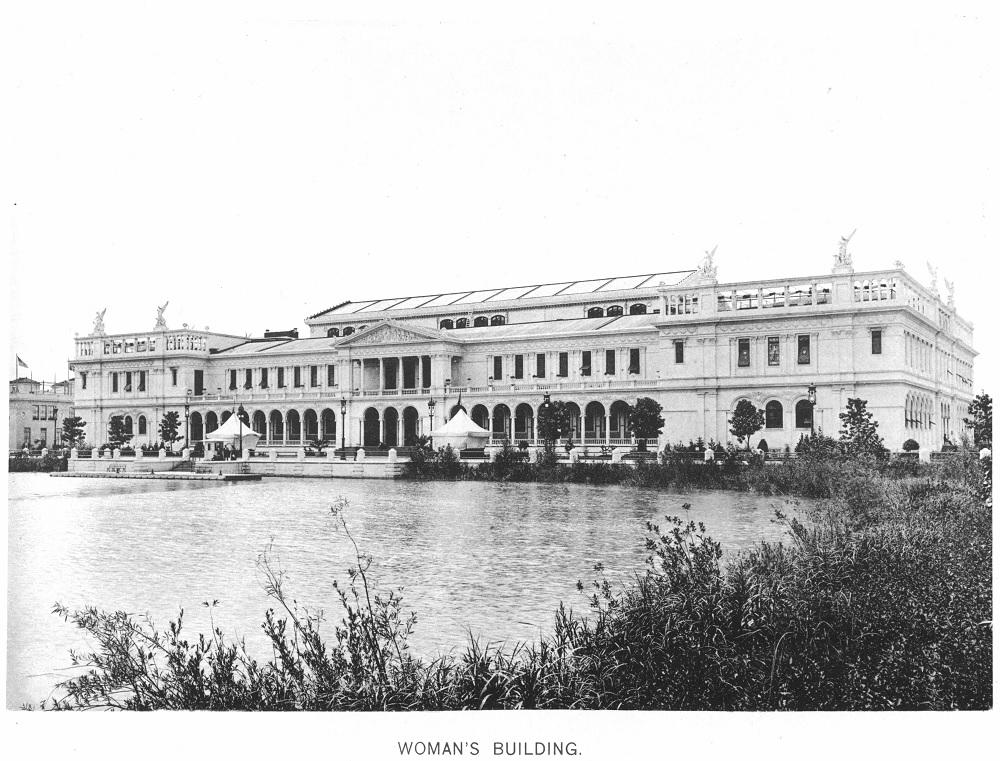
The Woman’s Building, the only exhibition palace designed by a female architect. [Image from Arnold, C. D.; Higinbotham, H. D. Official Views of the World’s Columbian Exposition (Press Chicago Photo-gravure Co., 1893).]
SOURCES
“All Honor the Nation” Chicago Times Jul. 5, 1893, p. 2.
The Congress of Women: Held in the Woman’s Building, World’s Columbian Exposition, Chicago, U. S. A., 1893, With Portraits, Biographies and Addresses. Edited by Mary Kavanaugh Oldham Eagle. Monarch Book Company, 1894.
“The Glorious Fourth” Chicago Inter Ocean Jul. 5, 1893, p. 1.
“Proud of America” Chicago Herald Jul. 5, 1893, p. 11.

Leave A Comment