

In her memoir about the 1893 World’s Fair in Chicago, Halcyon Days in the Dream City, Mrs. D. C. Taylor describes a day when she explored the area of Jackson Park around the South Pond. The visitor from Kankakee, Illinois, “wandered away by the fortress where is housed, black and baleful, with its great yawning mouth waiting to belch forth death, the great Krupp gun; a fearful hideous thing, breathing of blood and carnage, a triumph of barbarism crouching amid the worlds’ triumphs of civilization.”
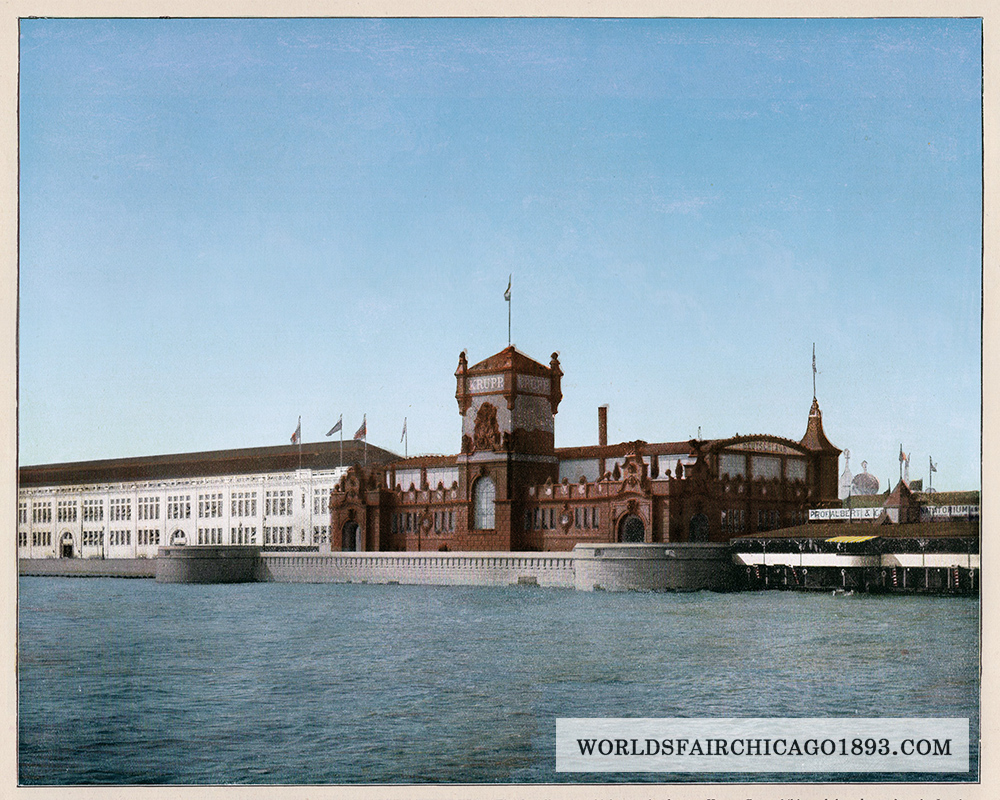
The Krupp Pavilion of the 1893 World’s Columbian Exposition, which housed the mammoth Krupp gun. [Image from Picturesque World’s Fair (W.B. Conkey, 1894); digitally edited.]
In the Krupp gun exhibit at the exposition there is a device that is bringing down an avalanche of denunciation upon the head of the great Herr Krupp. He has unwittingly erected an engine of destruction to female apparel in his building that is causing more tears and trouble than his big guns are doing in the world at the present time. A winding iron staircase, narrow and bristling with sharp ornamental points resembling fish hooks, stands in the center of Krupp’s exhibit and leads to a high platform from which can be obtained the best view of the collection of war machines.
A constant procession of men and women are passing up this staircase and others are crowding down. The big iron fish hooks seized their opportunity and hook on to many dresses and a few coat tails, rending and tearing cheap and costly garments with a sublime impartiality. Scarcely a woman escapes the hooks and comes down without a cry of dismay and the gnashing of her teeth.
Why such an absurdity as this staircase happens to be was ever constructed is a mystery. It spoils $1000 worth of dresses every day.
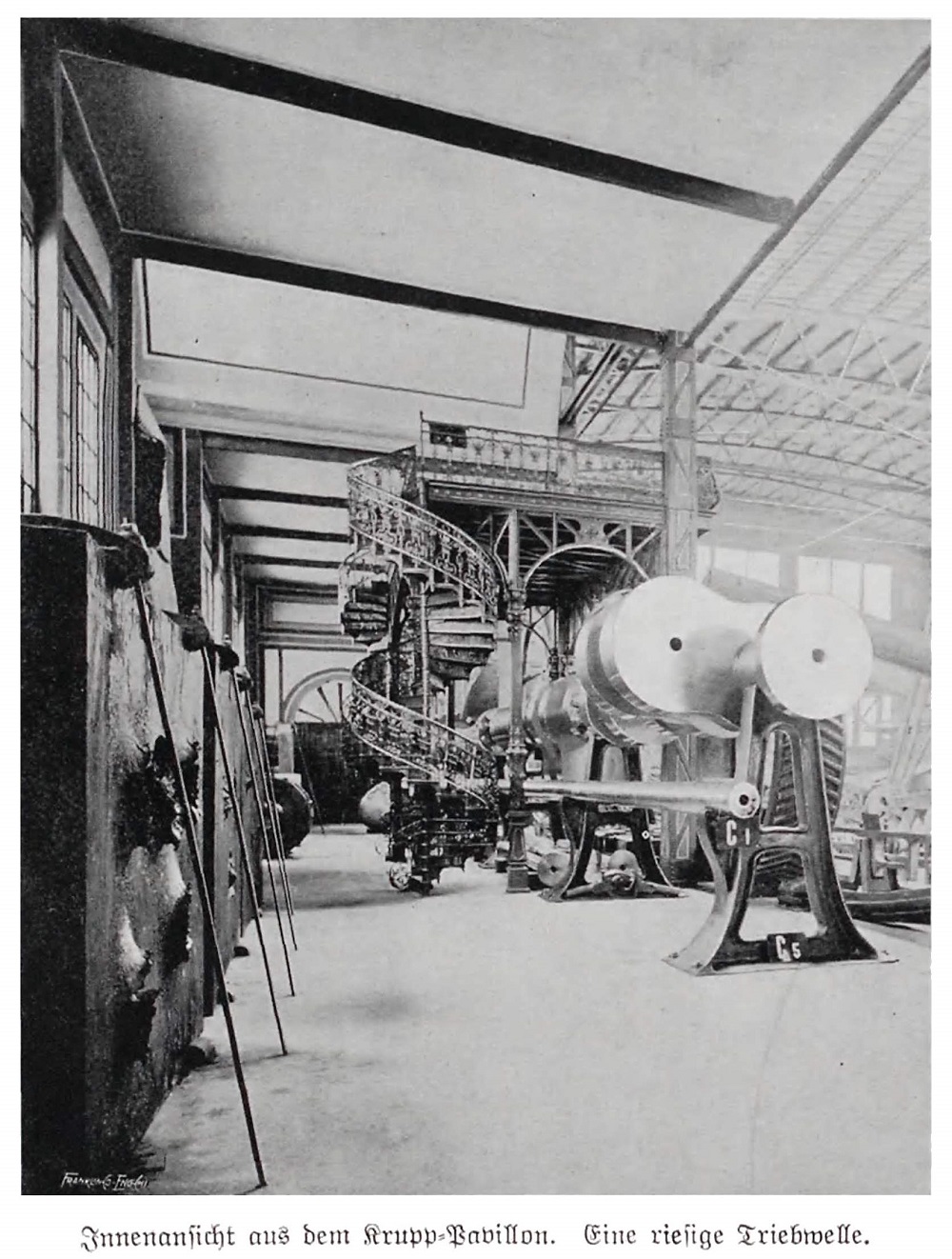
The interior of the Krupp Pavilion, showing the winding iron staircase, “narrow and bristling with sharp ornamental points.” [Image from Unsere Weltausstellung. Eine Beschreibung der Columbischen Weltausstellung in Chicago, 1893 (Fred. Klein Co. 1894.)]
SOURCE
Wells, E. Hazard “Pewter Spoons” Cincinnati Post Jun. 24, 1893, p. 3.









Leave A Comment