

The newspaper account reprinted below is a reminder that marble was mostly a myth at the 1893 World’s Columbian Exposition. The destination for this faux stone block may have been the Ruins of Yucatan exhibit.
Built for a Heavy Load
People who were on the platform of the intramural opposite the Anthropological Building yesterday about 3 o’clock were treated to a sight which almost made them doubt their eyes.
A wagon drove up whose heavy wheels and sturdy timbers seemed best fitted for carrying Krupp guns. The axles creaked, or seemed to creak, under the enormous block of Assyrian marble some eight feet square and four feet thick. Its sculptured sides were covered with the moss of ages; it was hoary beyond description and appeared like one of the very corner stones of earth’s first foundation. The heavy wagon stopped groaning and two men jumped lightly up beside that giant stone.
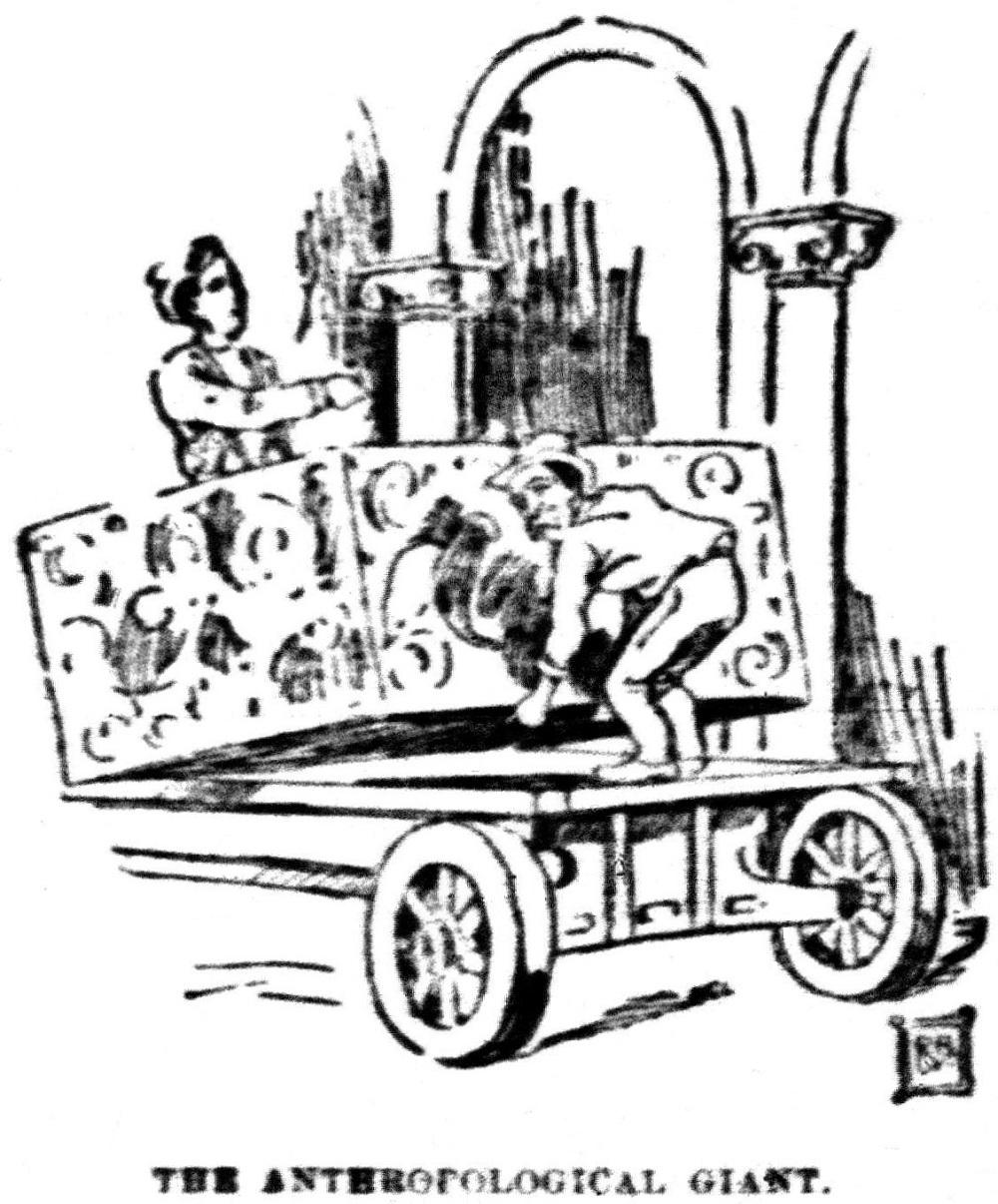
Moving the “Anthropological Giant.” [Image from Chicago Times Jun. 25, 1893.]
The spectators could not realize it as the great fragment came slowly up and up until it stood on end. And then they saw its hollow interior, and that block was made of nice, clean staff, barely three-quarters of an inch in thickness.
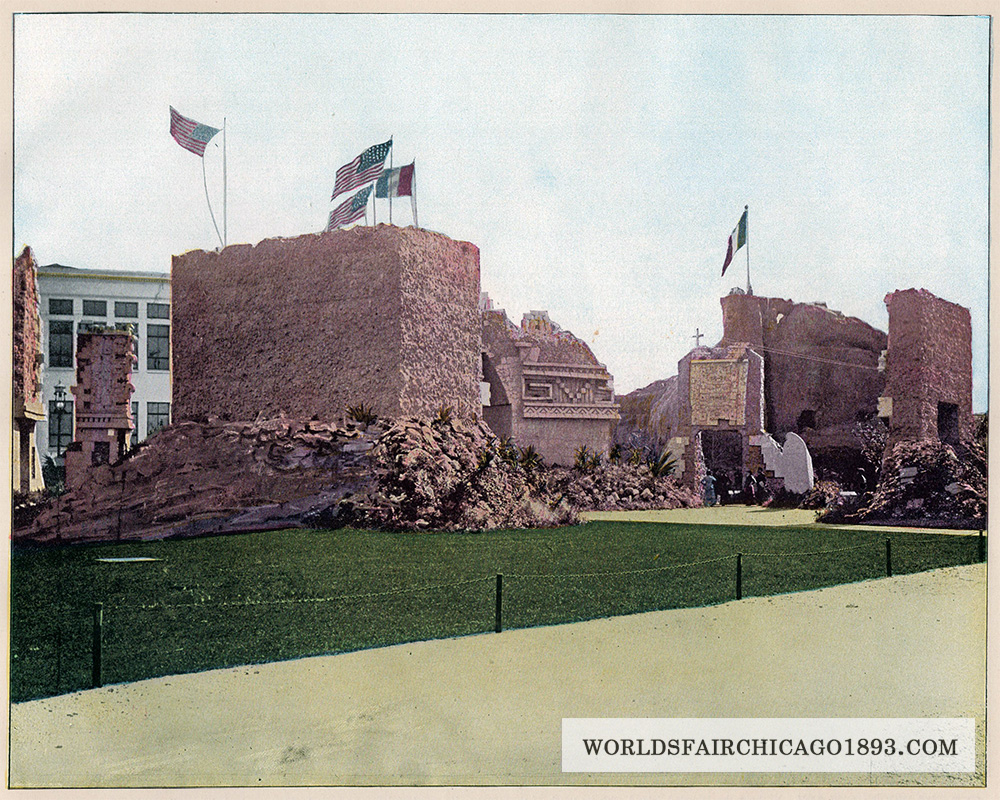
The Ruins of Yucatan exhibit next to the Anthropological Building at the 1893 World’s Fair. [Image from Picturesque World’s Fair. W.B. Conkey, 1894; digitally edited ]
SOURCE
“Western Cities at War” Chicago Times Jun. 25, 1893, p. 7.



Leave A Comment