
A Fair to Remember
Posts about the history of
the 1893 World’s Fair in Chicago
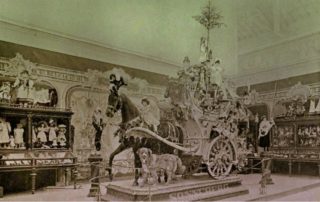
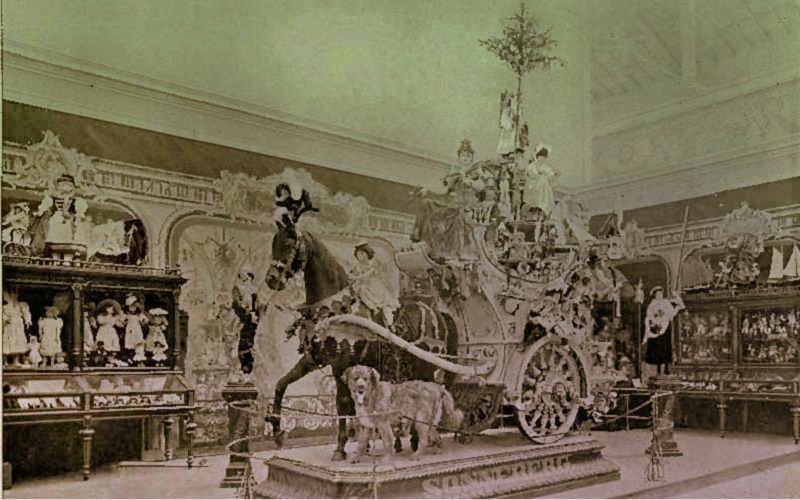
Sonneberg’s Santa Claus Visits the 1893 World’s Fair
Although the 1893 World’s Columbian Exposition ran during the warm months of May through October, a touch of Christmas could be found on the fairgrounds. Nestled in the northwest corner of the German Pavilion inside the Manufactures and Liberal Arts Building (Section F, 77-79), the toy manufacturers of Sonneberg, Germany, featured a lovely display of toys and dolls filling an ornate carriage and topped by a Christmas tree. [...]
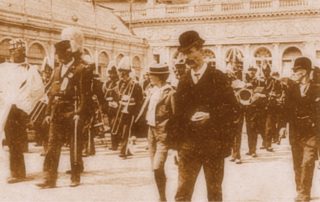
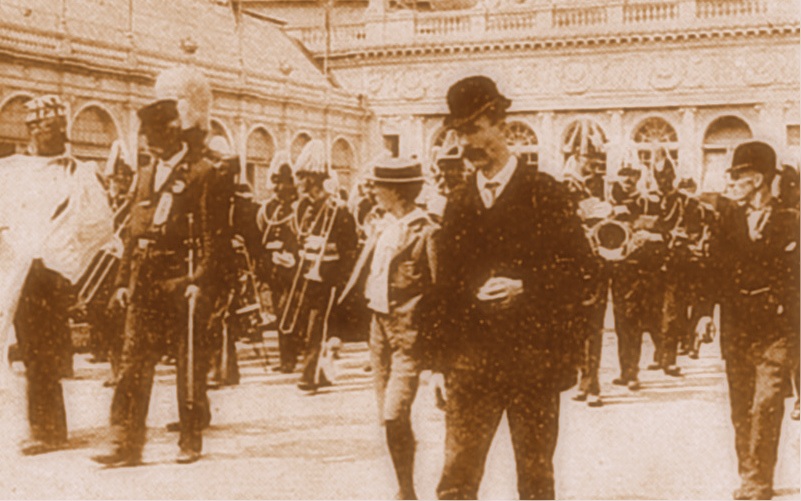
Veteran’s Days at the 1893 World’s Fair
Today marks the one-hundredth anniversary of the end of the Great War, when hostilities ceased on the "eleventh hour of the eleventh day of the eleventh month" of 1918. This anniversary is now commemorated in the United States as Veteran’s Day, a time to honor American veterans, both living and dead. The day was originally known--and still is to many--as Armistice Day, for reflecting on how we can achieve [...]

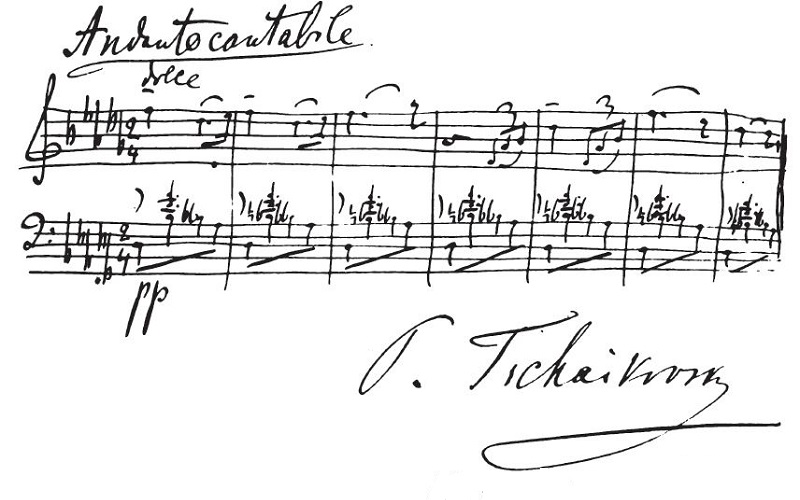
Tchaikovsky’s Tribute to Children for the 1893 World’s Fair
“Earth hold no music half so sweet as the laughter of a happy child.” -- Bertha Palmer in Fame's Tribute to Children (1893) On this day the world remembers the great Russian composer Pyotr Ilyich Tchaikovsky (May 7, 1840 -- November 6, 1893), who died 125 years ago. Although he did not attend the 1893 World’s Columbian Exposition in Chicago, he did provide a small musical gift to help [...]
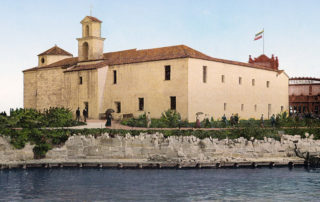
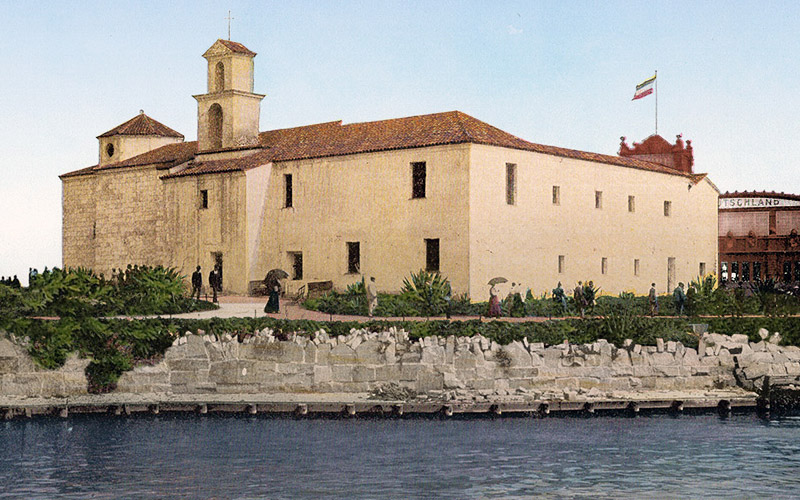
Remembering William Eleroy Curtis, chairman of the Latin American Department
Today marks the anniversary of the birth of William Eleroy Curtis, born on November 5, 1850, in Akron, Ohio. Curtis served the 1893 World’s Columbian Exposition as the chairman of the Latin American Department and representative of the State Department for the U.S. Government Exhibit. Curtis was a journalist and traveling correspondent for the Chicago Inter-Ocean and the Record-Herald newspapers and authored more than thirty books, many about his [...]
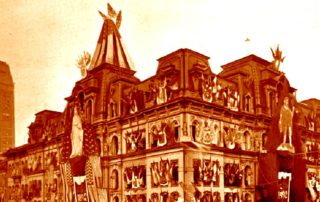
What was Chicago’s official color for the Columbian Exposition?
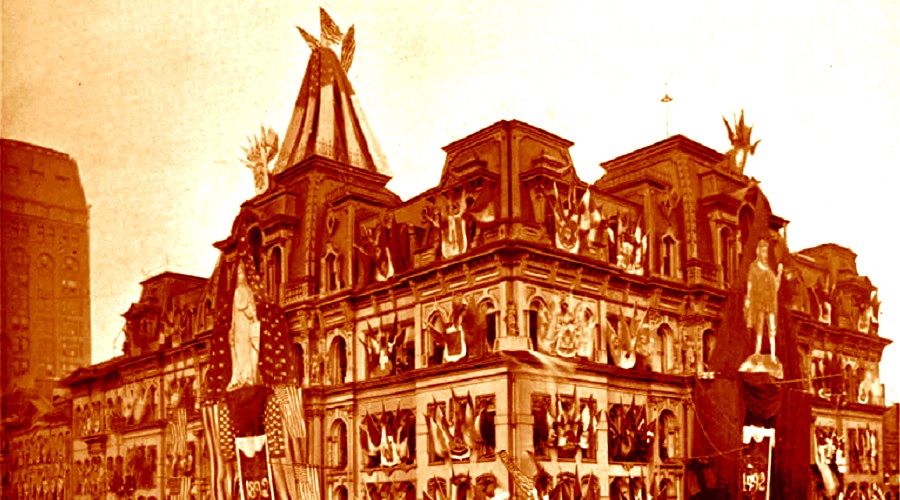
Frank Lloyd Wright was known for his Cherokee red, and Maxfield Parrish had his own blue. Diana Vreeland was known for wearing red, and Shelby Latcherie’s colors were "blush" and "bashful" (a.k.a “pink” and “pink”). Icons often have a signature color. In October of 1892, Chicago excitedly prepared for her coming out ball. The world soon would arrive to see the Fair, and downtown businessmen decided to decorate their city [...]
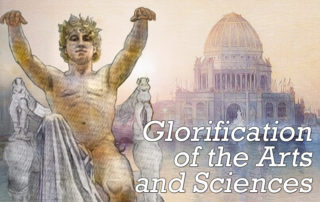
Inside the Administration Building Dome: “The Glorification of the Arts and Sciences” by William Dodge (Part II)
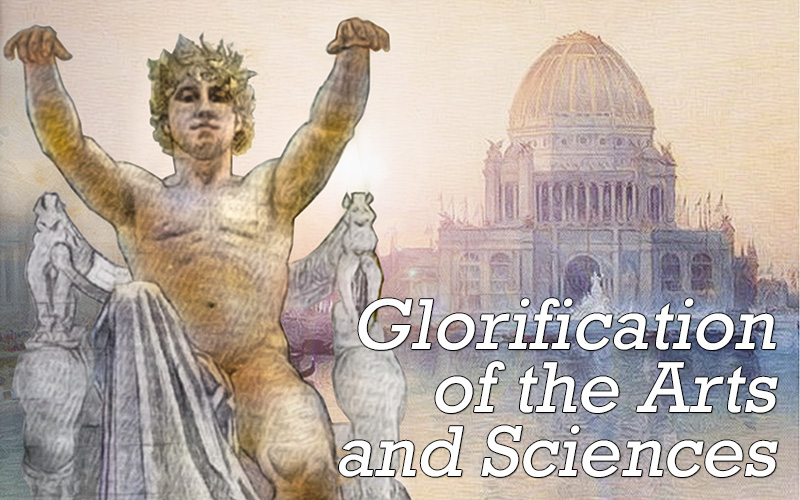
[Part I of this article describes Dodge’s commission to paint a mural for the 1893 World’s Columbian Exposition and his work to create The Glorification of the Arts and Sciences.] PART II: THE PROCESSION BEFORE THE THRONE OF APOLLO “… illuminated by the opal-like circle of light at the summit, Dodge’s great picture crowns the whole, with its circling procession of arts and sciences, gods and muses, nymphs and graces, [...]

Remembering Robert Swain Peabody, architect of Machinery Hall
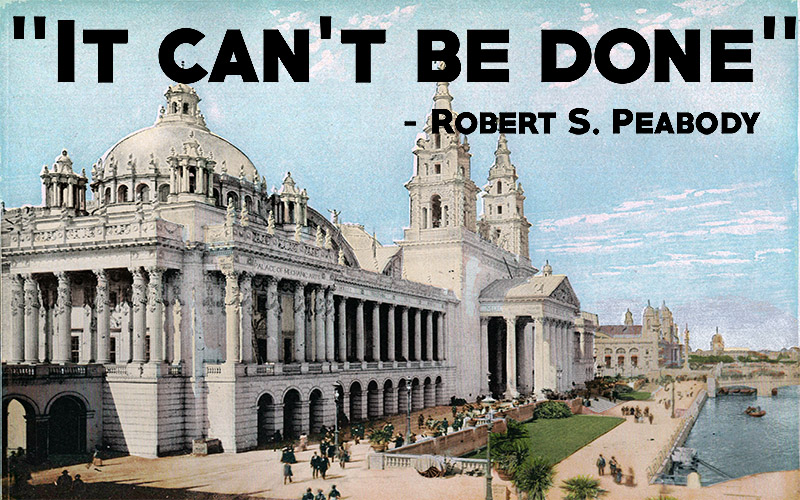
Robert Swain Peabody (February 22, 1845-September 23, 1917) died on this day at his summer home in Marblehead, Massachusetts. Cofounder of the renowned Boston architectural firm of Peabody & Stearns, he was one of the select east-coast architects invited by Daniel Burnham to contribute to the design of the 1893 World’s Columbian Exposition in Chicago. Despite his pessimistic statement in 1891 about the prospect of constructing the World’s Fair on [...]
Inside the Administration Building Dome: “The Glorification of the Arts and Sciences” by William Dodge (Part I)
PART I: DECORATING THE DOME OF THE ADMINISTRATION BUILDING “Fame comes only after death to those who have slaved during life.” —William de Leftwich Dodge The gem and crown of the Exposition Along with the Ferris Wheel and the Statue of the Republic, this magnificent structure is one of the most iconic images of the 1893 World’s Fair. With its grand and golden dome, the Administration Building towered over [...]
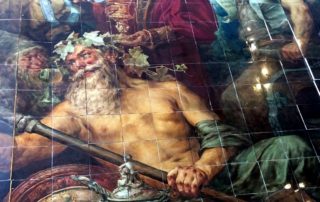
Germany’s “Glory of Germania” Tile Painting in the Manufactures and Liberal Arts Building
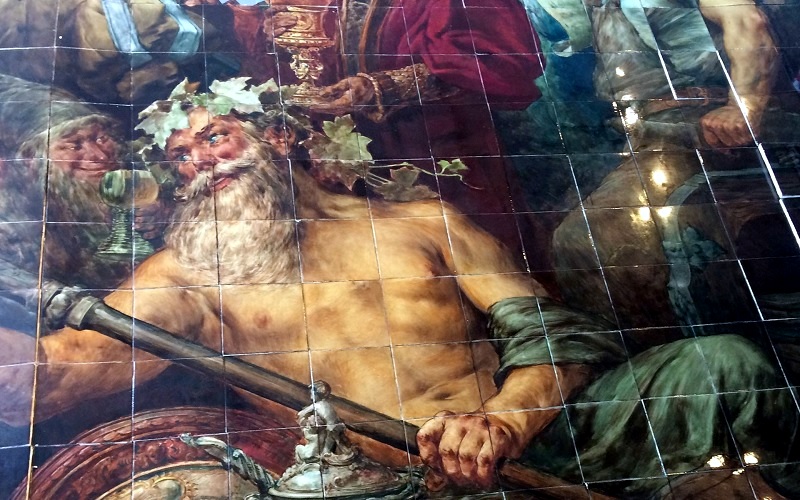
Within the enormous Manufactures and Liberal Arts Building on the fairgrounds of the 1893 World’s Columbian Exposition stood the imposing German Pavilion. Along with the other world powers of the era—Great Britain, France, and the United States—Germany displayed her national output in a prominent location around the central clock tower along the middle stretch of Columbia Avenue. Floorplan of the Manufactures and Liberal Arts Building [Image from Diagrams [...]

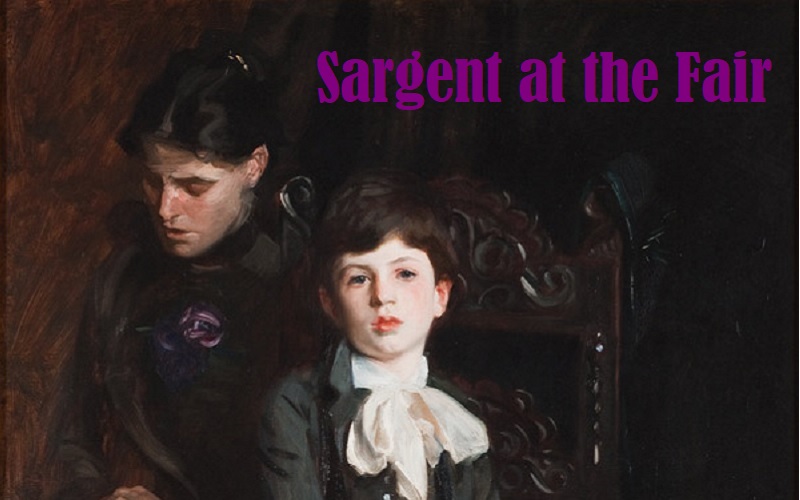
John Singer Sargent at the World’s Columbian Exposition
John Singer Sargent (1856–1925) was one of the most talked-about American artists whose works were displayed at the 1893 World’s Columbian Exposition. “Mr. Sargent easily leads the portrait painters,” wrote Ernest Knaufft in his review of art at the Exposition. “We should dislike to pick out any separate example, but taking him in the aggregate, he becomes the ideal painter for painters.” Another contemporary review of the Columbian Exposition [...]