
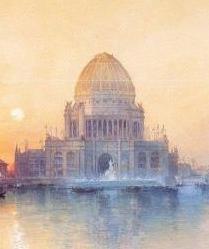

One of America’s most beloved holiday artistic traditions originated in imperial Russia and came to the United States through Chicago at the time of the 1893 World’s Columbian Exposition. On October 22, 1892, an audience of Chicagoans—joined by distinguished guests in town for the World’s Fair Dedication Day exercises—gathered in the Auditorium to hear a concert by the Chicago Orchestra conducted by Theodore Thomas. During the third piece on the program, songs of waltzing flowers, terpsichorean reeds, and a sugar-plum fairy, joined by melodies evoking Russia, Arabia, and China, danced into the imaginations of rapt listeners. They were the first audience outside of Russia to hear Tchaikovsky’s new composition, The Nutcracker Suite. The ballet would not have its premiere for another two months.

“A large and distinguished audience”
Having founded the Chicago Orchestra in 1891, musical director Theodore Thomas planned the 1892–93 season to include twelve concerts of symphonic music as well as eight evenings featuring compositions of lighter character. With these “popular concerts,” Maestro Thomas hoped he could “silence the complaints heard last year of the programs being ‘too heavy,’” announced the Chicago Tribune (Oct. 2, 1892).
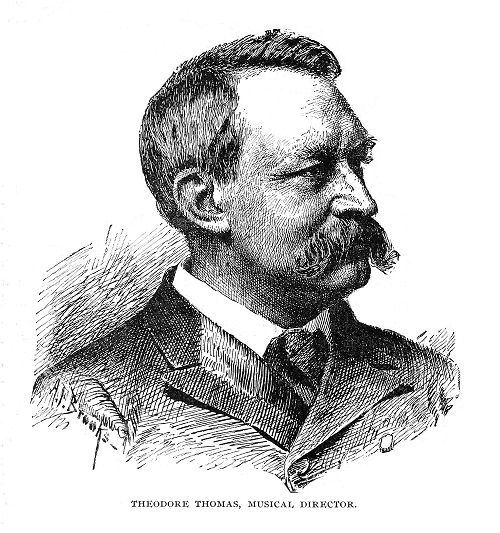
Founder and conductor of the Chicago Orchestra, Theodore Thomas premiered Tchaikovsky’s The Nutcracker Suite (Casse Noisette) on October 22, 1892. [Image from White, Trumbull; Igleheart, William World’s Columbian Exposition Chicago, 1893. J. W. Ziegler, 1893.]
The Chicago Orchestra’s season opener served as the coda of a spectacular week of celebrating the inauguration of the World’s Fair. The concert hall of the Auditorium still wore the splendid decorations from the grand Inaugural Reception ball held the previous Wednesday night, at which John Philip Sousa and his new band provided music for hundreds of national dignitaries and other distinguished guests. On Friday, October 21, the largest gathering of humans ever assembled under one roof sat inside the biggest building in the world for the Dedication Day ceremonies on the fairgrounds. Theodore Thomas, Director of the Bureau of Music at the Columbian Exposition, debuted his Exposition Orchestra, the Chicago Orchestra expanded with additional musicians. Joined by Sousa’s Band, other military bands and drum corps, and several choruses, the musicians on stage numbered 5000! The exercises on Friday “were more satisfying to the eye than to the ear,” recorded George H. Wilson, Secretary of Bureau of Music. Back in the Auditorium for their Saturday evening concert, the Chicago Orchestra worked with more manageable numbers and superior acoustics.
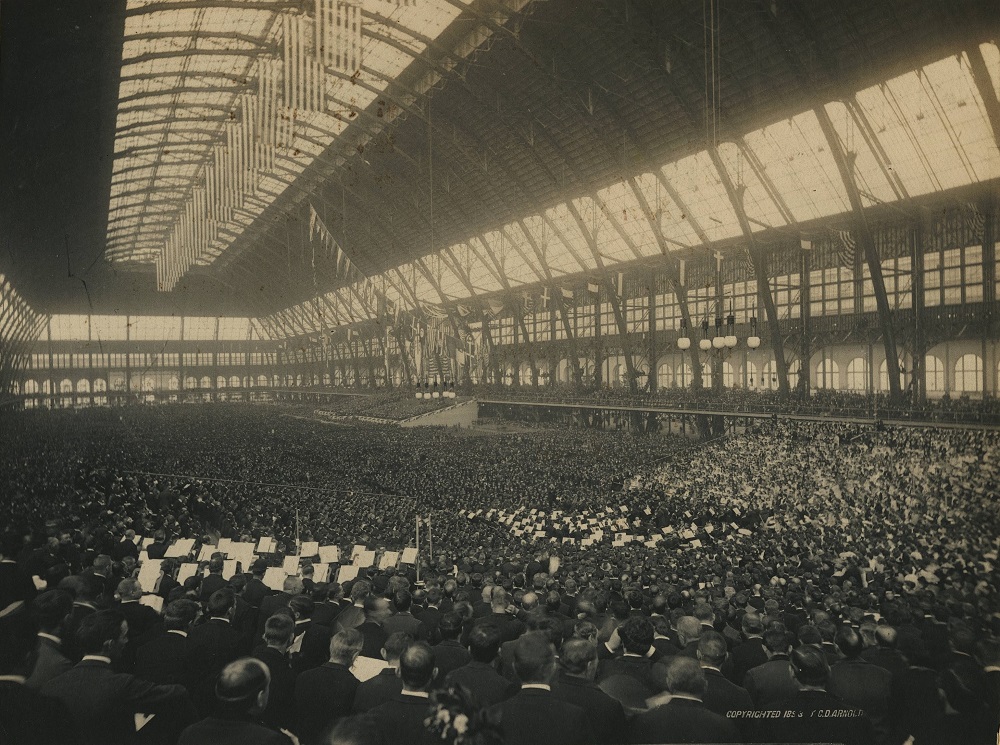
A photograph by C. D. Arnold showing the view looking north in the Manufactures and Liberal Arts Building on Dedication Day. The Exposition Orchestra and combined choruses (foreground) performed for the largest crowd ever assembled under one roof. [Image from the C.D. Arnold Photographic Collection, Chicago Public Library.]
Conductor Thomas was greeted by a full house in the enormous theater. Attendees completely filled the parquet, boxes, dress circle, and balcony and spilled into the standing room. “To one who remembers the discouragingly small audiences that attended some of the concerts of the Chicago orchestra last year,” observed the Evening Journal (Oct. 24, 1893), “the great audience which greeted Mr. Thomas and his musicians Saturday night cannot but suggest the thought that the attendance at such performances is governed largely by adventitious circumstances.” While recognizing that the city was “full of strangers” this weekend, the paper asserted that what really filled the seats was the effort to program for the popular tastes of the local concert audience.
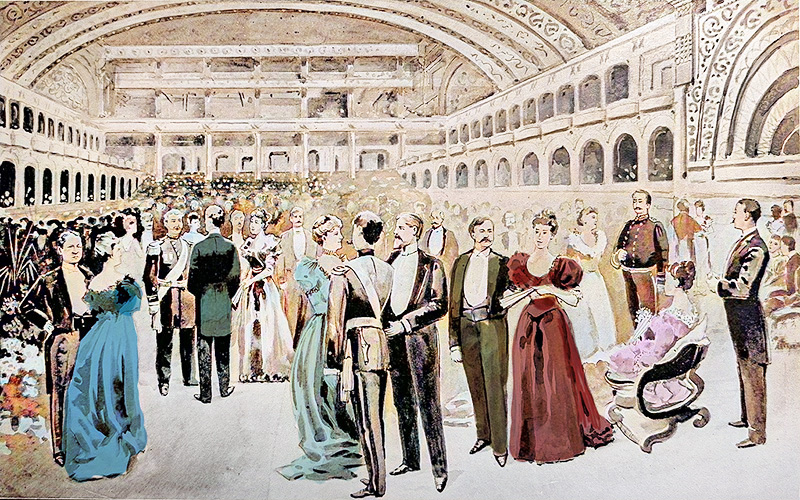
Chicago society hosted hundreds of out-of-town dignitaries at the Inaugural Reception of the World’s Columbian Exposition in the Auditorium on Wednesday, October 19, 1892. Three nights later the Chicago Orchestra took the stage here to premiere the Nutcracker Suite. [Image from Dedicatory and Opening Ceremonies of the World’s Columbian Exposition. A. L. Stone, 1893; image digitally colored.]

“Painted with great care”
The sensation of the evening, however, was the new work by Pyotr Ilyich Tchaikovsky, given under the French title Casse Noisette. The Chicago audience was hearing his music for the Nutcracker two months before the ballet would premiere on December 18, 1892, at the Imperial Mariinsky Theatre in Saint Petersburg. Critics at the Russian premiere would write harsh reviews about the ballet, though praise the music. One commented that “it is a pity that so much fine music is expended on nonsense unworthy of attention, but the music in general is excellent.” [Peterburgskaya Gazeta Dec. 19, 1892, p. 4; translated and reprinted in Wiley (1991) 221] Tsar Alexander III attended the dress rehearsal and was so pleased that he summoned the composer to his box and lavished him with compliments.
Tchaikovsky had spent two years on this project. Following on the success of ballet Sleeping Beauty (1889), the composer received a commission from the director of the Imperial Theatres for another ballet based on a children’s tale. The new work, intended for the 1891–92 season, would be based on Alexandre Dumas’ adaptation of the children’s story “The Nutcracker and the Mouse King” by E. T. A. Hoffmann. Tchaikovsky biographer Roland John Wiley posits that had the composer “known what miseries he would endure while writing it he would surely have refused.” Tchaikovsky worked on the new score throughout 1891, even while on tour in Europe and the United States. In April 1891, he complained of being “simply sick from despair, fright, and the most evil melancholy” about his task to set the Nutcracker to music. [Letter from Tchaikovsky to Ivan Vsevolozhsky Apr. 15, 1891, quoted in Wiley (1984) 417] Mounting pressures eventually forced a postponement of the Nutcracker ballet to the 1892–93 season.
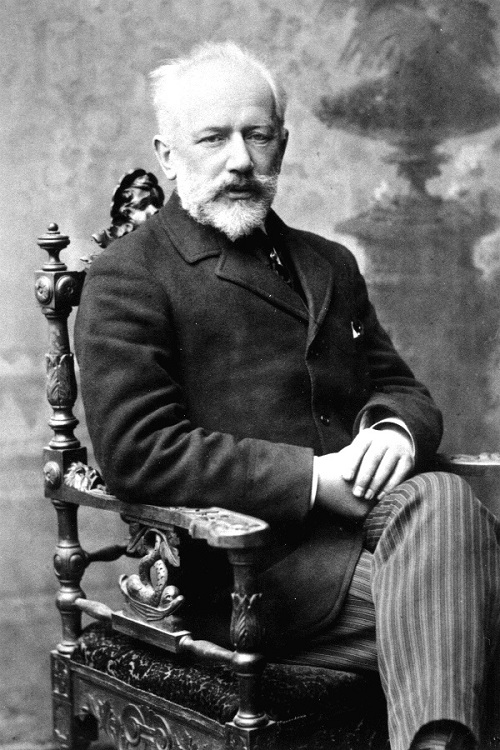
Pyotr Ilyich Tchaikovsky in 1893.
Having promised the Russian Musical Society a new work for their concert scheduled for March 1892, the composer decided to compile a selection of eight numbers from the ballet-in-progress. This Nutcracker Suite, Op. 71a, intended as an orchestral concert piece separate from the full ballet score, ultimately is the version heard by most audiences. While the Nutcracker Suite was mentioned by the Russian press as early as November 15, 1891, the first notice about the new composition in American newspapers seems to have been in early 1892. A syndicated news story reported that, in a “moment of feverish excitement” prior to hospitalization for a nervous condition, Tchaikovsky had thrown into a fire the overture and fragments of music to a ballet titled Casse Noisette (along with his score for the opera The Voyevoda) but that the work “was saved by the timely intervention of a friend.” [“Musical World”] The rescue of this manuscript changed the course of music history, as this piece would become one of Tchaikovsky’s most beloved works and the most often performed ballet in the world. In January and February of 1892, Tchaikovsky completed his orchestrations and then conducted the premiere of the Nutcracker Suite on March 19 for the Saint Petersburg branch of the Russian Musical Society. The composition proved so popular that the esteemed audience asked for encores of each number in the concert. For a second performance, in Moscow on July 16, Vojtěch I. Hlaváč, professor of music at the Imperial University in Saint Petersburg, conducted. As a special guest at the 1893 World’s Fair in Chicago the following summer, Prof. Hlaváč would have another opportunity to conduct the suite.
For the American premiere on October 22, 1892, the Chicago Orchestra performed Tchaikovsky’s full suite of eight songs in three movements:
1. “Overture Miniature”
2. Danses Characteristique
a. “Marche” (“March”)
b. “Danse de la Fee Dragee” (“Dance of the Sugar-Plum Fairy”)
c. “Trepac, Danse Russe” (“Russian Dance”)
d. “Danse Arabe” (“Arabian Dance”)
e. “Danse Chinoise” (“Chinese Dance”)
f. “Danse de Mirlitons” (“Dance of the Reed Flutes”)
3. “Valse des Fleurs” (“Waltz of the Flowers”)
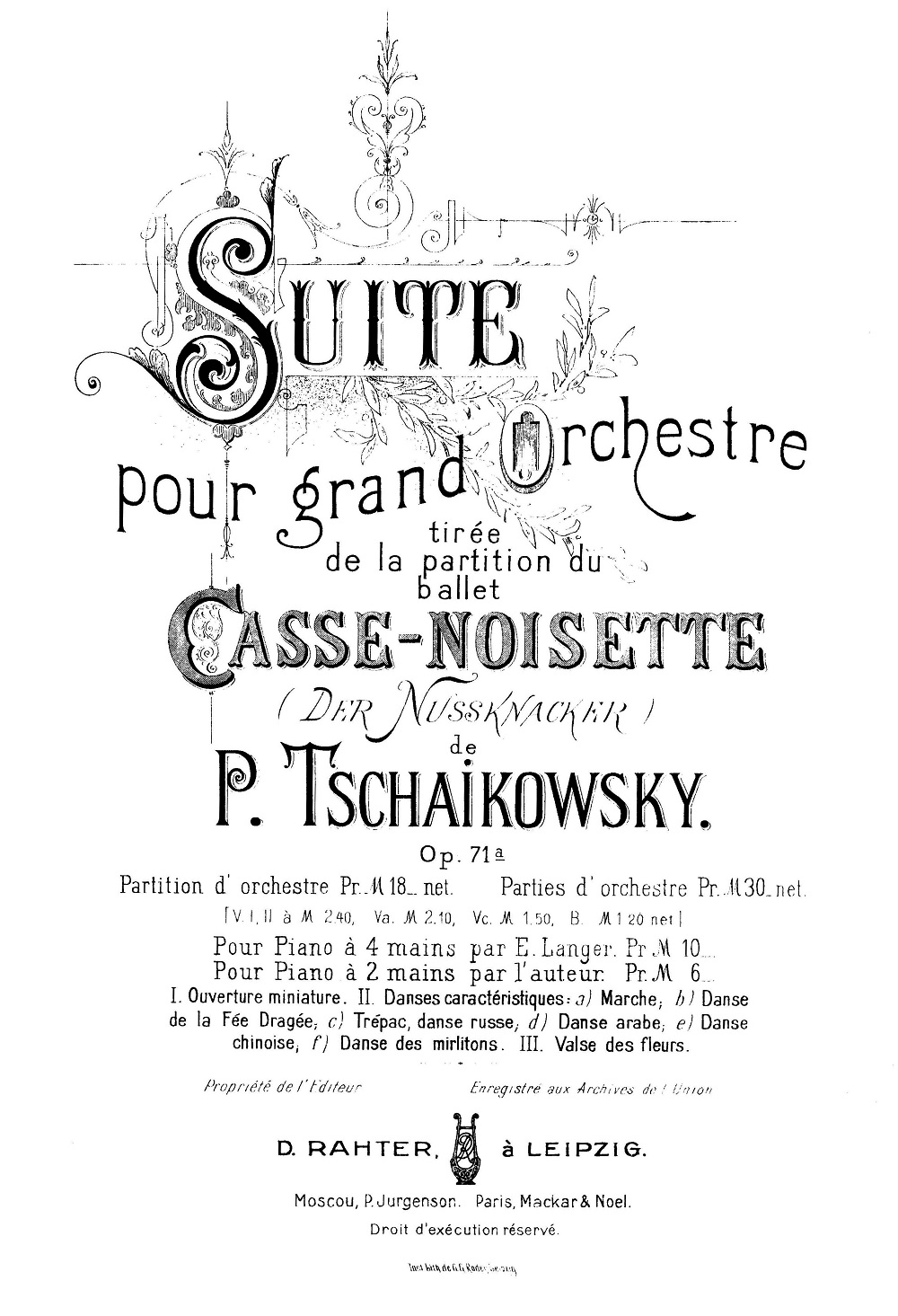
Sheet music for Tchaikowsky’s Casse Noisette suite.
A synopsis of the new work, printed in slightly different forms in the Chicago News Record (Oct. 22, 1892) and Inter Ocean (Oct. 23, 1892) and seemingly derived from orchestral program notes, describes the composition:
The Tschaikowsky suite, around which interest centers, is a series of miniature pictures painted with great care. The overture, bright and dainty, is scored without violoncellos and double basses, and this absence of the heavier strings, to a degree, determines its character. The March is divided into a military theme given to the wind instruments, alternating with a second phrase given to the strings, and a middle movement which might be called a trio and which is built up on a similar exchange between flutes and violins. An occasional comical crash and some piquanteries in the scoring are sufficient to exclude the idea of a grand march. The Danse de la Fee Dragee is another bit of instrumental legerdemain, at the close of which the sweet fairy seems to dart out of sight. The dance theme is given to a ‘celeste’ (a keyed instrument with steel tongs in the place of wires) or a piano. The Russian Dance has all the characteristic, monotonous sway which is peculiar to the popular melodies of the Slav. It is strictly music for the dance, not food for the brain. The Danse Arabe is not less characteristic. Minor in mood, the melody sings along in thirds, with those florid cadences which are the sine qua non of Arabic music. In utter contrast is the following Danse Chinois. The Celestial is, as far as I know, never presented in composition by any characteristic Chinese music, but a kind of universally accepted caricature seems to answer the purpose. Mr. Chinaman skips onto the stage to the fagatto’s [bassoon] kiddish capers, and tone is relegated to the screeching piccolo and flute. The Mirlitons are furnished with a kind of “staccato polka,” cleverly worked up, while the Danse des Fleurs is a valse, having in parts a Strauss-like swing.
The suite’s musical imagery of China, Arabia, and Russia (however ethnographically inauthentic) must have charmed an audience anticipating the international displays being constructed in Jackson Park for the great Exposition the next summer.

“A divinely marvellous sound”
Nestled in these program notes is a brief mention of the keyboard solo in the “Dance of the Sugar-Plum Fairy” being scored for either a celeste or a piano. The former instrument would have presented a mystery to any audience in 1892, as few had heard its name and even fewer had heard it played.
While on his way to the opening of Carnegie Hall in New York in 1891, Tchaikovsky visited Paris, where he reported to his publisher Pyotr Jurgenson about discovering “a new orchestral instrument, something between a small piano and a glockenspiel with a divinely marvellous sound.” [Letter from Tchaikowsky to Pyotr Jurgenson Jun. 3, 1891; translated and reprinted in Wiley (1991) 228] The cèleste (in French, or “celesta” in its more common Italian spelling), named for its celestial sound, was the invention of French harmonium and organ maker Auguste Victor Mustel (1842–1919), who had patented the novel instrument in 1886. Mustel had unveiled the Celesta No. 1 orchestral model at 1889 Exposition Universelle in Paris and was awarded a gold medal by the jury. Enchanted by the ethereal sound, Tchaikovsky immediately ordered one, but advised Jurgenson: “I would prefer it to be shown to nobody, for I am afraid that Rimsky-Korsakov and Glazunov will get wind of it and use its unusual effects sooner than me.” Tchaikovsky was indeed among the earliest composers to incorporate the celesta into orchestral works, first in his symphonic poem The Voyevoda (1891) and the following year in what would become the instrument’s most famous showpiece to this day—The Nutcracker Suite.
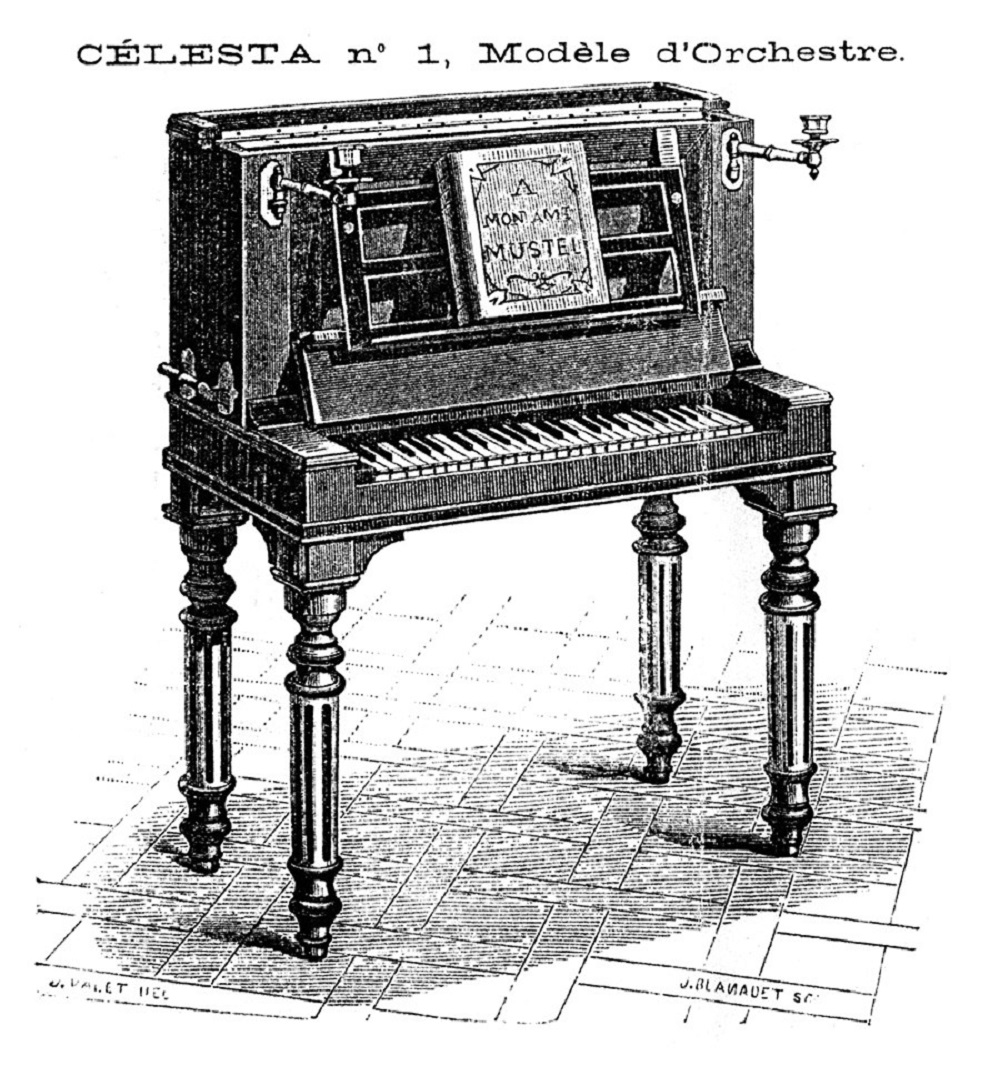
Auguste Victor Mustel’s Celesta No. 1 orchestral model. [Image from Schiedmayer Celesta GmbH.]

“Abounding in color and sensuous beauty”
The Chicago press praised the concert and the Tchaikovsky premiere. “The foreign visitors cannot but be impressed by the finish and uniform excellence of the work of this truly great band,” offered the Chicago Times (Oct. 23, 1892) about the season opener. “The programme was all that the most ardent lover of music could wish for,” wrote Figaro magazine. “Theodore Thomas received an ovation which must have convinced him that the public are delighted with the promises he has made regarding the season’s repertory, the chief feature of which will be an increased number of popular programs.” The Chicago Orchestra succeeded at “winning the enthusiastic commendation of a brilliant and distinguished audience,” wrote a reviewer for the Inter Ocean (Oct. 23, 1892), who thought the Tchaikovsky premiere was “one of the interesting features of the programme.”
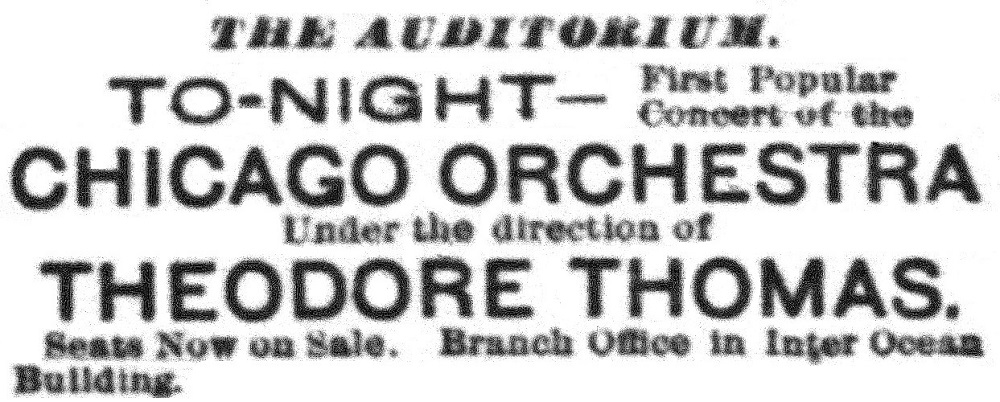
On October 22, 1892, the Chicago Orchestra offered the first performance of Tchaikowsky’s Nutcracker Suite outside of Russia. [Image from the Chicago Evening Journal Oct. 22, 1892.]
Melodious and rhythmic, and abounding in color and sensuous beauty, the suite proved to be one of the most attractive among the lighter works the great Russian has produced. Its charm is due largely to the skill displayed in orchestration, odd and bizarre effects being frequently employed. This is especially the case in the six dances. The Russian Trépac is a boisterous rhythmic ‘bit’ for the entire orchestra; but in good contrast is the Dance Arabe which follows it and which is mournful and slightly weird in character. The Chinese Dance is a merry joke, the clown of the orchestra, the bassoon, being unfailingly and conspicuously present. The Dance de la Fée Dragée is a dainty little conceit, the piano (played last evening by Mr. Seeboeck) being used to good effect, and the Danse des Mirlitons has a catchy air that is orchestrated and harmonized so as to possess piquancy and brightness. The Overture, Marche, and the Valse are less peculiar in style than are the dances, but are rendered attractive by their tunefulness and the skill in instrumentation revealed in them.
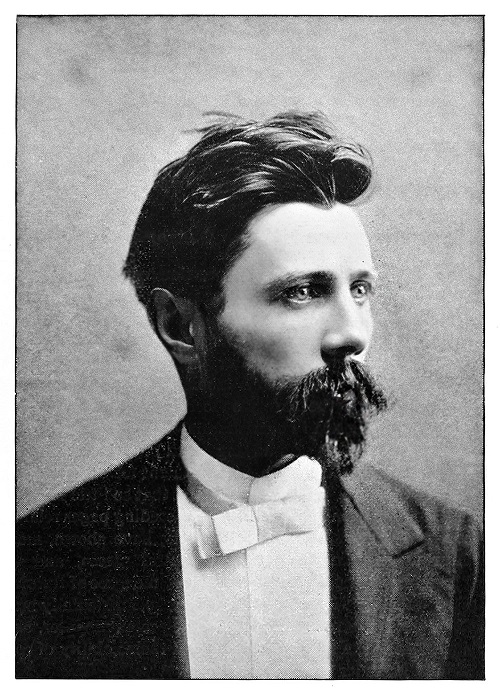
Pianist W. E. C. Seeboeck performed the “Dance of the Sugar Plum Fairy” solo on piano (instead of a celesta) for the American premiere of The Nutcracker Suite. [Image from Mathews, W. S. B. A Hundred Years of Music in America (G.L. Howe, 1889).]

“Worth hearing a number of times”
Chicagoans did not have to wait long to hear a reprise of Tchaikovsky’s new work. On March 20, 1893, the Auditorium again was transformed into the Land of Sweets with a performance of the Casse Noisette suite during the third in a series of “People’s Concerts” given by the Chicago Orchestra for 4000 wage workers in the audience. On April 15, art critic Amy Leslie summed up the successful second season and praised the numerous works—including the Nutcracker— premiered by Maestro Thomas:
“That the attendance has been uniformly complimentary, the concerts eminently artistic and instructive are facts of immediate interest to every student and lover of music. Hopes that Chicago has proved herself more worthy these splendid treats than she did last year animate the vote of gratitude coming from those who have enjoyed each concert so earnestly. Many new compositions have found their road to the classic programmes prepared by Mr. Thomas—Greig’s No. 2 Peer Gynt Suite, Liszt’s Légende, one of Mascagni’s intermezzos, Xaver Scharwenka’s Mataswintha vorspiel, Tschaikowski’s Casse Noisette ballet suite, a song by Svendson and fete descriptions by Tinel and several works by old masters produced for the first time. … It has been a charming pastime for those who could look upon so august an undertaking in that pleasant way and most invaluable assistance to those who viewed it in graver lights.”
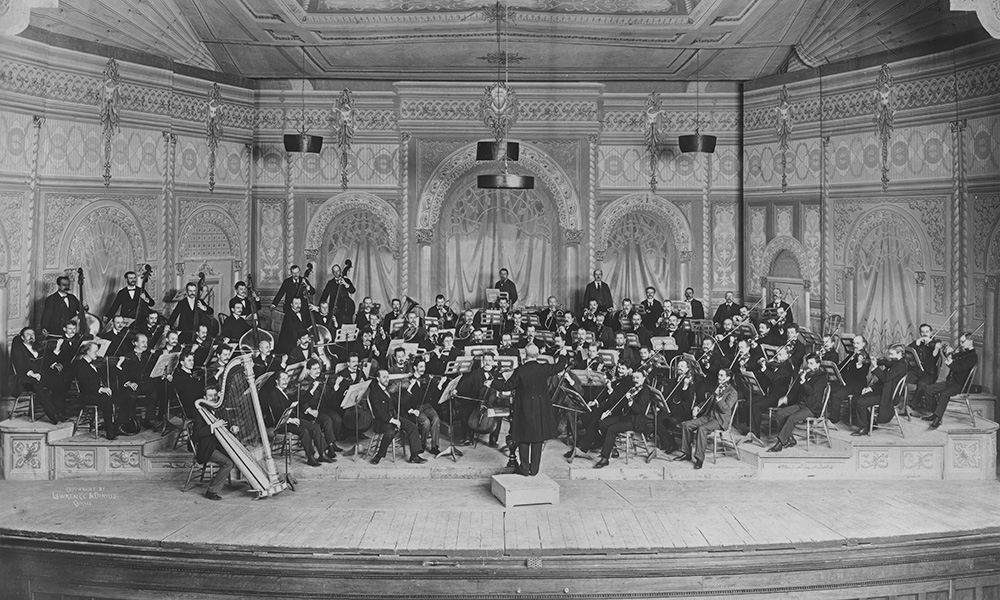
The Chicago Orchestra at home in the Auditorium c1897. [Image from Theodore Thomas, a Musical Autobiography (A.C. McClurg, 1905).]
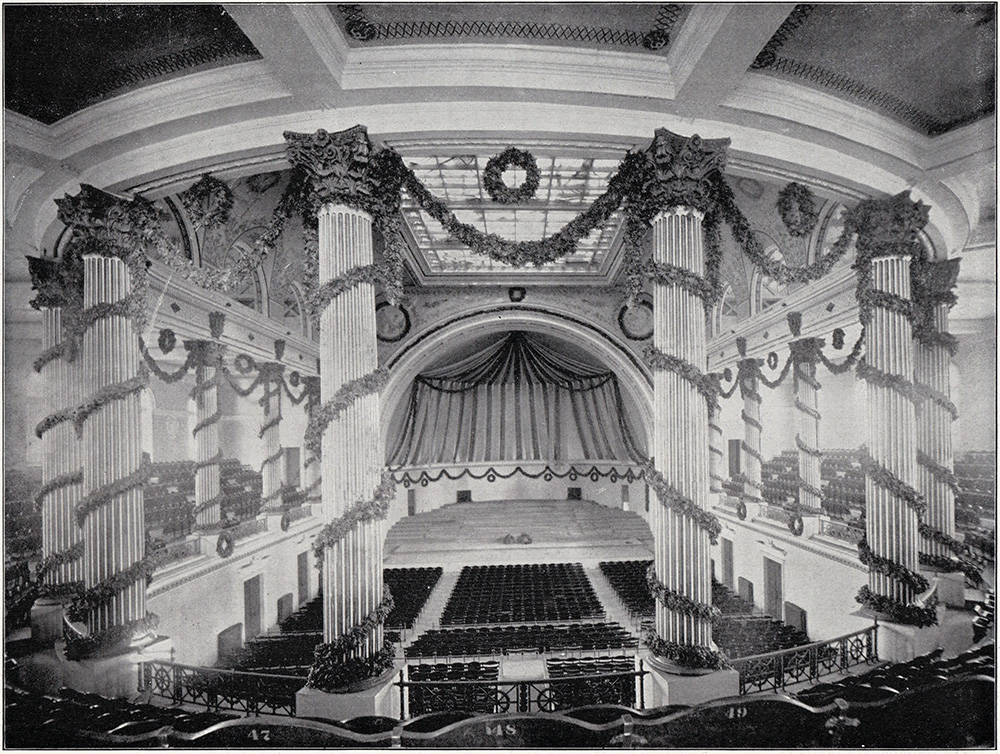
Festival Hall (also named Choral Hall) at the 1893 World’s Fair is where the Exposition Orchestra performed the Nutcracker Suite several times, including at least once with a celesta. [Image from The Columbian Exposition Album: Containing Views of the Grounds, Main and State Buildings, Statuary, Architectural Details, Interiors, Midway Plaisance Scenes, and Other Interesting Objects Which Had Place at the World’s Columbian Exposition, Chicago, 1893. Rand, McNally & Co., 1893.]

“A novelty was introduced”
Perhaps the highest-profile performance Tchaikovsky’s new work came on August 3, as part of a special concert of Russian music in Festival Hall to celebrate “Russia Day” at the Fair. The Exposition Orchestra performed the Nutcracker Suite under the baton of Vojtěch I. Hlaváč, who had conducted the second Russian performance back in July of 1892. This performance at the World’s Fair included a notable addition to the orchestra’s instrumentation—M. V. Mustel’s celesta. The Chicago Record (Aug. 4, 1893) offered this description of the unique keyboard instrument:
“In Tschaikowsky’s delightful Casse-Noisette suite, a novelty was introduced in the shape of a new instrument of French invention, known as the ‘celesta.’ It produces a delicate tone, something between that of a harp and a softly tapped bell.”
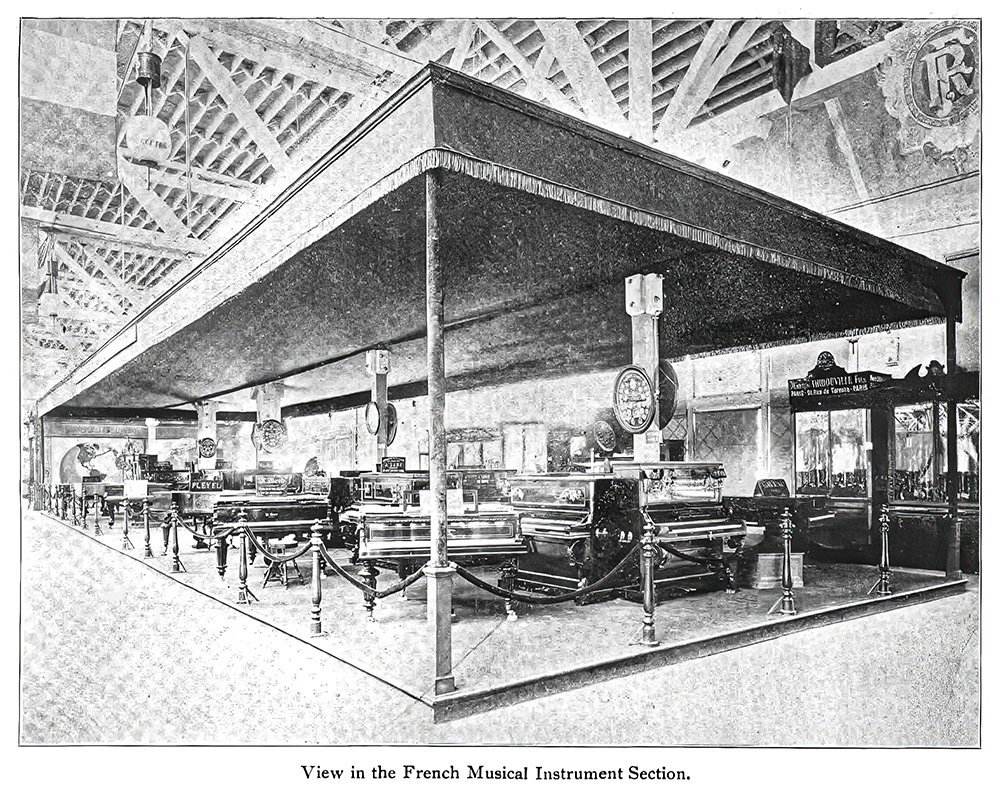
View of the French musical instruments section in the gallery of the Electricity Building, where M. V. Mustel exhibited his celesta. [Image from Musical Instruments at the World’s Columbian Exposition. Presto, 1895.]
From this introduction at the 1893 World’s Fair, the celesta grew into a musical instrument familiar to—though not always identifiable by—the public, in compositions ranging from Gustav Holst’s The Planets to “Won’t You Be My Neighbor” from Mr. Rodgers’ Neighborhood to John Williams’ “Hedwig’s Theme” for the Harry Potter movies.

Nutcracker on the march
Popularity of the Nutcracker Suite also grew. Soon after the Chicago premiere, audiences in other cities had opportunities to hear the new work. Theodore Thomas brought his Chicago Orchestra to Ann Arbor, Michigan, on November 21, 1892, and performed the piece along with most of program from his October 22 concert in Chicago. They performed the piece again for a New Year’s Eve concert in Cleveland.
Tchaikovsky’s confection soon spread to other musical groups as well. Anton Seidl conducted an abridged Nutcracker Suite for his Metropolitan Orchestra, beginning with a concert at the Lenox Lyceum in New York on November 6, 1892, and then throughout an East Coast tour that took the orchestra to Buffalo, Ottawa, Montreal, Philadelphia, Portland and other cities well into the spring of 1893. Seidl’s concert suite included only six pieces of what he titled Ballet of Nutcracker Automatons, omitting the “Dance of the Sugar-Plum Fairy” and the “Arabian Dance.” Conductor Walter Damrosch also used this abridged six-part Nutcracker Suite when the Symphony Orchestra of New York performed in concerts in late November and early December. The Musical Yearbook of the United States 1892–93 records that Tchaikovsky’s Casse Noisette suite was performed a total sixteen times during the concert season, presumably by these various orchestras.
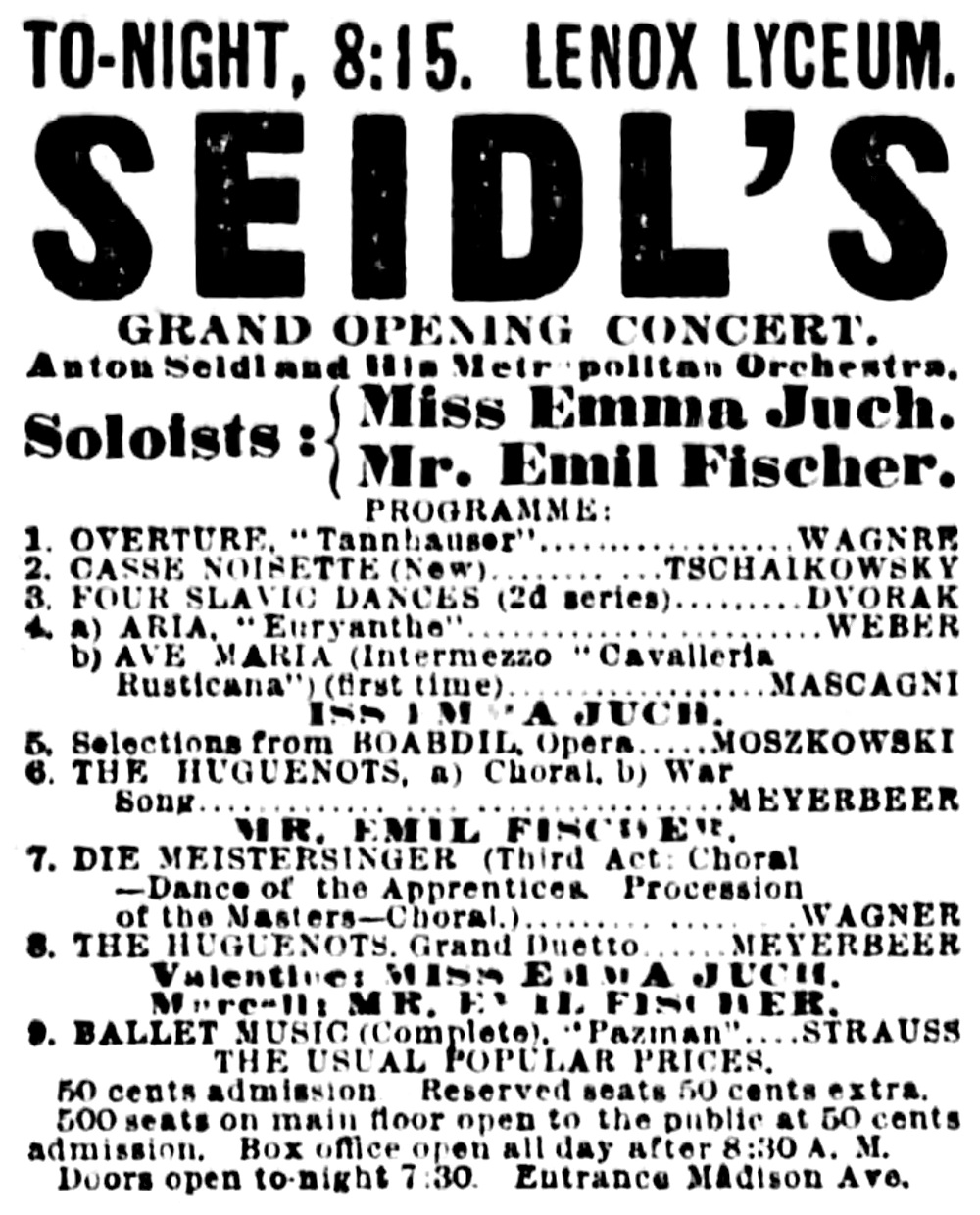
An advertisement for Anton Seidl’s Metropolitan Orchestra concert on November 6, 1892. The program included the “new” Casse-Noisette Suite. [Image from New York Herald Nov. 6, 1892.]
There is something inimitable about these miniature pictures. If one of the old composers, Beethoven or Hayden, could listen to them, they would throw up their hands in amazement, so subtle are the effects of orchestration and so different from the results obtained by the early composers, who were masters where grace and simplicity were concerned.
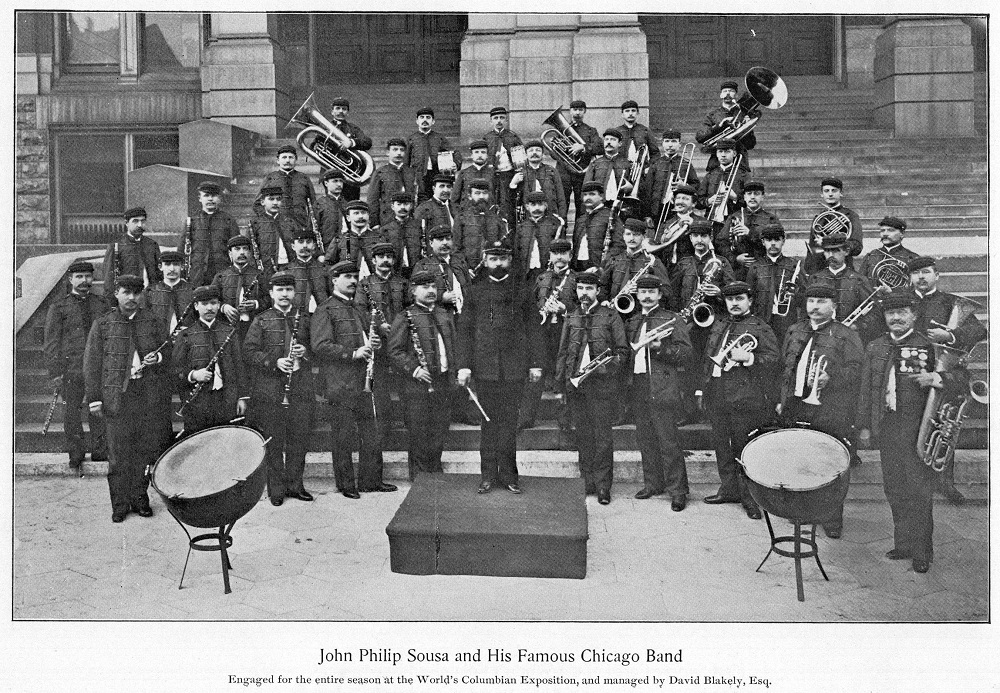
John Philip Sousa and his famous “Chicago Band” (as they were briefly known) were in residence at the 1893 World’s Fair for only five weeks, not the entire six-month season. While at the Fair, the Sousa Band (as they came to be known) performed the Nutcracker Suite. [Image from Pictorial Album and History of the World’s Fair and Midway. Harry T. Smith & Co., 1893.]
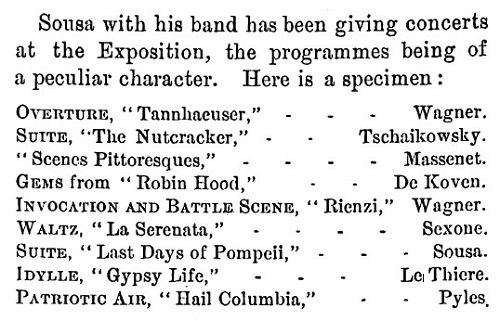
Concerts performed by the Sousa Band at the 1893 World’s Fair had the Nutcracker Suite included on what an East-coast music magazine described as programs “of a peculiar character.” No concert date for this “specimen” repertoire was given. [Image from Freund’s Weekly Jun. 3, 1893.]

“I know how much you have done for me”
Pyotr Ilyich Tchaikovsky died in Saint Petersburg on the morning of November 6 [Old Style October 25], 1893. The composer had no greater champion in the United States than Theodore Thomas, who had conducted the world premiere of his Piano Concerto No. 2 at a Philharmonic Society concert in New York on November 12, 1881, and the American premiere of his Symphony No. 5 at the Chickering Hall in New York on March 5, 1889. For the inaugural concert of his new Chicago Orchestra on October 16, 1891, Thomas chose Tchaikovsky’s Concerto No. 1 for Pianoforte and Orchestra.
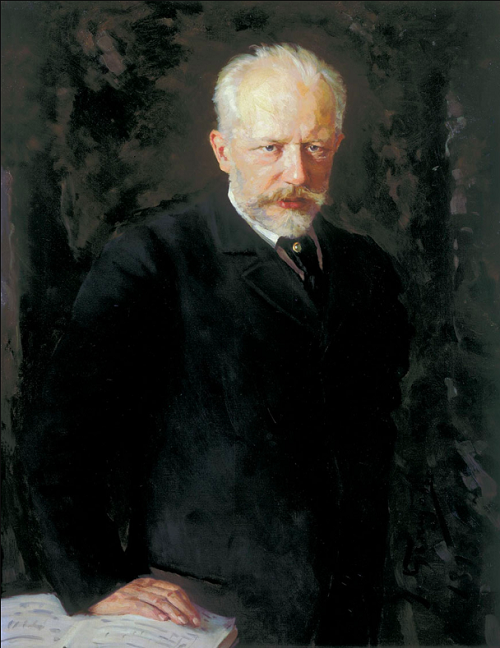
An 1893 oil-on-canvas portrait of Pyotr Ilyich Tchaikovsky by Nikolai Dmitriyevich Kuznetsov. [Image from the Tretyakov Gallery, Moscow]
In addition to the Nutcracker Suite, Thomas programmed more than two dozen other Tchaikovsky works for the Exposition Orchestra concerts of 1893. The composer also contributed a small to a musical gift to support the Children’s Building at the Fair (see “Tchaikovsky’s Tribute to Children for the 1893 World’s Fair”). Thought not present at the World’s Fair, the Russian composer was well represented.

“Nobody performs it nowadays”
“For a lot of people, Tchaikovsky is The Nutcracker, but not the ballet in full, only the suite from it,” choreographer George Balanchine told musicologist Solomon Volkov. This was certainly true for Americans from the time of the 1893 World’s Fair until the middle of the twentieth century. After the Chicago Orchestra’s inaugural performance of the suite in October 1892, the Evening Journal promised that the piece was “sure to become very popular.” It sure did. Perhaps a faint echo of the American premiere can be heard on a recording made on November 28, 1939, when the Chicago Symphony Orchestra (renamed in 1913) conducted by Frederick Stock performed the Nutcracker Suite in Orchestra Hall. Originally released on the Columbia label, the recording remains available on compact disc.
The following year, a delicious sampler from Walt Disney changed the course of Nutcracker history. The second segment of Disney’s Fantasia (1940) features selections of the Nutcracker Suite (omitting the “Overture” and “March”) and, importantly, uses the songs as a score for a set of ballet scenes—though danced by animated fairies, mushrooms, blossoms, fish, and thistles rather than humans. Still, this was the first wide exposure of the Nutcracker ballet to an American audience. Introducing the segment, narrator Deems Taylor states:
You know it’s funny how wrong an artist can be about his own work. Now the one composition of Tchaikovsky’s that he really detested was his Nutcracker Suite, which is probably the most popular thing he ever wrote. It’s a series of dances taken out of a full-length ballet called the Nutcracker and was once composed in the St. Petersburg Opera House. It wasn’t that much of a success, and nobody performs it nowadays, but I’m pretty sure you’ll recognize the music of the suite when you hear it.
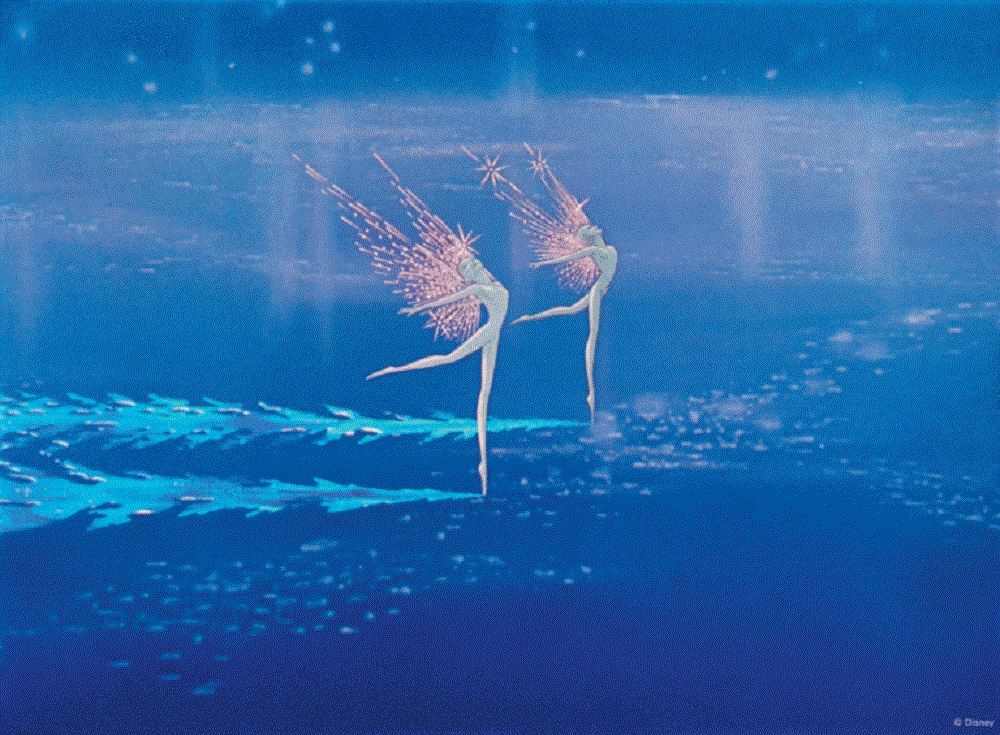
Disney’s Fantasia (1940) visually interpreted the popular Nutcracker Suite and anticipated the ballet that soon would conquer America. Dance Magazine praised the film sequence for “the perfection of its dancing.”
While the Nutcracker Suite had by 1940 become a staple of the orchestral repertoire, the full ballet went unperformed in the United States until a 1944 production by the San Francisco Ballet. Ten years later, George Balachine launched his formative Nutcracker with the New York City Ballet, which has performed it annually ever since. In the decades to follow, the Nutcracker phenomenon snowballed until the Russian immigrant became one of America’s most cherished holiday traditions. To correct Mr. Taylor’s Fantasia speech: Everybody performs it nowadays! Coming full circle is Christopher Wheeldon’s Nutcracker for the Joffrey Ballet of Chicago, featuring a delightful new story by Brian Selznick set at the 1893 World’s Fair.
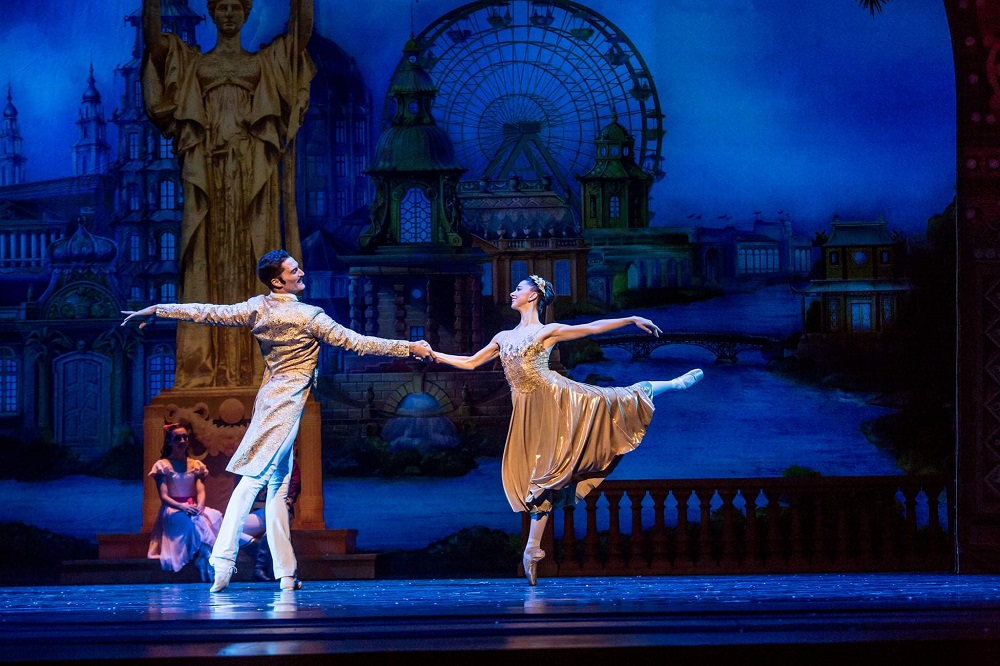
The Joffrey Ballet’s Nutcracker is set in Chicago in December 1892 and in the Dream City of the 1893 World’s Fair, where the Great Impresario and the Queen of the Fair perform a pas de deux. [Image from the Joffrey Ballet https://joffrey.org/.]
SOURCES
“Chicago Orchestra Concert” Chicago Inter Ocean Oct. 16, 1892, p. 20.
“The Chicago Orchestra’s Concert” Chicago News Record Oct. 24, 1892, p. 3.
“Concert of a New Organ” St. Louis Republic Sep. 20, 1904, p. 5.
Fantasia. DVD, Walt Disney Home Entertainment, 2010.
Fisher, Jennifer Nutcracker Nation: How an Old World Ballet Became a Christmas Tradition in the New World. Yale University Press, 2003.
“For the Lovers of Music” Chicago Daily News Oct. 22, 1892, p. 2.
“Foreign Notes” Boston Evening Transcript Jan. 30, 1892, p. 7.
Johnson, Rossiter A History of the World’s Columbian Exposition Held in Chicago in 1893, Volume 1: Narrative. D. Appleton and Co., 1897.
“Leader Sousa …” Indianapolis Journal Jul 2, 1893, p. 12.
Letter from Tchaikovsky to Thomas, May 17, 1892; translated from German to English by Brett Langston. Newberry Library, Theodore Thomas papers, Box 2, Folder 131.
“Music and Musicians” Chicago Evening Journal Oct. 22, 1892, p. 12.
“Music and Musicians: Chicago Orchestra Concert” Chicago Inter Ocean Oct. 23, 1892, p. 20.
“Music at the Fair” Chicago Tribune Aug. 3, 1893, p. 4.
“Music at the Fair” Chicago Tribune Aug. 25, 1893, p. 4.
“Music for Today” Chicago Inter Ocean May 10, 1893, p. 7.
“Music Hath Charms” Chicago Tribune Oct. 23, 1892, p. 5.
“Musical Mélange” Chicago Inter Ocean Feb. 14, 1892, p. 20.
“Musical Notes” Figaro Oct. 27, 1892, pp. 145–46.
“Musical World” Lewiston (ME) Sun Journal Jan. 26, p. 5.
Musical Yearbook of the United States 1892–93. Vol. X George H. Wilson and Calvin B. Cady, Eds.
“Notes on Music” Chicago News Record Oct. 22, 1892, p. 4.
“The Nutcracker (suite)” https://en.tchaikovsky-research.net/pages/The_Nutcracker_(suite)
Otis, Philo Adams The Chicago Symphony Orchestra. Clayton F. Summy, 1924.
“Received an Ovation” Detroit Free Press May 11, 1893, p. 5.
“Russians at the Fair” Chicago Record Aug. 4, 1893, p. 3.
Schabas, Ezra Theodore Thomas: America’s Conductor and Builder of Orchestras, 1835–1905. University of Illinois Press, 1989.
Leslie, Amy “Shows Music a Science” Chicago Daily News Apr. 15, 1893, p. 4.
“Thomas’ Second Season” Chicago Times Oct. 23, 1892, p. 3.
Thomas, Theodore Theodore Thomas, a Musical Autobiography. A.C. McClurg, 1905.
Volkov, Solomon Balanchine’s Tchaikovsky: Interviews with George Balanchine. Simon and Schuster, 1985.
Wiley, Roland John “On Meaning in ‘Nutcracker’” Dance Research: The Journal of the Society for Dance Research Autumn 1984, Vol. 3, No. 1, pp. 3–28.
Wiley, Roland John Tchaikovsky. Oxford University Press, 2009.
Wiley, Roland John Tchaikovsky’s Ballets: Swan Lake, Sleeping Beauty, Nutcracker. Clarendon Press, 1991.
World’s Columbian Exposition, Bureau of Music, Official Report. 1892–1895. Special Collections, Chicago Public Library.




Leave A Comment