

Buildings from the 1893 World’s Fair have been reconstructed in Jackson Park. Sort of.
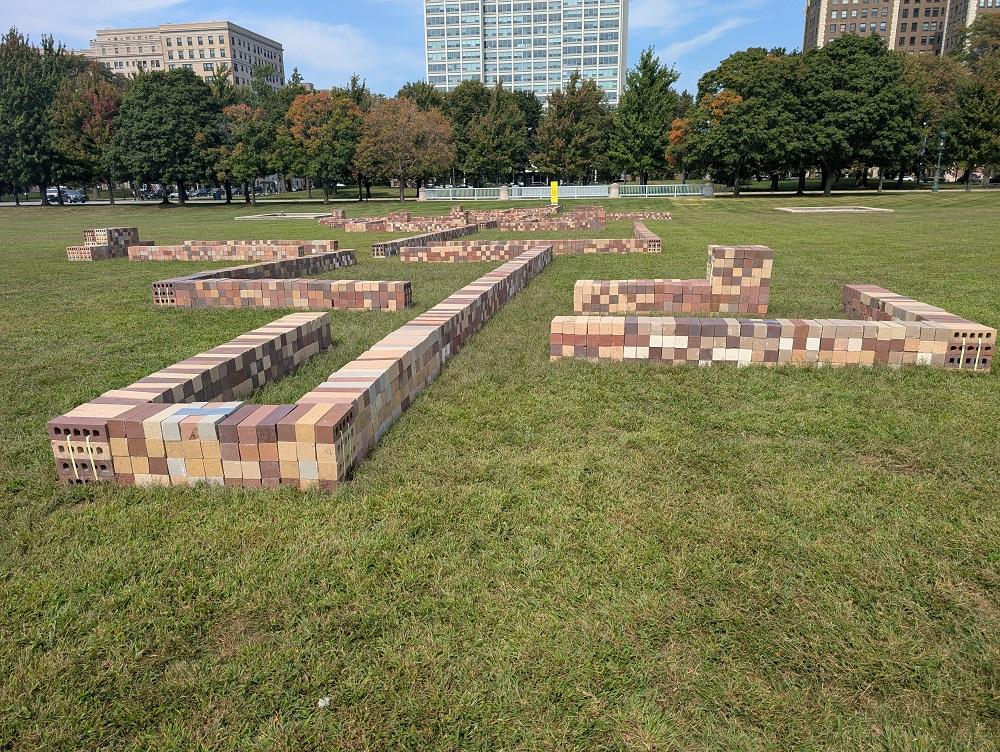
A view of “Traces” looking north from the Griffin Museum of Science and Industry, a campus once home to the State Buildings of the 1893 World’s Fair.
For the past decade, the Chicago Architectural Biennial (CAB) has brought many fascinating, provocative, and engaging installations by architects, artists, and designers to sites around the city. This year’s show, SHIFT: Architecture in Times of Radical Change, aims to be “an invitation to think with others and to set new grounds for the interpretation and design of our built environments.” One work in this, the sixth CAB, conjures a hint of architecture of the 1893 World’s Columbian Exposition on land that once housed it.
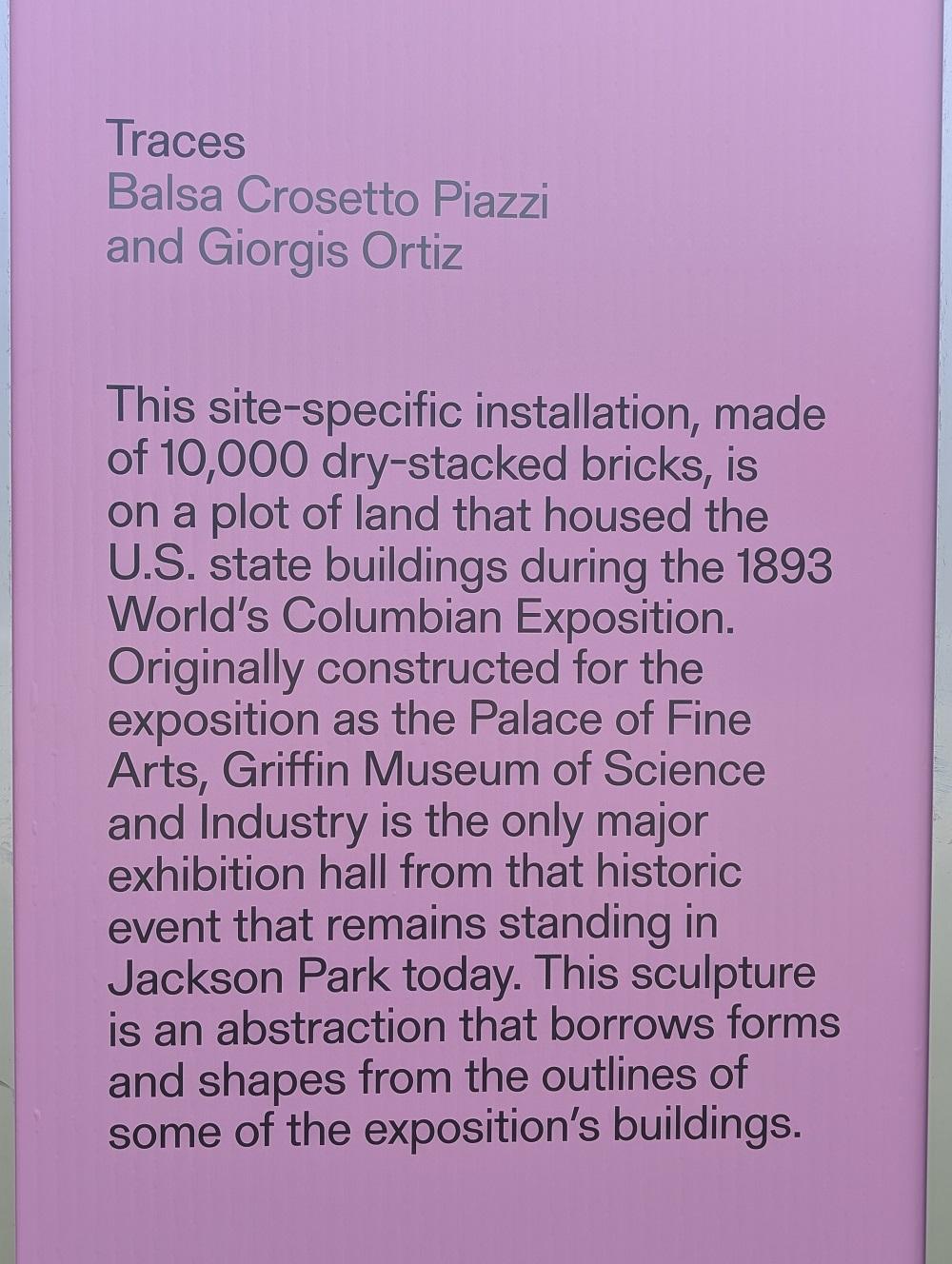
“TRACES” by Balsa Crosetto Piazzi and Giorgis Ortiz sits on the lawn north of the Griffin Museum of Science and Industry. Low walls of stacked bricks form outlines meant to represent fifteen of the great palaces and smaller exhibit halls of the 1893 World’s Fair. A description from the CAB explains:
“On the grounds of Jackson Park, site of the 1893 Chicago World’s Fair, TRACES is a site-specific installation of 10,000 dry-stacked bricks tracing the footprint of the Fair’s temporary Great Buildings. The work invites reflection on the Fair’s ambition and theatrical design, creating spaces without walls and mass without permanence. After the Biennial, the bricks will be reused, leaving no waste—only the memory of the experience.”
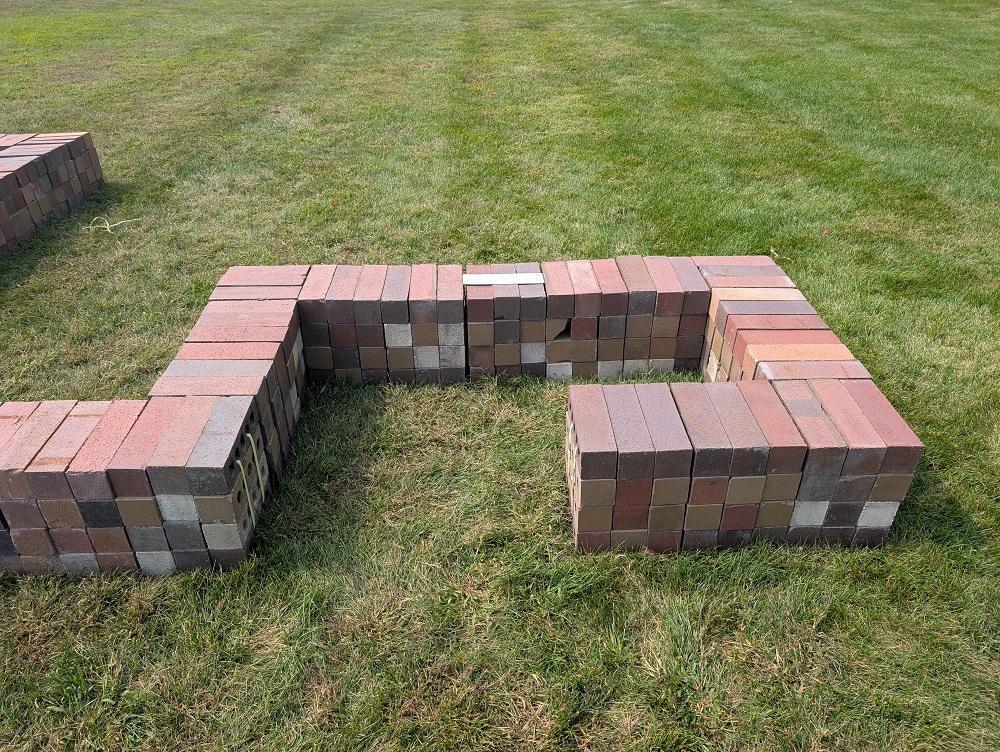
A representation of Henry Ives Cobb’s Fisheries Building from the Columbian Exposition.
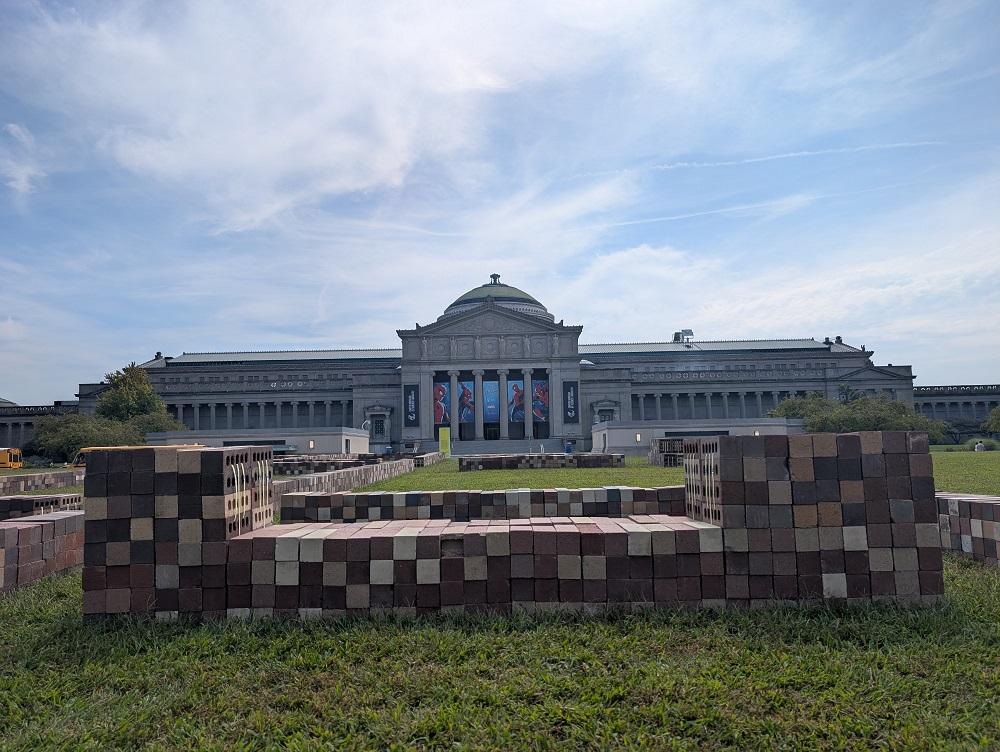
“Traces” represents the 1893 Palace of Fine Arts in brick in front of the (almost) original building.
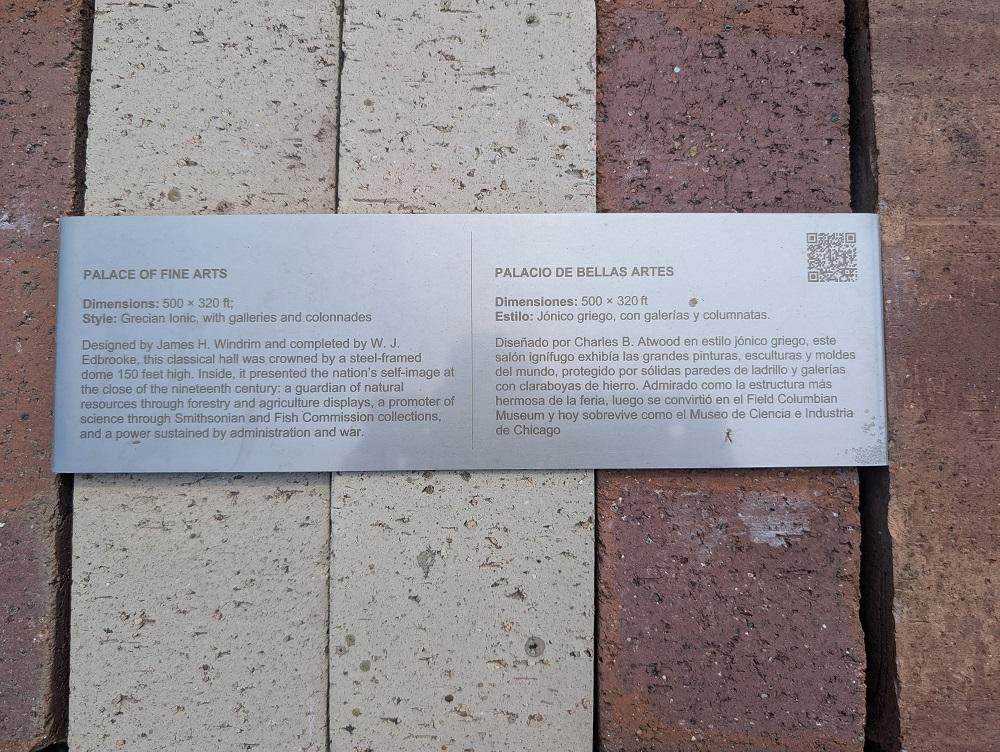
This descriptive sign for the Palace of Fine Arts has (English) text for a different 1893 structure, the U.S Government Building.
An observer would be hard pressed to detect much of a resemblance of the shapes created by the brick walls to any of the original white palaces, save perhaps the Palace of Fine Arts with its distinctive east and west wings. The brick patterns are arranged along a single line rather than in a depiction of their original layout on the fairgrounds. Small signs identify the original structure that inspired each brick outline, but several descriptions include perplexing statements and careless mistakes.
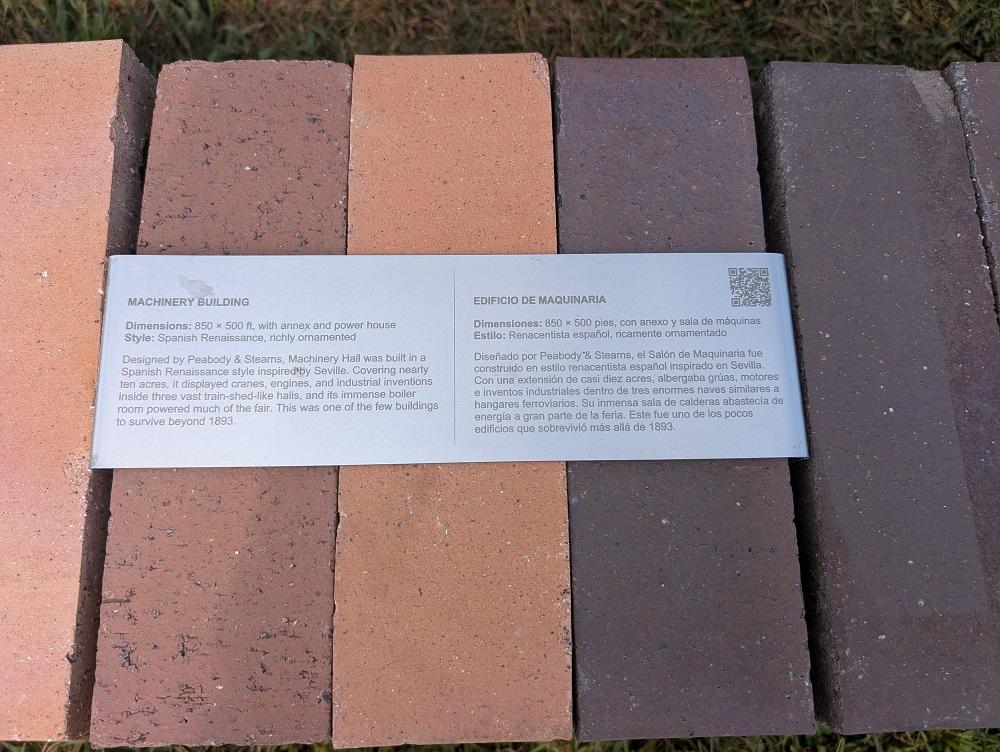
This descriptive sign for the Machinery Building indicates that it survived “beyond 1893” while other structures (see image below) “were dismantled or destroyed within a year.” Machinery Hall succumbed to the same fire on July 5, 1894, that also razed Terminal Station, the Administration Building, Mines and Mining Building, Electrical Building, Manufactures and Liberal Arts Building, and Agricultural Building.
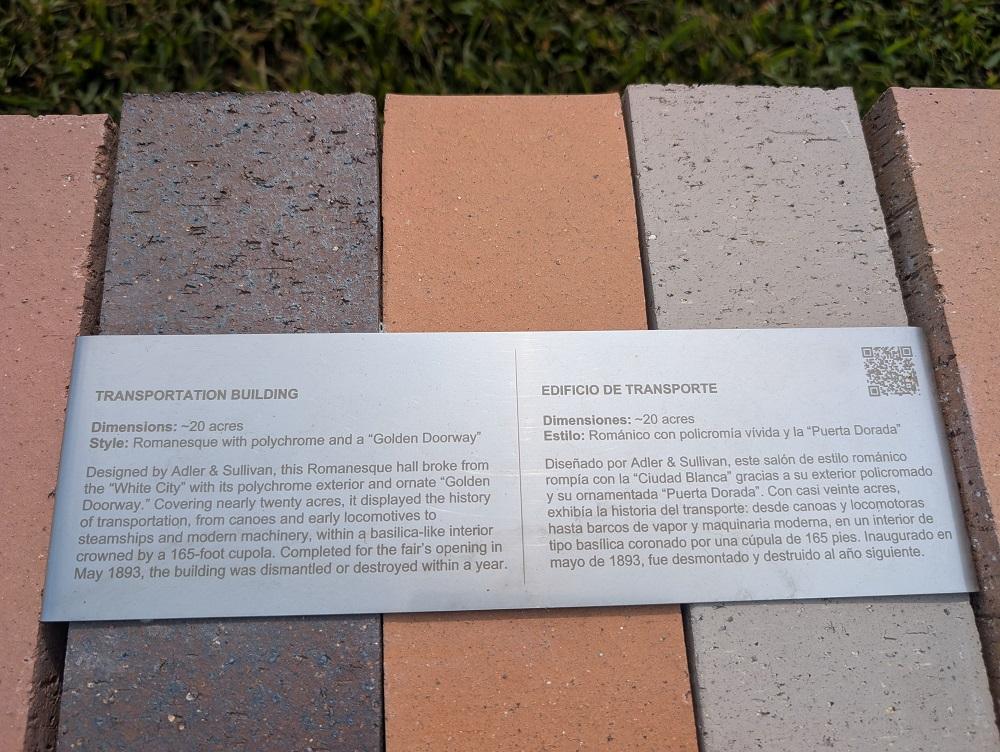
Beautiful multi-color bricks evoke the polychromatic Transportation Building of 1893.
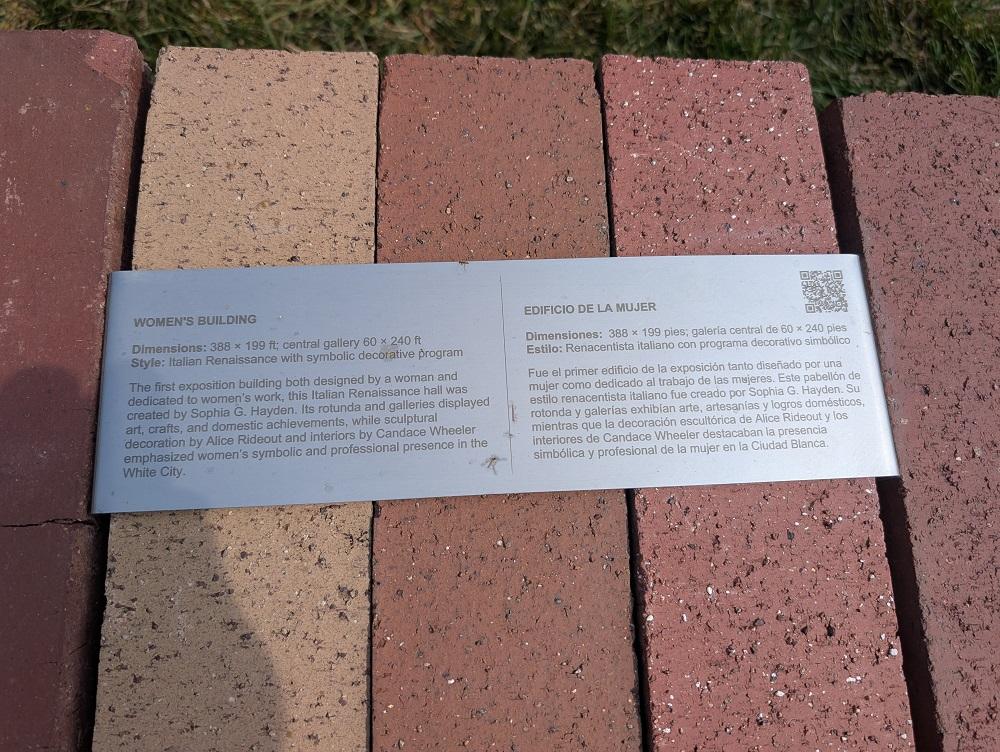
The building designed by Sophia Hayden and used by the Board of Lady Managers was called the Woman’s (not “Women’s”) Building.
With an active imagination, a viewer might see ghosts of the Pennsylvania, New York, Delaware, Maryland, West Virginia, and Joint Territories buildings in the surrounding lawn. A beautiful view of Charles Atwood’s Palace of Fine Arts provides an inspiring backdrop to an otherwise prosaic path of bricks.
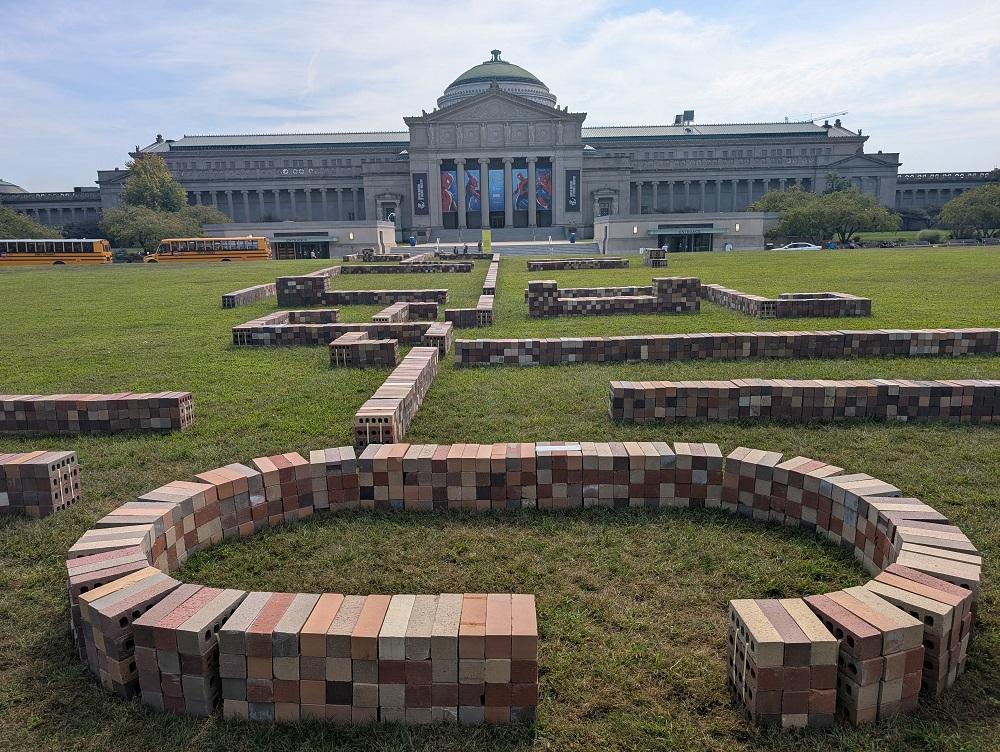
The oval of the Live Stock Pavilion stands out along the strip of rectangular shapes.
The Chicago Architectural Biennial runs from September 19, 2025, through February 28, 2026.





Leave A Comment