
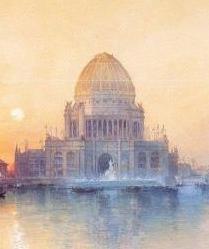
The inaugural issue of Jewell N. Halligan’s monthly periodical The Illustrated World’s Fair listed Robert Ingersoll as a contributor. Known as “the Great Agnostic” and dubbed “Pope Bob” by the Chicago press, Robert G. Ingersoll (1833–1899) was a famous lawyer and one of the foremost freethinkers of the era.
“The editor of this journal has been personally promised an article from the pen of Colonel Robert G. Ingersoll,” wrote John McGovern in the October 1891 issue of Illustrated World’s Fair. “The great poet of our Republic has said emphatically that he ‘must do it right’—that is, the article on Columbus, on the Exposition, on the results of the event of 1893, must he Ingersoll’s, in warp and woof.” When Col. Ingersoll visited Chicago that month, a reporter from the Chicago Tribune asked him if he had any thoughts about the upcoming World’s Fair. Ingersoll replied:
“I believe it will be not only worthy of Chicago but of the United States. It will be in all probability the greatest fair that has ever been held, and I believe it will do an immensity of good in countless ways …”
Mr. Ingersoll’s essay about the Columbian Exposition appeared in the December 1891 issue of Illustrated World’s Fair. [As always, this reprint expresses the views solely of the author.]
EFFECT OF THE WORLD’S FAIR ON THE HUMAN RACE
The Great Fair should be for the intellectual, mechanical, artistic, political and social advancement of the world. Nations, like small communities, are in danger of becoming provincial, and must become so, unless they exchange commodities, theories, thoughts, and ideals. Isolation is the soil of ignorance, and ignorance is the soil of egotism; and nations, like individuals who live apart, mistake provincialism for perfection, and hatred of all other nations for patriotism. With most people, strangers are not only enemies, but inferiors. They imagine that they are progressive because they know little of others, and compare their present, not with the present of other nations, but with their own past.
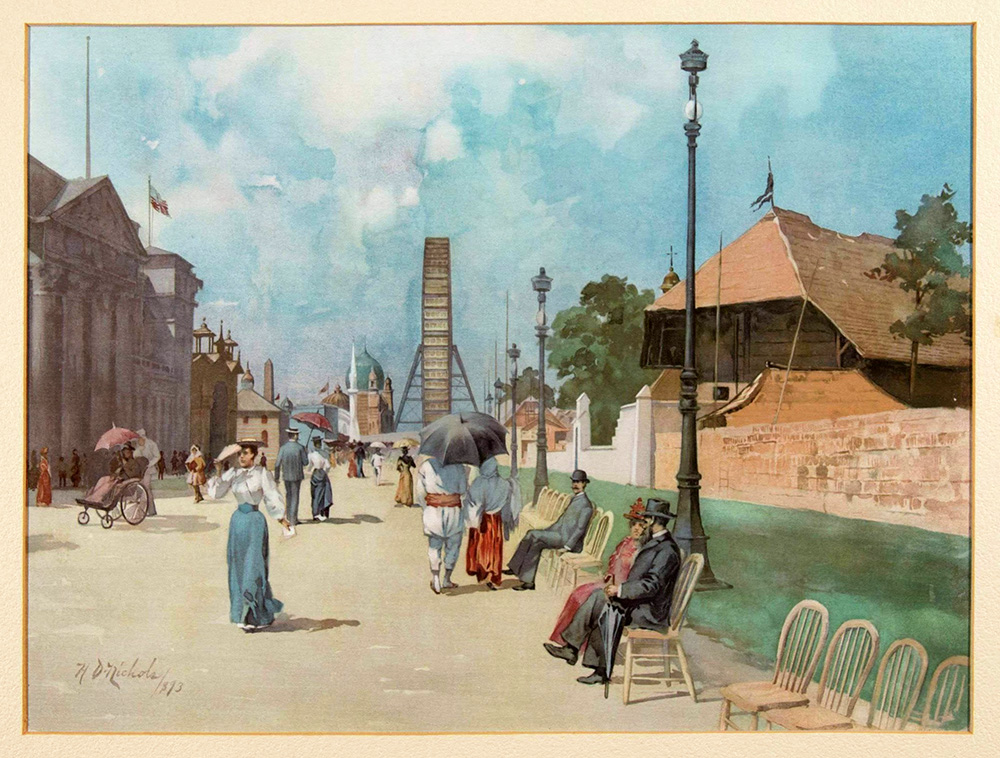
Nowhere more than the Midway Plaisance [https://worldsfairchicago1893.com/tag/midway-plaisance/] did people of different complexion, religion, language, and dress encountered each other at the 1893 World’s Fair. This watercolor by Harley DeWitt Nichols depicts a scene on the east end of the Midway. [Image from Bancroft, Hubert Howe The Book of the Fair. The Bancroft Company, 1893.]
Countless agencies have been at work for many years destroying the hedges of thorn that have so long divided nations, and we at last are beginning to see that other people do not differ from us, except in the same particulars that we differ from them. At last, nations are becoming acquainted with each other, and they now know that people everywhere are substantially the same. We now know that while nations differ outwardly in form and feature, somewhat in theory, philosophy and creed, still, inwardly—that is to say, so far as hopes and passions are concerned—they are much the same, having the same fears, experiencing the same joys and sorrows. So we are beginning to find that the virtues belong exclusively to no race, to no creed, and to no religion; that the humanities dwell in the hearts of men, whomever and whatever they may happen to worship. We have at last found that every creed is of necessity a provincialism, destined to be lost in the universal.
At last, Science extends an invitation to all nations, and places at their disposal its ships and its cars; and when these people meet—or rather, the representatives of these people—they will find that, in spite of the accidents of birth, they are, after all, about the same; that their sympathies, their ideas’ of right and wrong, of virtue and vice, of heroism and honor, are substantially alike. They will find that in every land honesty is honored, truth respected and admired, and that generosity and charity touch all hearts.
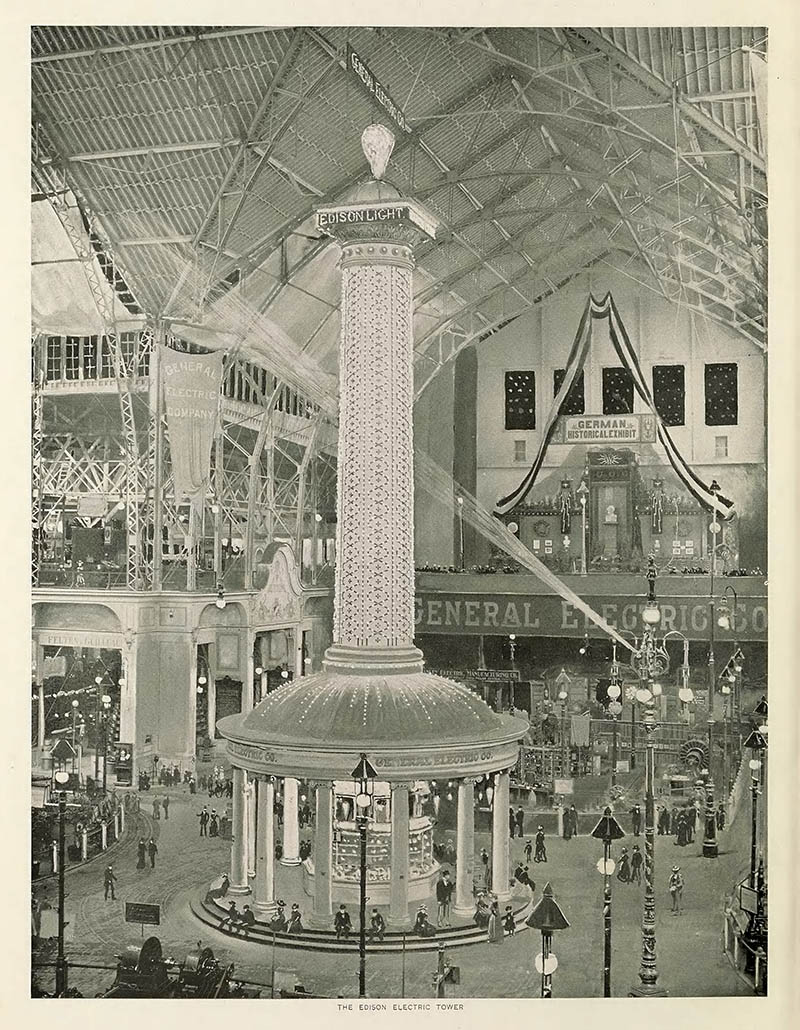
“The inventions of the world should be brought beneath one roof,” proposed Robert Ingersoll. They were brought under several roofs, but perhaps the most striking inventions—including the Edison Tower of Light—were displayed in the Electricity Building. [Image from Bancroft, Hubert Howe The Book of the Fair. The Bancroft Company, 1893.]
The history of the world demonstrates that man becomes what we call civilized by increasing his wants. As his necessities increase, he becomes industrious and energetic. If his heart does not keep pace with his brain, he is cruel, and the physically or mentally strong enslave the physically or mentally weak. At present these inventions, while they have greatly increased the countless articles needed by man, have to a certain extent enslaved mankind. In a savage state there are few failures. Almost any one succeeds in hunting and fishing. The wants are few, and easily supplied. As man becomes civilized, wants increase; or rather as wants increase, man becomes civilized. Then the struggle for existence becomes complex; failures increase.
The first result of the invention of machinery has been to increase the wealth of the few. The hope of the world is that through invention man can finally take such advantage of these forces of nature, of the weight of water, of the force of wind, of steam, of electricity, that they will do the work of the world; and it is the hope of the really civilized that these inventions will finally cease to be the property of the few, to the end that they may do the work of all for all.
When those who do the work own the machines, when those who toil control the invention, then, and not till then, can the world be civilized or free. When these forces shall do the bidding of the individual, when they become the property of the mechanic instead of the monopoly, when they belong to labor instead of what is called capital, when these great powers are as free to the individual laborer as the air and light are now free to all, then, and not until then, the individual will be restored and all forms of slavery will disappear.
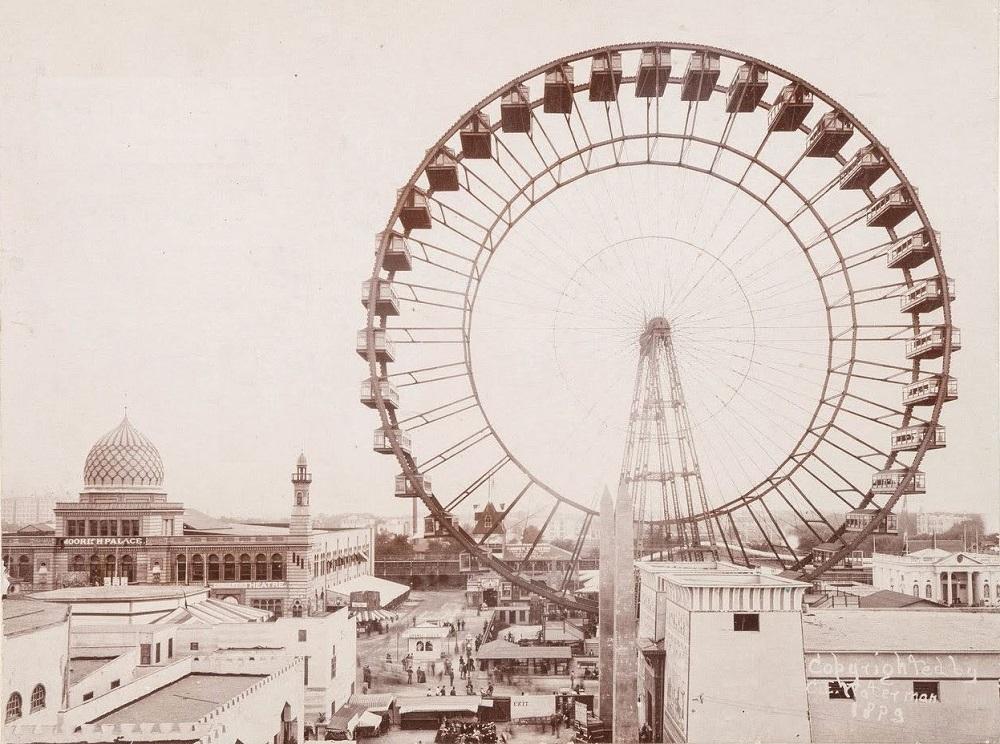
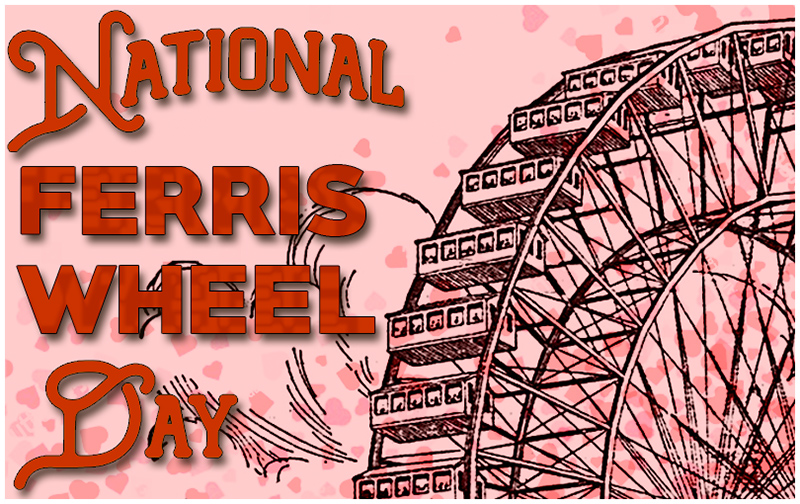
“We have given beauty of form to machines” such as the Ferris Wheel. [Image from Waterman cabinet card.]
The Great Republic has lived a greater poem than the brain and heart of man have as yet produced, and we have supplied material for artists and poets yet unborn; material for form and color and song. The Republic is to-day Art’s greatest market.
Nothing else is so well calculated to make friends of all nations as really to become acquainted with the best that each has produced. The nation that has produced a great poet, a great artist, a great statesman, a great thinker, takes its place on an equality with other nations of the world, and transfers to all of its citizens some of the genius of its most illustrious men.
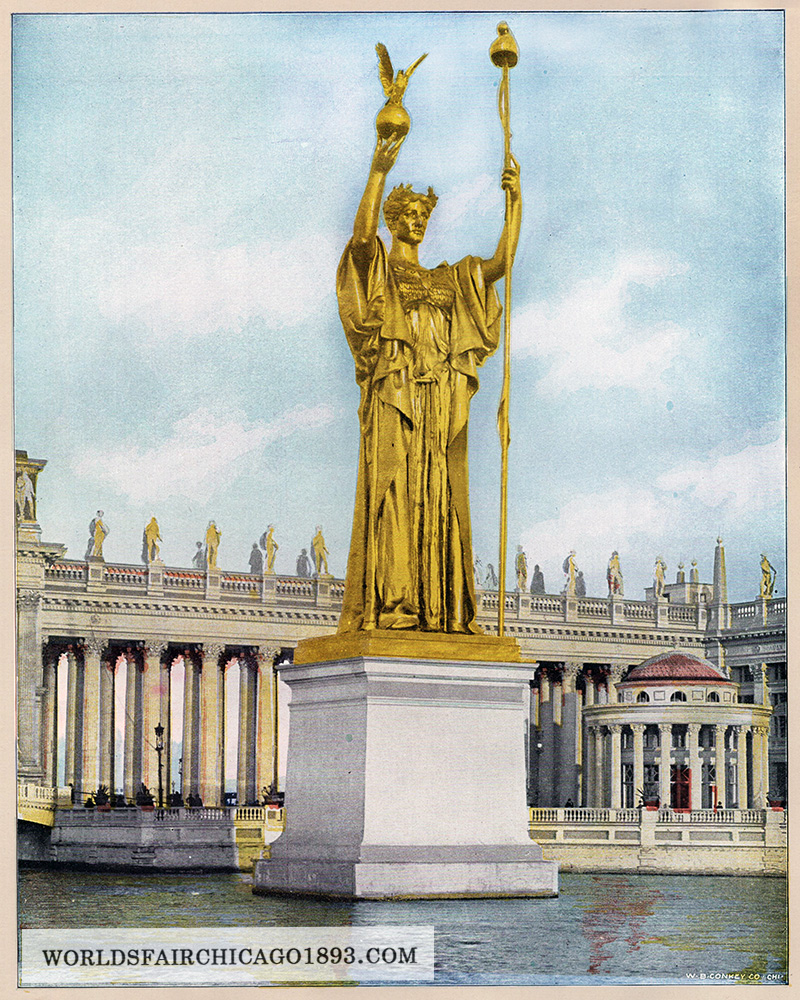
Chicago would welcome the world to “a land in which the pew is above the pulpit; where the people are superior to the state; where legislators are representatives and where authority means simply the duty to enforce the people’s will.” Daniel Chester French’s Statue of the Republic embodied the spirit of a democratic republic. [Image from Picturesque World’s Fair. W.B. Conkey, 1894.]
Let us hope above all things that this Fair will bind the nations together closer and stronger; and let us hope that this will result in the settlement of all national difficulties by arbitration instead of war. In a savage state, individuals settle their own difficulties by an appeal to force. After a time these individuals agree that their difficulties shall be settled by others. This is the first great step toward civilization. The result is the establishment of courts. Nations at present sustain to each other the same relation that savage does to savage. Each nation is left to decide for itself, and it generally decides according to its strength—not the strength of its side of the case, but the strength of its army. The consequence is that what is called “the Law of Nations” is a savage code. The world will never be civilized until there is an international court. Savages begin to be civilized when they submit their difficulties to their peers. Nations will become civilized when they submit their difficulties to a great court, the judgments of which can be carried out, all nations pledging the co-operation of their armies and their navies for that purpose. If the holding of the great Fair shall result in hastening the coming of that time it will be a blessing to the whole world.
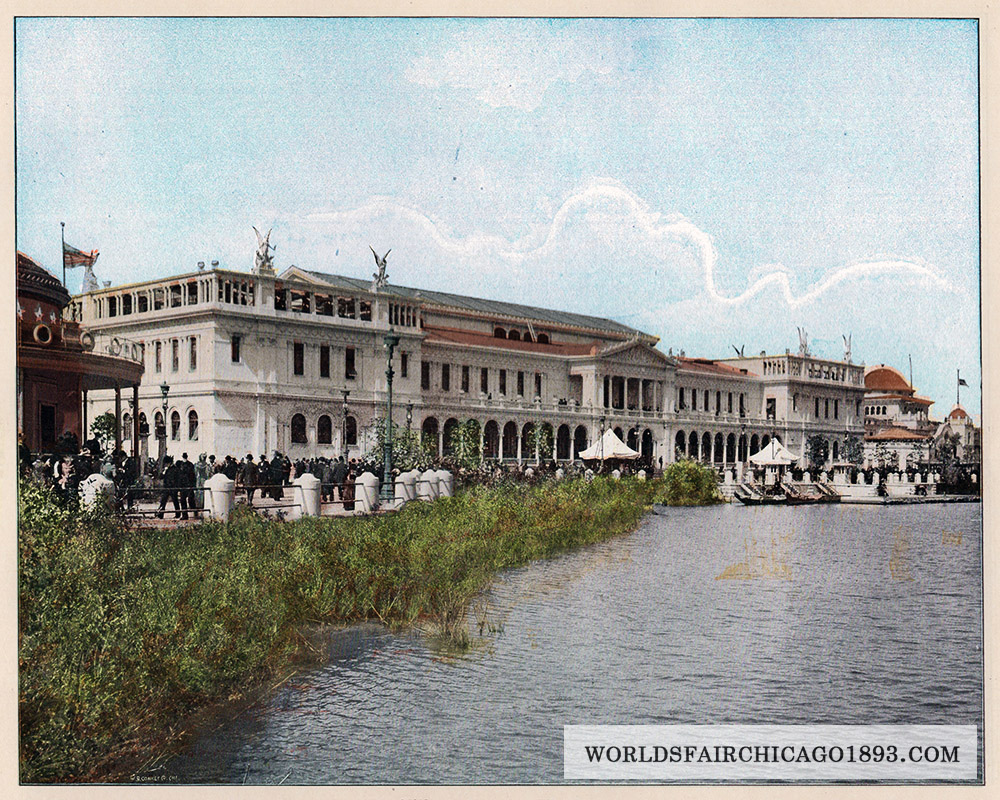
The Columbian Exposition “will represent the progressive spirit of the nineteenth century,” thought Ingersoll. The more prominent role for women at the Columbian Exposition sewed the seeds of the progressive era in the coming century. [Image from Picturesque World’s Fair. W.B. Conkey, 1894.]
SOURCES
Ingersoll, Robert G. “Effect of the World’s Fair on the Human Race” Illustrated World’s Fair Dec. 1891, p. 4.
“‘Pope Bob’ on Theology” Chicago Tribune Oct. 27, 1891, pp. 1–2.


Leave A Comment