
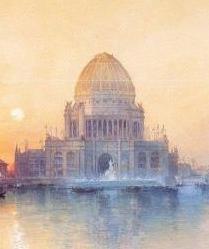
RECENT POSTS ABOUT THE HISTORY OF THE COLUMBIAN EXPOSITION’S BUILDING, FAIRGROUNDS, EXHIBITS, EVENTS, AND PEOPLE.
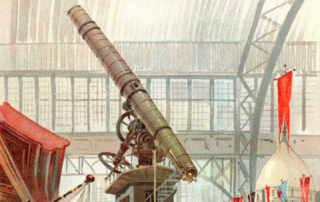
The Yerkes Telescope, Great Revealer of the Solar System
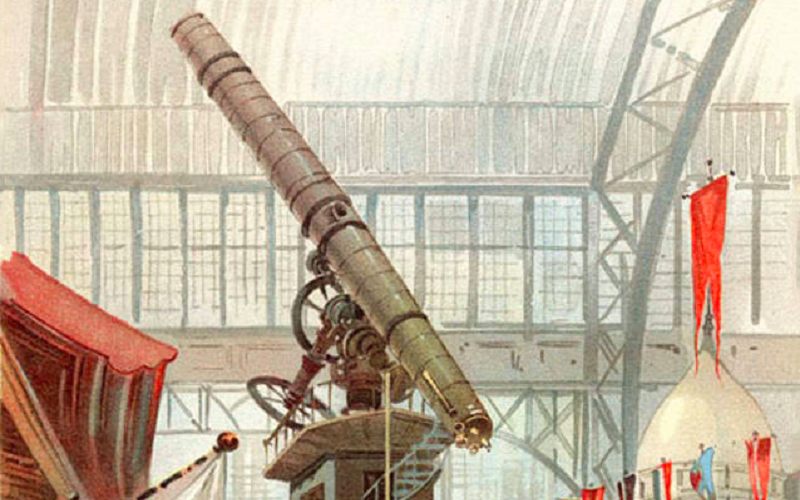
Among the many enormous and record-breaking displays at the 1893 World’s Columbian Exposition, none were astronomical as the Yerkes Telescope. The historic telescope has been on view to the public, and in service to scientists, for the past 120 years while housed in the Yerkes Observatory in Williams Bay, Wisconsin, a beautiful building designed by World’s Fair architect Henry Ives Cobb. The observatory and treasured telescope face an uncertain future as the University of Chicago ceases operations of the facility in October 2018. A painting of the Yerkes Telescope by Charles Graham. This description of the Yerkes [...]
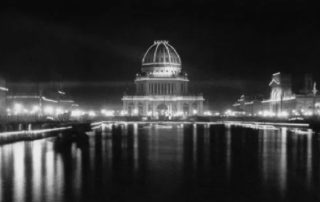
Company Vacation to the 1893 World’s Fair
The Wellington Machine Company of Wellington, Ohio, was a foundry for the manufacturing of brick-making machines. An image of the works can be seen in an 1890 engraving here. The article below from the August 16, 1893, issue of Clay Record (an industry semi-monthly) reports on the company’s generous gift to its employees: an all-expense-paid vacation to the World’s Columbian Exposition in Chicago. NICE TRIP TO THE WORLD’S FAIR. Last week the Wellington Machine company, Wellington, O., gave its employee a week’s trip to the World’s Fair, paying all expenses. The enterprising proprietors, Messrs. Bennett and McDermott, after having [...]
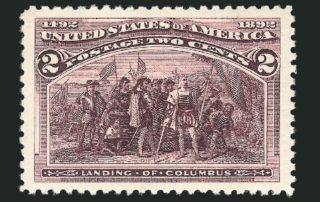
1893 World’s Fair Commemorative Postage Stamps and the (Alleged) Death of Stamp Collecting
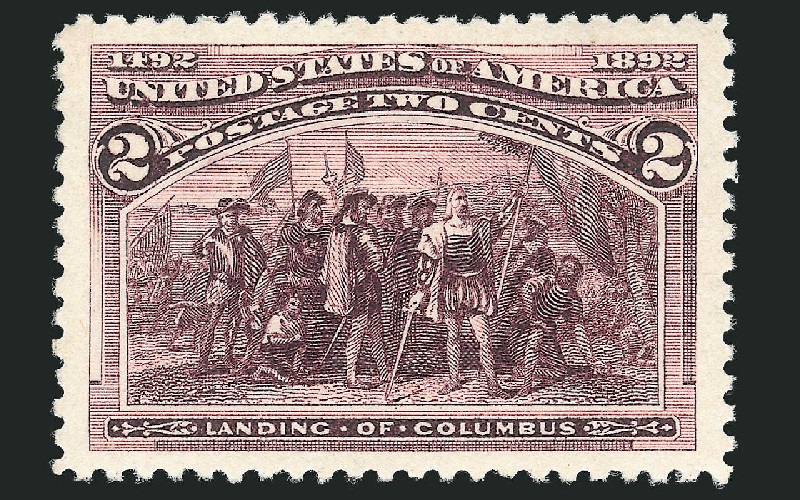
"The report of my death was an exaggeration.” -- Mark Twain (June 2, 1897) In his July 23, 2018, “U.S. Stamp Notes” column at Linn’s Stamp News, John M. Hotchner describes the birth of World’s Fair philately at the 1893 World’s Columbian Exposition. His article “World’s fair philately: 19th and early 20th centuries” explains how the set of 16 commemorative postage stamps, which at the time cost $16.34 (roughly $444 in 2018 dollars) “caused the philatelic press of the time to suggest that the Columbian issue would cause the death of stamp collecting.” Luckily for philatelists, it did not. [...]
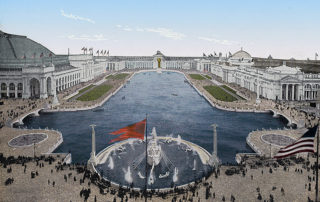
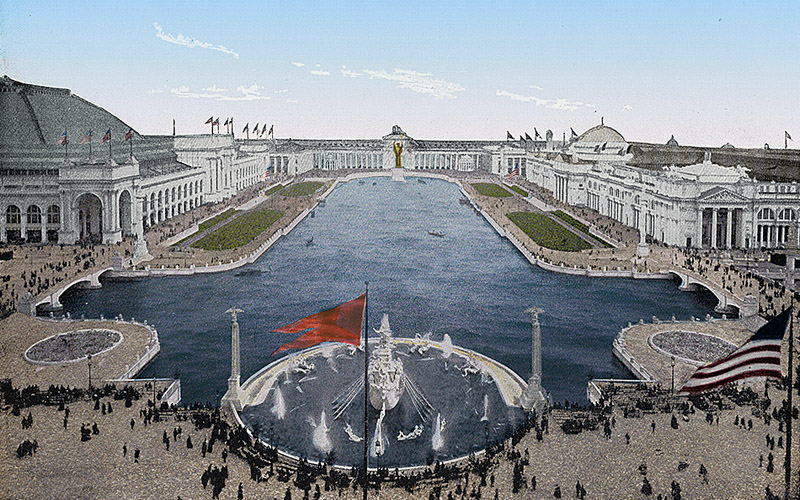
PICTURESQUE WORLD’S FAIR – The Grand Basin from the Administration Gallery (p. 62)
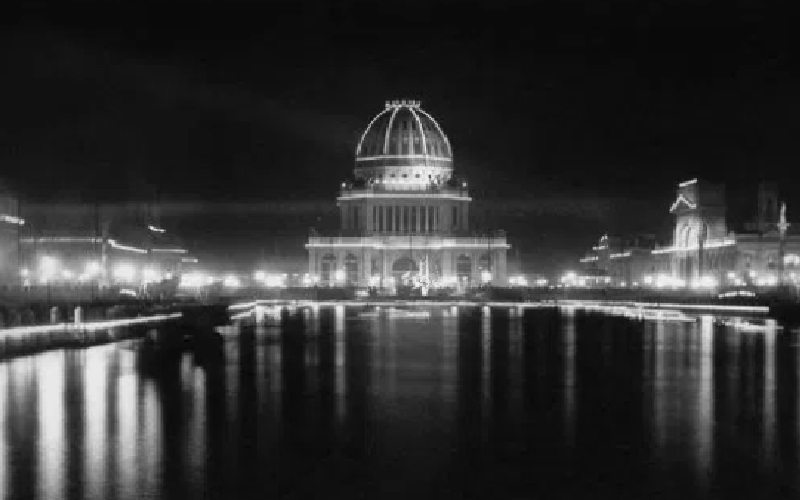
PICTURESQUE WORLD’S FAIR. AN ELABORATE COLLECTION OF COLORED VIEWS Page 62 – THE GRAND BASIN FROM THE ADMINISTRATION GALLERY THE GRAND BASIN FROM THE ADMINISTRATION GALLERY.—Very striking was the effect produced by the body of water known as the Grand Basin, forming a symmetrical marble-framed lake in the center of the Court of Honor. Here, during the day, were reflected the hosts of white fronts uprearing on every side; here, at night, were flashed back the blaze of light from all directions, and here the launches and gondolas flitted about by scores, carrying the hosts of people who chose [...]
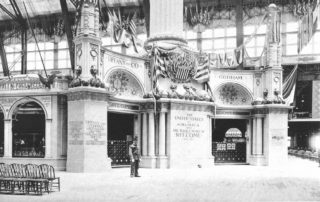
Sept. 8, 2018-Aug. 11, 2019: “Treasures from the White City: The Chicago World’s Fair of 1893” at the Driehaus Museum (Chicago)
The Richard H. Driehaus Museum presents Treasures from the White City: Chicago World’s Fair of 1893, displaying original objects and memorabilia designed for and exhibited at the fair on the occasion of its 125th anniversary. The objects are drawn from the Museum’s permanent collection, as well as the Richard H. Driehaus private collection, and are exhibited in two galleries in the Nickerson Mansion, the building that now houses the Museum, which not only stood during the World’s Fair in 1893 but also hosted a large reception to celebrate the event. Treasures from the White City is divided into three [...]
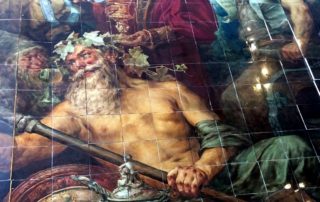
Germany’s “Glory of Germania” Tile Painting in the Manufactures and Liberal Arts Building
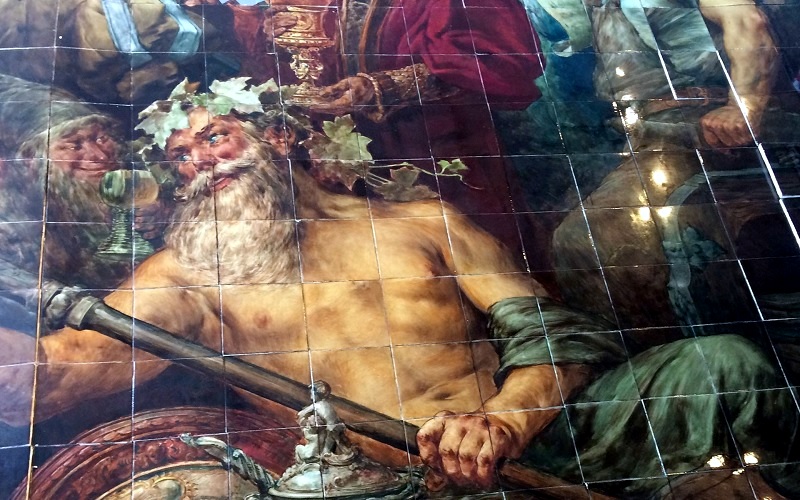
Within the enormous Manufactures and Liberal Arts Building on the fairgrounds of the 1893 World’s Columbian Exposition stood the imposing German Pavilion. Along with the other world powers of the era—Great Britain, France, and the United States—Germany displayed her national output in a prominent location around the central clock tower along the middle stretch of Columbia Avenue. Floorplan of the Manufactures and Liberal Arts Building [Image from Diagrams of World's Fair Buildings. Rand McNally, 1893.] Occupying a section on the northwest corner stood the massive Renaissance-style structures and magnificent displays of Germany. “No single section has such a [...]
July-September, 2018: “Glory of Germania” on Display at DANK Haus in Chicago
A German ceramic tile tableau exhibited at the 1893 World’s Fair is back on display for a limited time at the DANK Haus German American Cultural Center in Chicago. The Glory of Germania is an 18-by-12-foot tableau constructed of 1,057 individual tiles displayed with the German exhibit inside the Manufactures and Liberal Arts Building at the 1893 World’s Columbian Exposition. (See our full post here.) After 93 years on display in the Germania Club of Chicago and another 32 years in boxed storage, the tiles were reassembled by the DANK Haus Museum & Collections staff in the summer of [...]

July 2018 Trivia Question
Our monthly newsletter includes a “Palmer Puzzler” exclusive to those who subscribe. (You can sign up here.) The first person to send us the correct answer wins a small prize. The July 2018 Trivia Question Which of the following Liberty Bells was NOT on display at the 1893 World's Fair? A. the original Liberty Bell from Philadelphia. B. a "New Liberty Bell" cast in honor of the Fair. C. a Liberty Bell made out of oranges and other citrus fruit. D. a Liberty Bell made out of grains of wheat, oats, and rye. E. a Liberty Bell made out of Cracker [...]
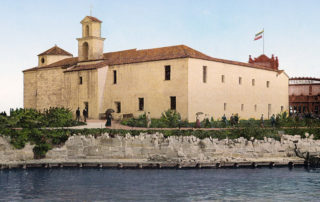
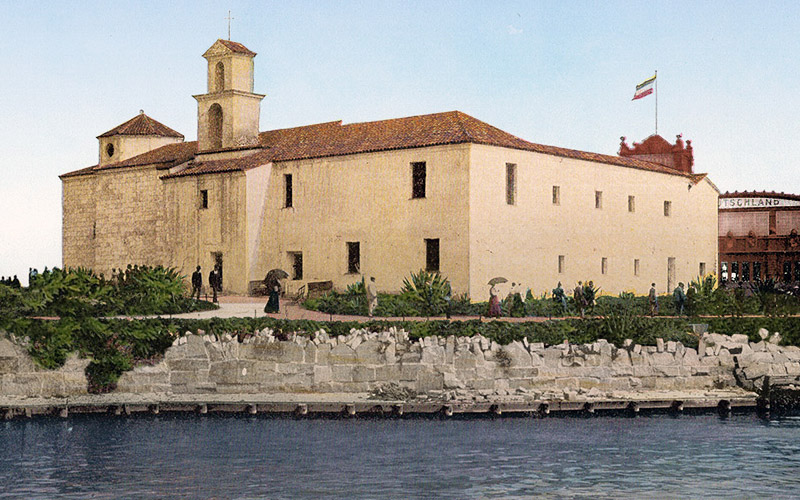
PICTURESQUE WORLD’S FAIR – The Convent of La Rabida (p. 61)
PICTURESQUE WORLD’S FAIR. AN ELABORATE COLLECTION OF COLORED VIEWS Page 61 – THE CONVENT OF LA RABIDA THE CONVENT OF LA RABIDA.—In marked contrast with the great modern structures near it was the reproduction at the Exposition of the Convent of La Rabida, or, to express its title more correctly, the Convent of Santa Maria de la Rabida, which means The Convent of St. Mary of the Frontier. It was to this convent that Columbus went when most wearied and discouraged and found shelter for himself and his child, and it was at the town of Palos de Moguer, [...]

How The 1893 World’s Columbian Exposition Played Into Chicago’s Rivalry With New York
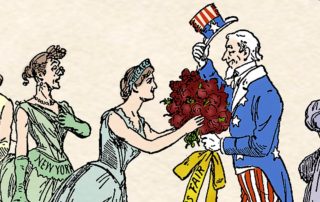
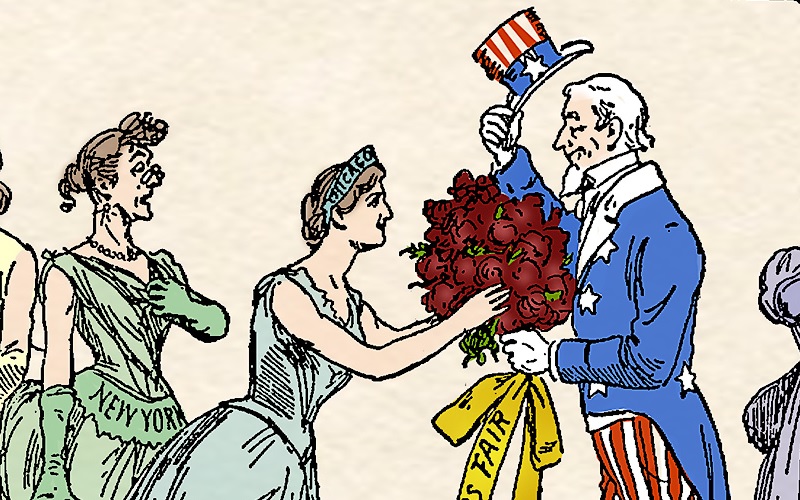
WBEZ’s Curious City podcast “How The 1893 World’s Columbian Exposition Played Into Chicago’s Rivalry With New York” answers the question Where does Chicago’s inferiority complex toward New York come from and when did it start? Recorded live at the Museum of Science and Industry (MSI) in Chicago during their “Night at the Fair” After Hours event on June 15, 2018, this episode of Curious City exposes the roots of the rivalry between the two cities to be the fierce competition to host the 1893 World’s Fair. Performing a volley of insults that appeared in newspapers prior to the February [...]