
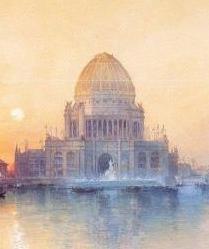
RECENT POSTS ABOUT THE HISTORY OF THE COLUMBIAN EXPOSITION’S BUILDING, FAIRGROUNDS, EXHIBITS, EVENTS, AND PEOPLE.

Tiffany Clock from the 1893 World’s Fair Sells for $150,000
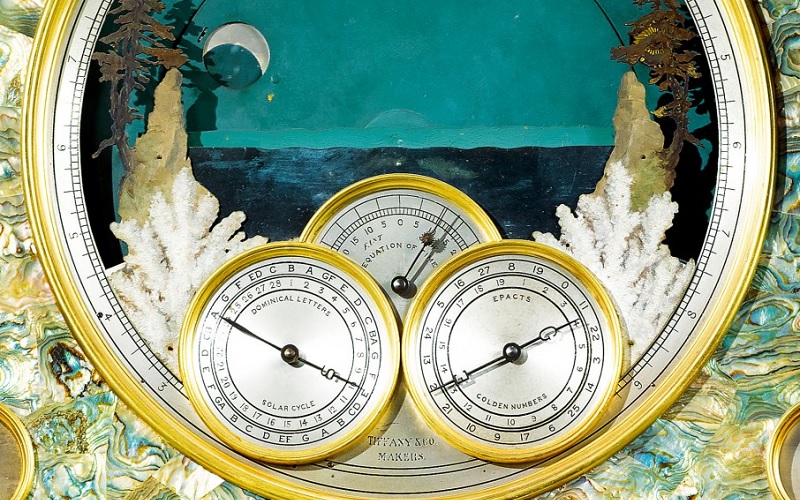
(Left) The “Louis XV Clock” on display in the Tiffany Pavilion within the Manufactures and Liberal Arts Building. [Image from Bancroft, Hubert Howe The Book of the Fair. The Bancroft Company, 1893.] (Right) The Tiffany clock today. Note the plain lower panel, compared to the image of the clock from 1893. [Image from Sotheby’s.] A magnificent clock manufactured by Tiffany & Company and exhibited at the 1893 World’s Fair sold by Sotheby's at their June 4, 2019, auction for $150,000. The eight-foot-tall longcase clock, designed in the style of Louis XV, is “one of the most complicated clocks [...]

All the World is Beer
A HAPPY PROSPECT. Sing a song of wondrous things A city full of sights: Common folks and queens and kings Enjoying the delights. When the fair is opened, And all the world is here, We'll have a jolly time throughout the Exposition year. (from The Illustrated World’s Fair, May 1892) For a jolly time throughout the current year, consider a taste of “All the World is Here,” a new beer inspired by the 1893 World's Fair from Temperance Beer Company of Evanston, Illinois. While not a recreation of a beer from 1893, the dry-hopped cream ale is made using some [...]
The Best Potato Display Ever Made
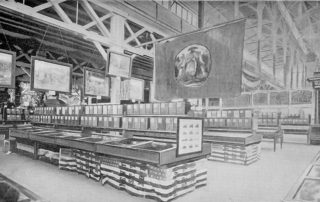
In honor of National Potato Day, here is a look at “the best potato display ever made,” which was exhibited the 1893 World’s Columbian Exposition in Chicago. The agricultural exhibit from New York State occupied 4,000 square feet on the south side of the main aisle of the Agricultural Building, near the eastern entrance. For the autumn season, the exhibit featured potato varieties grown all around New York State--from Chittenango to Chateaugay and from East Aurora to Westbury Station. “The specimens were grown under contract in widely separated localities so as to ensure, in one place or another, the [...]
The (Im)Perfection of Rude Simplicity: Davy Crockett’s Descendant Visits the Hunter’s Cabin at the 1893 World’s Fair
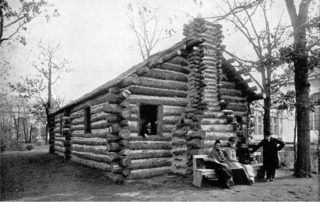
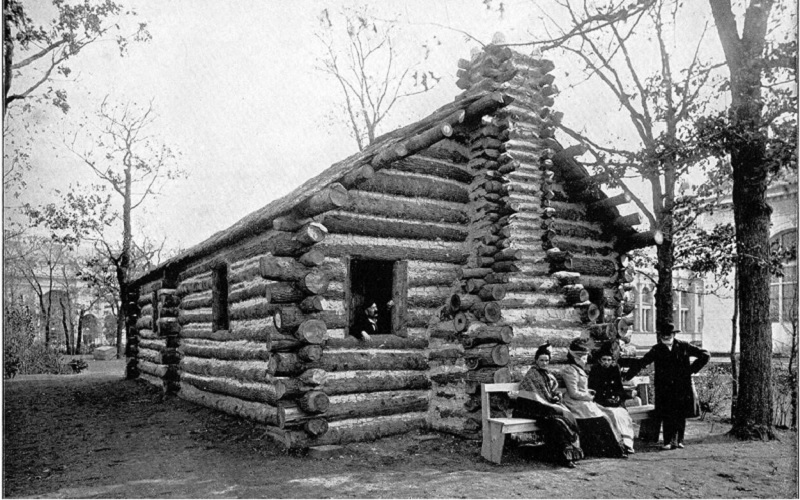
Many visitors to the World’s Columbian Exposition in Chicago on June 9, 1893, were eagerly trying to spot the Infanta Eulalia, the visiting Princess from Spain, as she toured the White City and Midway Plaisance. Meanwhile, just off the south end of the Wooded Island, a direct descendant of the legendary pioneer Davy Crockett (August 17, 1786 – March 6, 1836) visited the quaint Hunter’s Cabin. Sponsored by Theodore Roosevelt and his Boone and Crockett Foundation and designed by prolific architect Charles Atwood, the Hunter’s Cabin was a replica of a typical pioneer house from 1850s and contained a display [...]
Sept. 8, 2019: “Walking the White City” Tour in Jackson Park
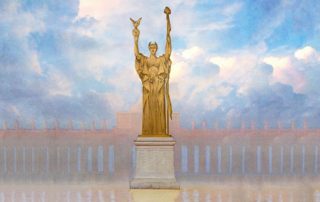
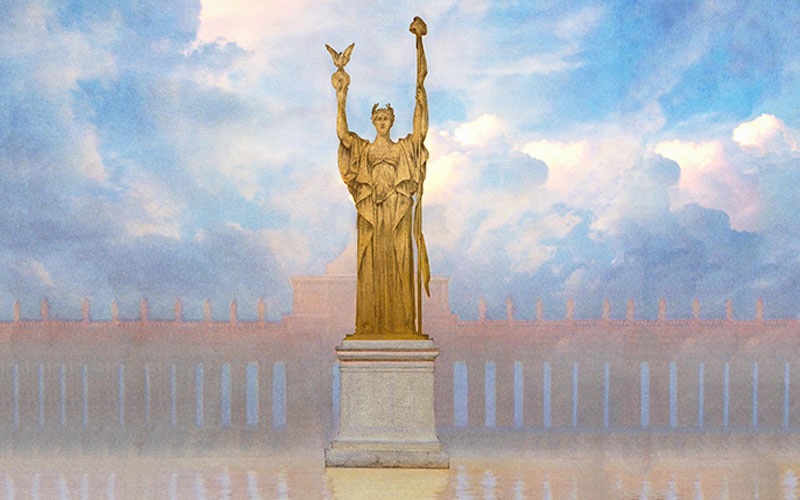
The Glessner House is sponsoring "Walking the White City," a walking tour of Jackson Park on Sunday, September 8, 2019, from 10 am to noon. Led by architect and historian John Waters, the tour will locate the sites of landmarks of the fair, explore the fascinating vestiges of the fair that still remain, and show how the fair influenced the design of Jackson Park as we know it today. The tour costs $25 per person ($20 for Glessner House members) and pre-paid reservations (required) can be made here. The tour begins at the Statue of the Republic in Jackson [...]

Summer 2019 Trivia Question
Our seasonal newsletter includes a “Palmer Puzzler” exclusive to those who subscribe. (You can sign up here.) The first person to send us the correct answer wins a small prize. Gondola on the North Pond, featuring a traditional fero da prora. [Image from Johnson, Rossiter A History of the World's Columbian Exposition Volume 1 - Narrative. D. Appleton and Co., 1897.] The Summer 2019 Trivia Question The prow of a traditional Venetian gondola has a metal plate (a fero da prora), which serves as a counterweight to the gondolier. The design symbolizes the S shape of the [...]

PICTURESQUE WORLD’S FAIR – Looking North from the South Colonnade (p. 84)
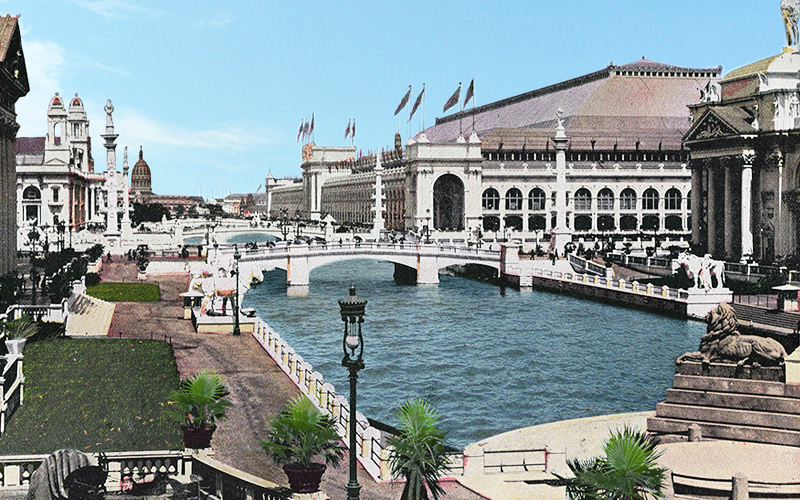
PICTURESQUE WORLD’S FAIR. AN ELABORATE COLLECTION OF COLORED VIEWS Page 84 – LOOKING NORTH FROM THE SOUTH COLONNADE LOOKING NORTH FROM THE SOUTH COLONNADE.—In the opinion of many people the most striking extended view to be had upon the Fair grounds was from the Obelisk, at the southern extremity of the South Canal, or better still, from the Colonnade immediately in its rear. From this point opened a vista nearly a mile in length terminated only by the beautiful front of the Art Palace, the dome of which is faintly discernible in the accompanying illustration. The whole stretch of [...]
Night and Day Differences at the 1893 World’s Fair
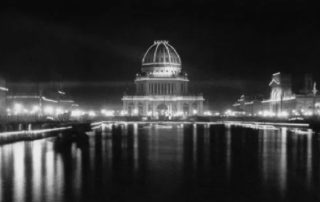
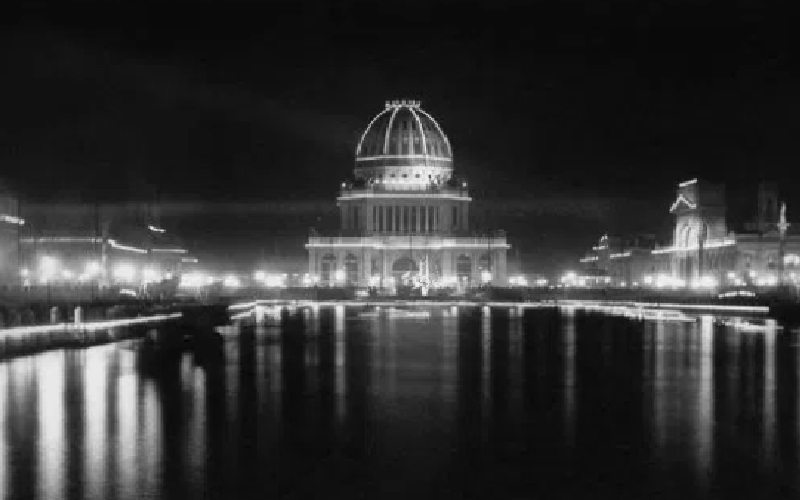
The October 2019 release of the film The Current War will offer many people their first view of the 1893 World’s Columbian Exposition. A recent trailer offered a tantalizing peak at how the special effects team has recreated the White City. In an attempt to provide some historical background, BBC History recently published an article on the “real history” of the World’s Fair in Chicago that included this description of the Opening Ceremony: “Grover Cleveland had one of the more straightforward tasks of his presidency on the evening of 1 May 1893. After saying a few words to the crowd, he [...]
Richard Morris Hunt (1827-1895), dean of American Architecture
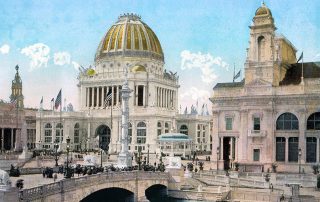
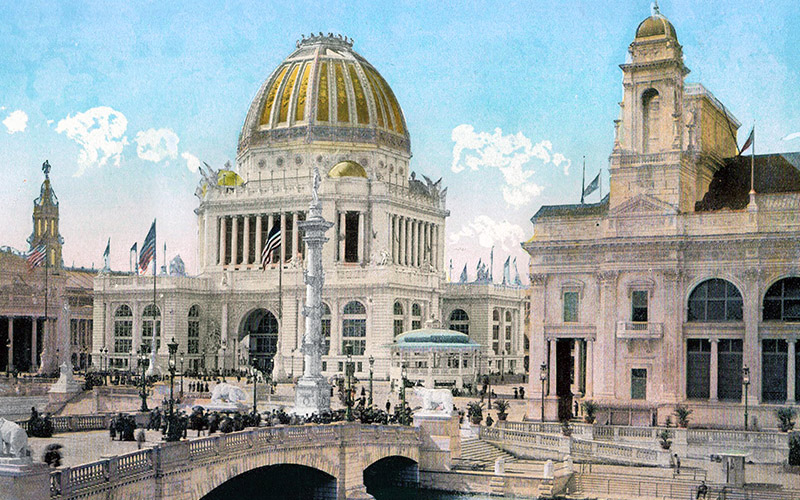
Today marks the anniversary of the death of Richard Morris Hunt, on July 31, 1895. Among the most revered architects working in the U.S. at the time of the World’s Columbian Exposition, Hunt was invited to contribute a design for the Administration Building, which stood in a position of honor at the west end of the Grand Basin. The magnificent classical Beaux-Arts building, capped by a gleaming gold dome, was considered one of the finest structures on the fairgrounds. One contemporary chronicler called it “the gem and crown of the Exposition Buildings” [Moseley, 192]. His design for the Administration [...]


White City Beautiful
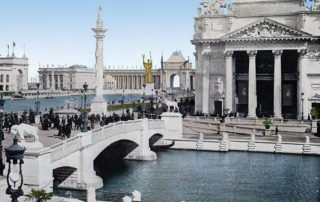
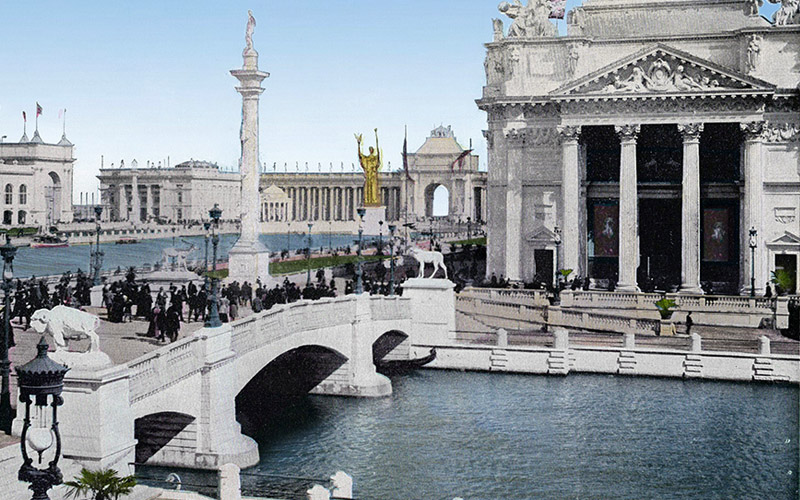
Where can we find remains of the 1893 World’s Columbian Exposition? All around us! While few buildings of the White City remain, the urban planning movement it ushered in endures. In “A Case for Civic Splendor: Notes on the City Beautiful Movement," Kayla Bartsch, writing for the National Review, opens with a look back at the “gleaming citadel” on the shores of Lake Michigan in 1893. She reminds us of one of the most important enduring legacies of the Fair: “The grandeur of the place, marked with monumental symmetry and Gilded Age splendor, sparked the imaginations of the fair’s [...]