THE CITY OF WONDERS: A Souvenir of the World’s Fair (Introduction)
THE CITY OF WONDERS A SOUVENIR OF THE WORLD'S FAIR by Mary Catherine Crowley (1894)
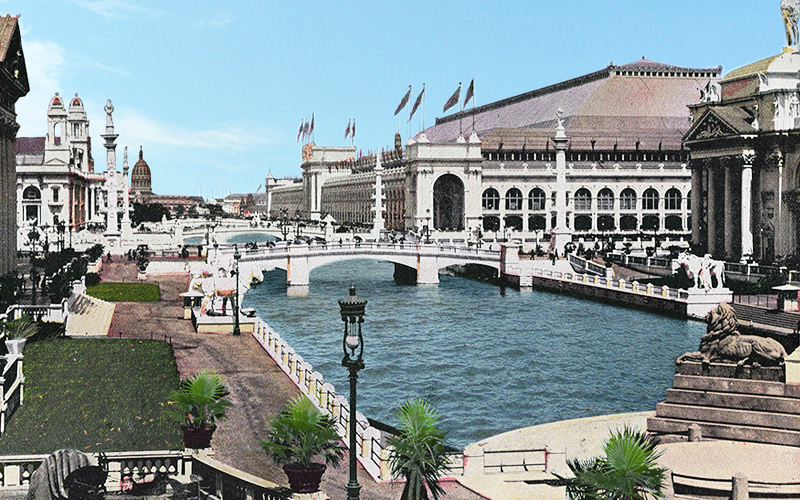
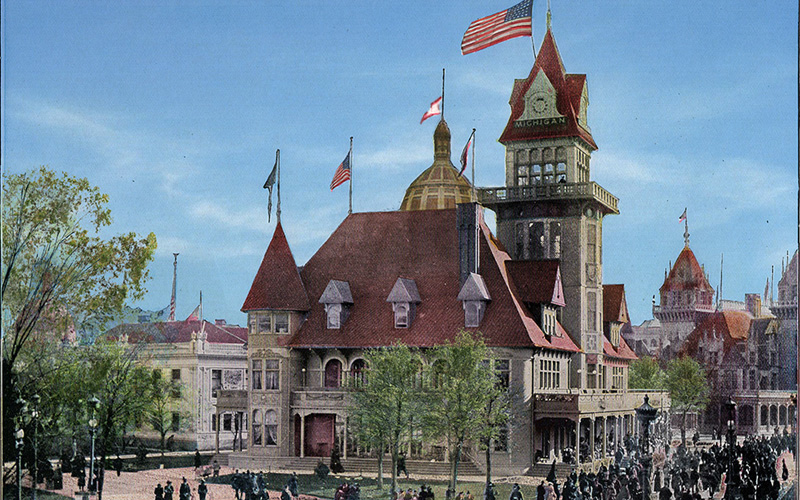
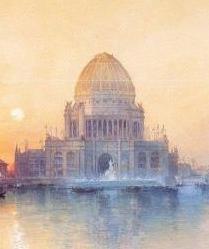
Charles Bowler Atwood (1849–December 19, 1895), the most prolific architect of the 1893 World’s Columbian Exposition, designed more than seventy-five buildings and structures, ranging from the stock to the sublime.
THE CLIFF DWELLERS.--There were few more interesting exhibits at the World's Fair than the home of the ancient Cliff Dwellers, shown in the imitation of Battle Rock Mountain, in the Mac Eimo Valley of Colorado. The curious structure was made of timbers, iron and staff, and stood near the Anthropological Building in the southeast corner of the grounds. The representation of the homes of the people whose history can be but guessed at was most complete, and, upon entering [...]
The man whose name is synonymous with the kinetic attraction he erected on the Midway Plaisance of the 1893 World’s Fair died of typhoid fever on November 22, 1896, at Mercy Hospital in Pittsburgh. Though now unforgettably linked to his engineering marvel, the name of George Washington Gale Ferris Jr. was unfamiliar to many fairgoers who walked by the great wheel, as shown in this story published in the October 29, 1893, issue of the Chicago Daily Tribune. Persist [...]
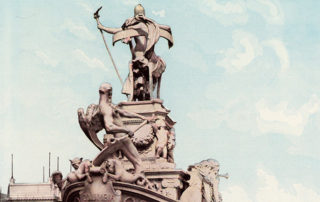
PICTURESQUE WORLD’S FAIR. AN ELABORATE COLLECTION OF COLORED VIEWS Page 90 - DETAILS OF THE "GOLDEN DOORWAY." DETAILS OF THE "GOLDEN DOORWAY."—The magnificent entrance to the Transportation Building, known popularly as the "Golden Doorway"—though it was not golden, but green and silver—was not, architecturally considered, complete with the quintuple arches and doorway proper alone, but included, as part of the entrance effects, a system of elaborate lateral ornamentation, the details of which, on one side, are given in the [...]
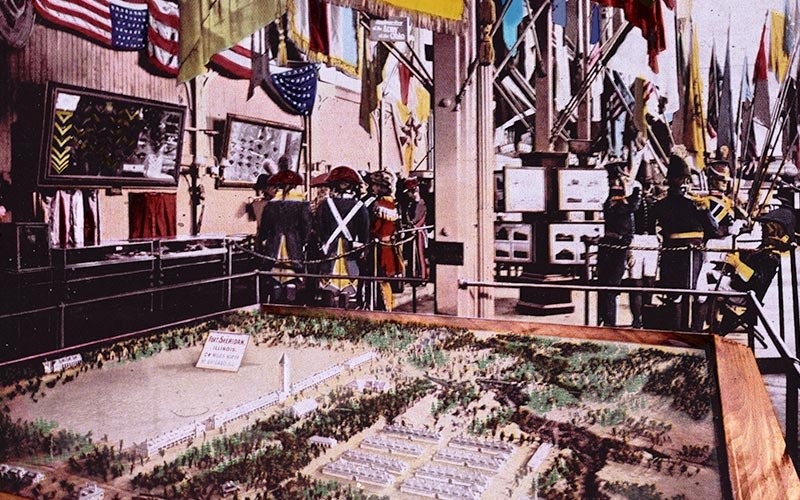
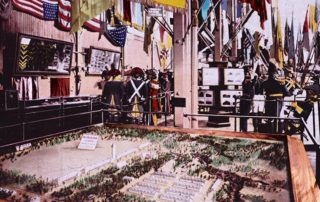
PICTURESQUE WORLD’S FAIR. AN ELABORATE COLLECTION OF COLORED VIEWS Page 89 – FORT SHERIDAN IN THE GOVERNMENT BUILDING FORT SHERIDAN IN THE GOVERNMENT BUILDING.—In point of reproduction, under a roof, of certain objects connected with the aim of its display the government did exceptionally well. The lay figures of soldiers and animals, the first to exhibit styles of uniforms of different eras, the second to illustrate means of transportation under certain circumstances, were exceedingly life-like and deceived, for the [...]
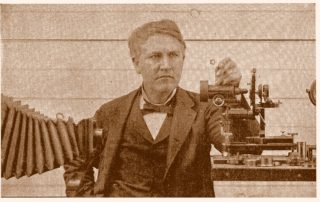
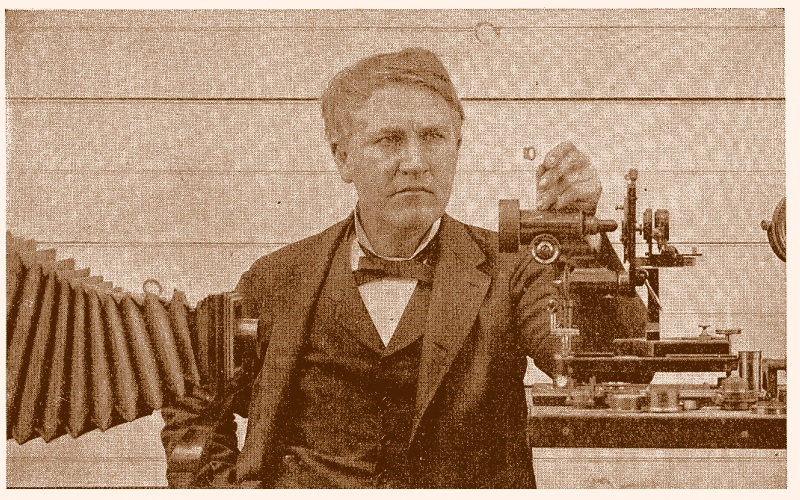
Thomas Edison visited Chicago on May 12, 1891, staying for several days “to attend to some private interests” and to consult with Prof. John P. Barrett, Chief of the Department of Electricity and Electrical Appliances for the World’s Columbian Exposition. [“Proposition for a Compromise” Chicago Inter Ocean May 12, 1891, p. 8.] The article below, from the front page of the May 12, 1891, issue of the Chicago Evening Post, describes his interest in the 1893 World’s Fair and [...]
In August 1893, Thomas A. Edison visited the World’s Columbian Exposition in Chicago. His time at the World's Fair bears little resemblance to the story portrayed on screen in The Current War. According to the report below, from the September 2, 1893, issue of Electrical Review, Edison kept a low profile and showed little interest in the electrical exhibits. Thomas A. Edison, accompanied by his family, arrived in Chicago last Monday evening, and went immediately to a house on [...]
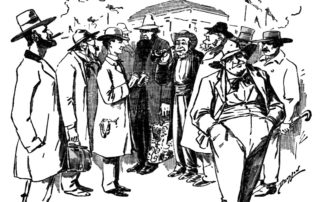
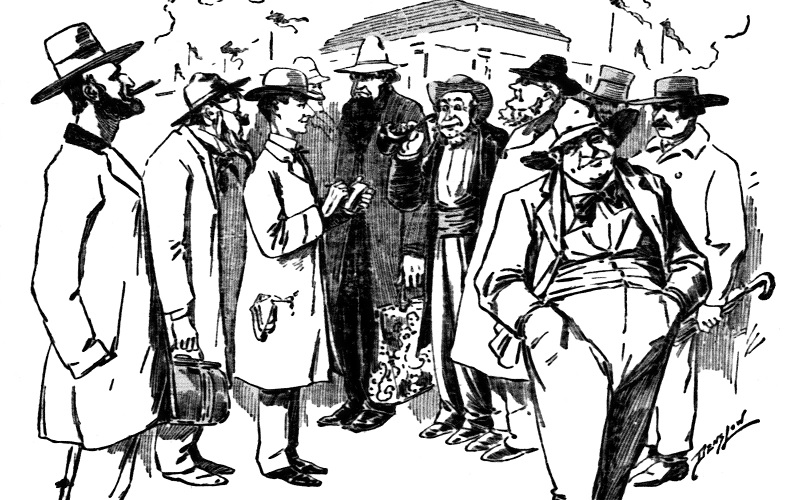
Before “Goin’ to the Fair,” Americans received unsolicited advice in their small-town newspapers on how to navigate the city of Chicago during their visit to the 1893 World’s Columbian Exposition. The June 22, 1893, issue of the Mount Vernon (OH) Democratic Banner offered these words of guidance: There is little doubt that a large proportion of those who will attend the World's Fair ought to be under the charge of a guardian while in the Windy City. This would [...]
Americans planning to visit the 1893 World’s Fair in Chicago were inundated with cautionary tales about evil trappings in the big city and stories of tourists being ripped off. While an event the size of the World’s Columbian Exposition certainly had its fair share of scammers, reports of exorbitant prices on the fairgrounds were largely unsubstantiated. Even before the opening of the Fair, the poem reprinted below offered guidance to the unsophisticated who contemplated a trip to see the [...]
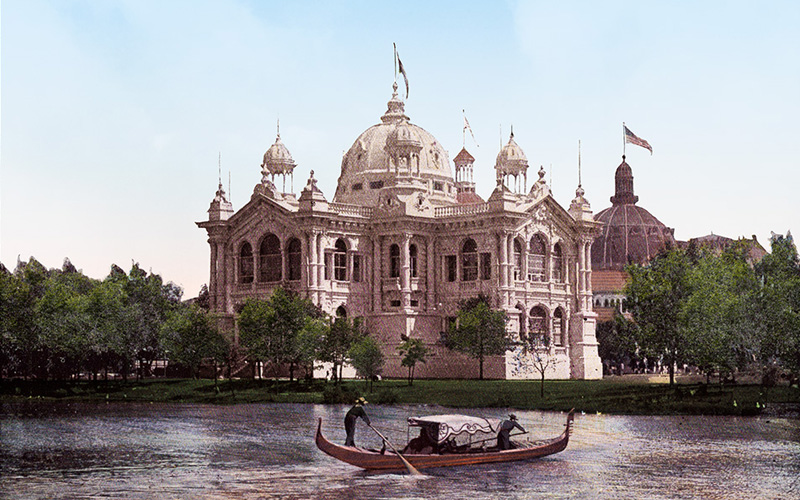
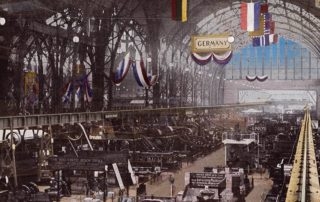
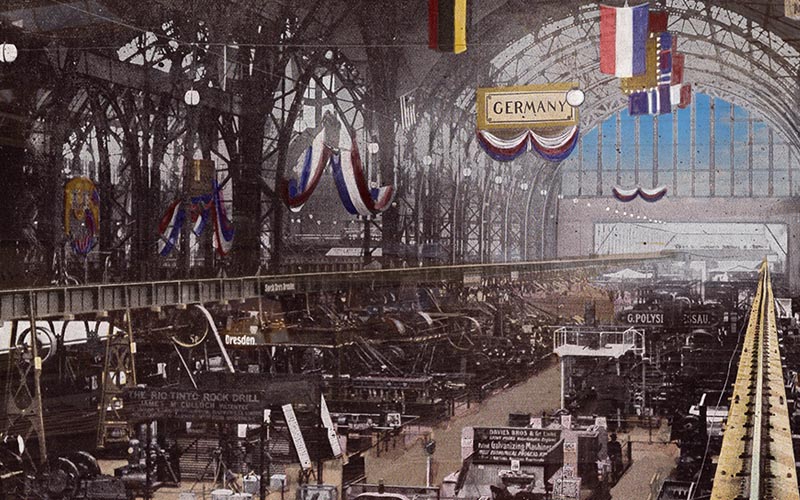
PICTURESQUE WORLD’S FAIR. AN ELABORATE COLLECTION OF COLORED VIEWS Page 88 – INTERIOR OF MACHINERY HALL INTERIOR OF MACHINERY HALL.—Quite different from the view afforded inside any other of the buildings of the Fair was that where the acres of all kinds of modern machinery were exposed in competition. So constructed that the most effective display of such exhibits could be made, the vast hall presented a scene never equaled of its kind before. A common simile in describing [...]
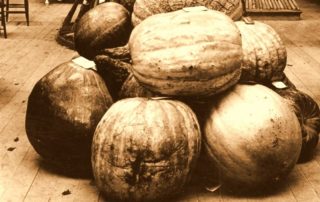
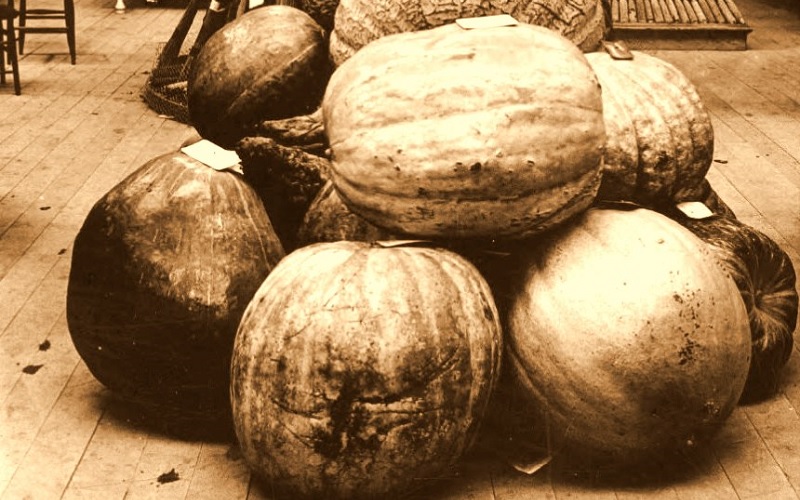
With autumn comes the fall harvest. The doggerel below, from the April 1892 issue of Halligan’s The Illustrated World's Fair, has a rural farmer anticipating the upcoming World’s Columbian Exposition in Chicago. Poet W. H. Jewett may be referencing Littleville, Alabama, in the second verse. A photograph of pumpkins from the California exhibit in the Agricultural Building, from a Kilburn stereoscope card. [Image from the Keystone-Mast Collection, UCR/California Museum of Photography, University of California at Riverside.] FARMER HEDGEROW'S [...]
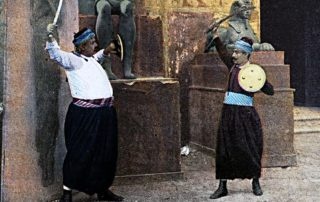
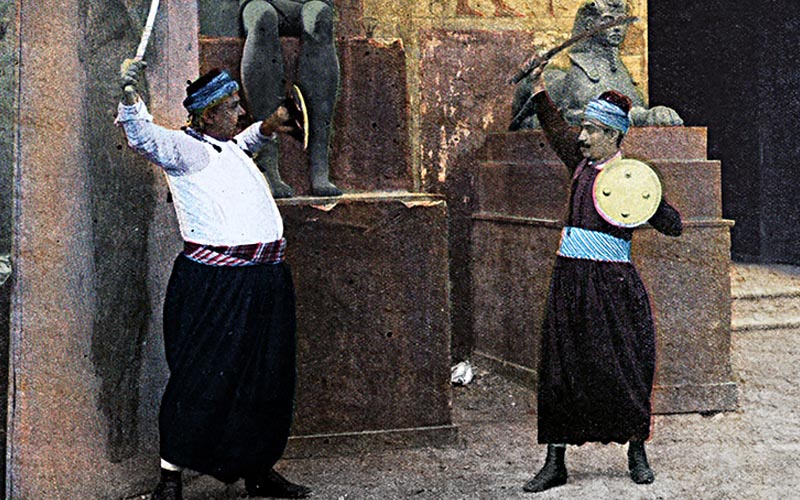
PICTURESQUE WORLD’S FAIR. AN ELABORATE COLLECTION OF COLORED VIEWS Page 87 – EGYPTIAN SWORDSMEN EGYPTIAN SWORDSMEN.— Among the attractions of a Street in Cairo were a number of swordsmen, some of them very expert in their profession. Their weapons were not of the style in use among Europeans and Americans, but resembled Japanese swords somewhat and had no guard above the hand grip. The blades were not, however, used much in a defensive way, that being left to the [...]
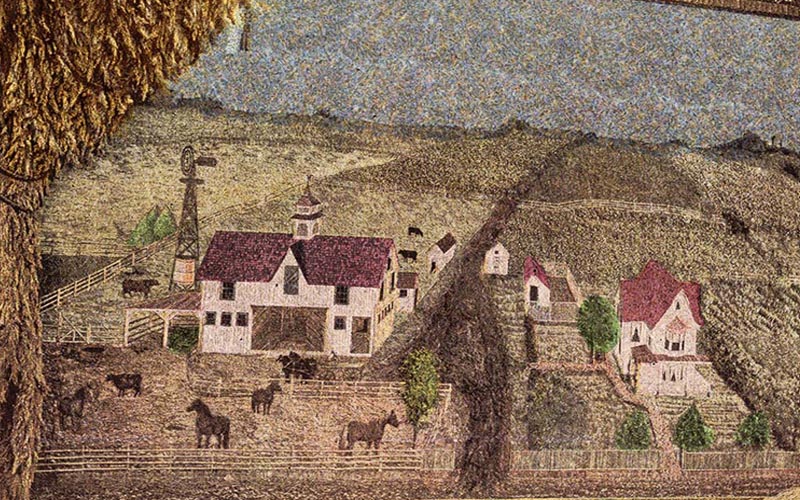
PICTURESQUE WORLD’S FAIR. AN ELABORATE COLLECTION OF COLORED VIEWS Page 86 – THE CURIOUS GRAIN PICTURE THE CURIOUS GRAIN PICTURE.—There were many fine exhibits in the big Illinois Building, many novel displays and a great showing of objects with what might be called an agricultural tendency, but the throng was always greatest at one particular point, that being immediately in front of what became known popularly as " The Grain Picture." The picture represented a typical, well-conducted Illinois prairie [...]
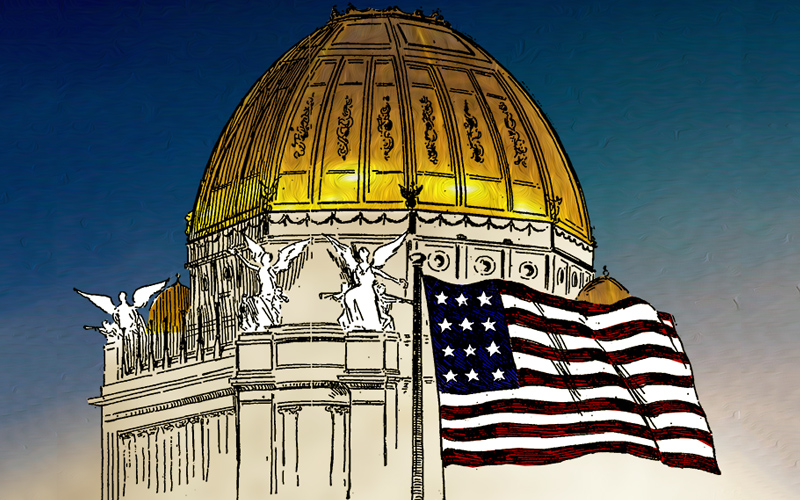
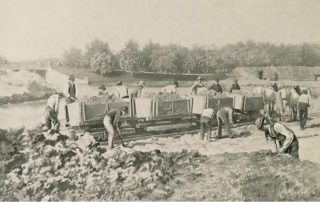
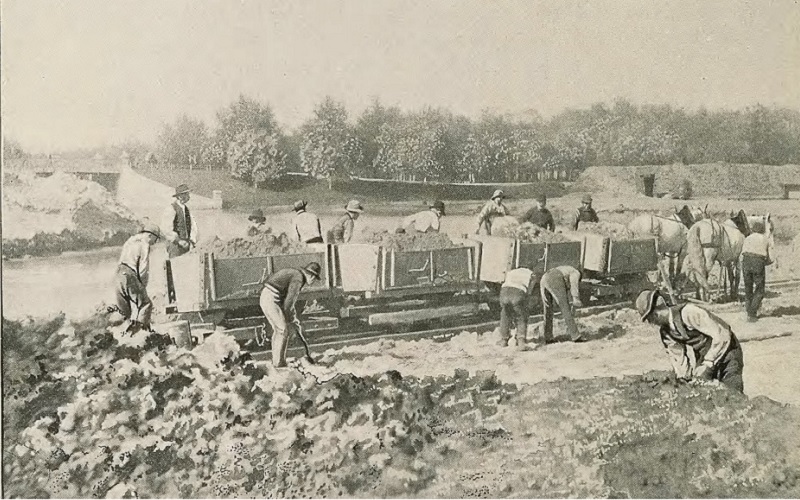
Laborers working to landscape Jackson Park in 1891. In the rear left of the frame is the bridge connecting the Lagoon and the North Pond. It still stands today as the Clarence Darrow Memorial Bridge. [Image from World's Columbian Exposition Illustrated June 1891.]
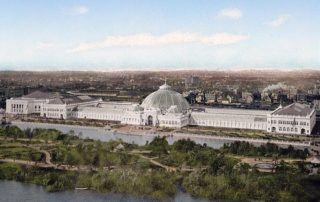
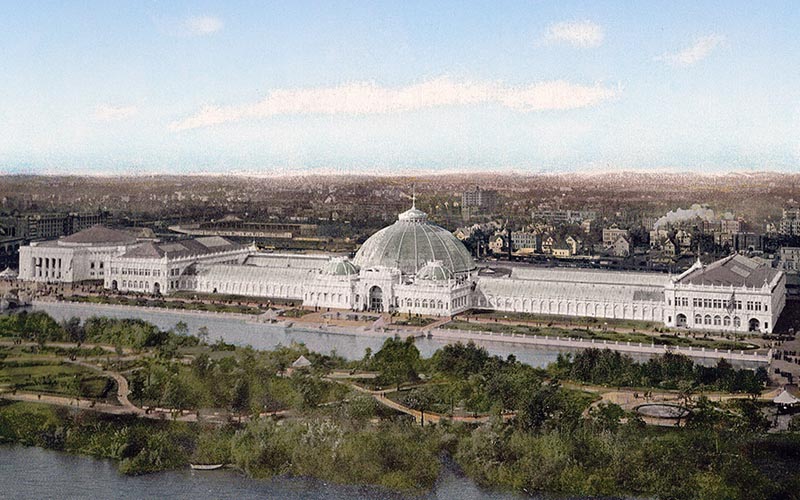
The Wooded Island in the fairgrounds of the 1893 World's Columbian Exposition. On the anniversary of the death of Frederick Law Olmsted (April 26, 1822 – August 28, 1903), we endeavor that the memory of his name and personality is not dimmed in the passage of years. This tribute to Olmsted’s design of the 1893 World’s Columbian Exposition comes from the May 3, 1893, issue of Garden and Forest, written just after Opening Day on the fairgrounds. In [...]
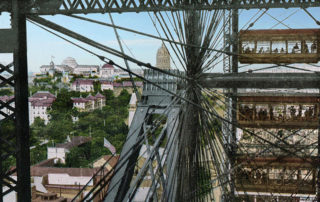
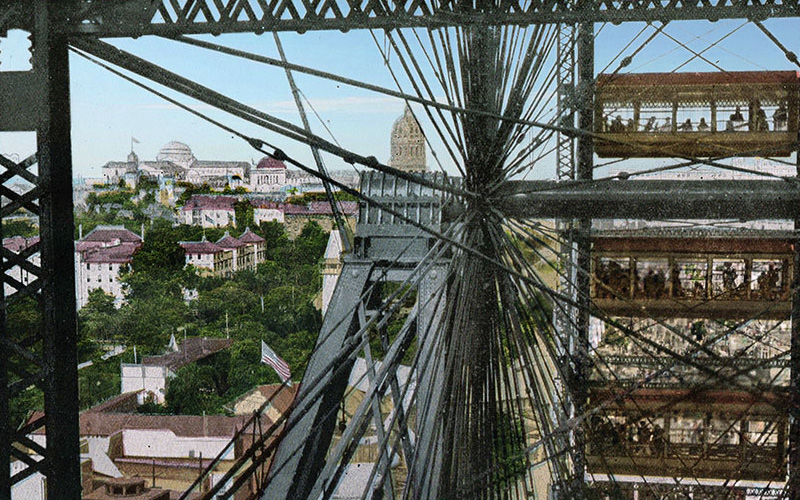
PICTURESQUE WORLD’S FAIR. AN ELABORATE COLLECTION OF COLORED VIEWS Page 85 – A VIEW THROUGH THE FERRIS WHEEL A VIEW THROUGH THE FERRIS WHEEL.—Imposing as was the Ferris Wheel seen from a distance, a great object towering aloft and showing the location of the Fair from a distance of miles away, it was scarcely less impressive when its monster parts were examined from one of the cars which revolved with it, carrying their hosts of passengers. It was not [...]
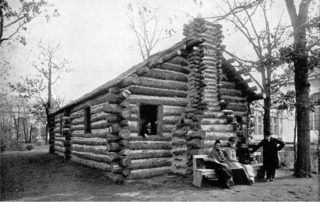
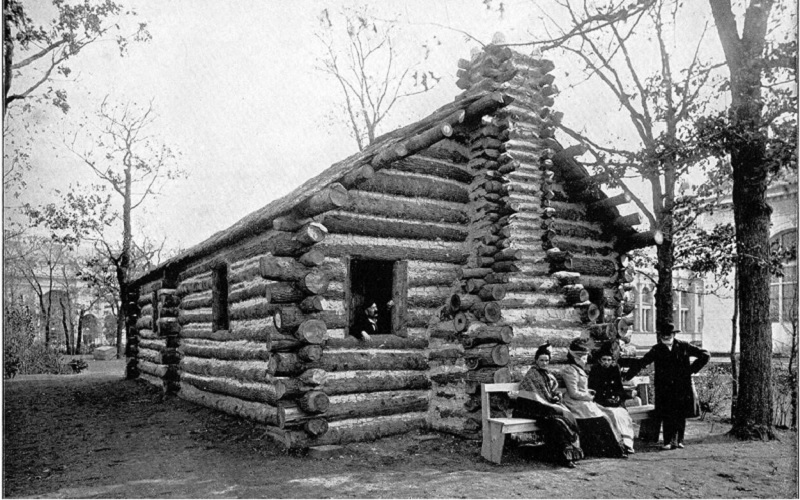
Many visitors to the World’s Columbian Exposition in Chicago on June 9, 1893, were eagerly trying to spot the Infanta Eulalia, the visiting Princess from Spain, as she toured the White City and Midway Plaisance. Meanwhile, just off the south end of the Wooded Island, a direct descendant of the legendary pioneer Davy Crockett (August 17, 1786 – March 6, 1836) visited the quaint Hunter’s Cabin. Sponsored by Theodore Roosevelt and his Boone and Crockett Foundation and designed by prolific [...]
PICTURESQUE WORLD’S FAIR. AN ELABORATE COLLECTION OF COLORED VIEWS Page 84 – LOOKING NORTH FROM THE SOUTH COLONNADE LOOKING NORTH FROM THE SOUTH COLONNADE.—In the opinion of many people the most striking extended view to be had upon the Fair grounds was from the Obelisk, at the southern extremity of the South Canal, or better still, from the Colonnade immediately in its rear. From this point opened a vista nearly a mile in length terminated only by the beautiful [...]
PICTURESQUE WORLD’S FAIR. AN ELABORATE COLLECTION OF COLORED VIEWS Page 83 – THE BRAZIL BUILDING THE BRAZIL BUILDING.—The structure erected by the greatest of the South American Republics was what might have been expected from that great country. Brazil appropriated for the Columbian Exposition no less than $600,000, and of this sum $50,000 was expended on the building where all visitors were entertained and where were the official head-quarters of the commission. The edifice was in the form of [...]