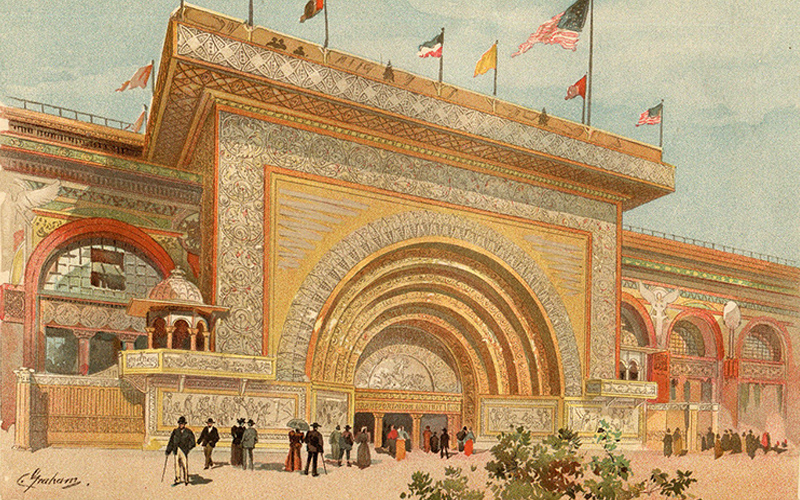
“Let this gentleman in at once”: Trouble at the Gate of the 1893 World’s Fair

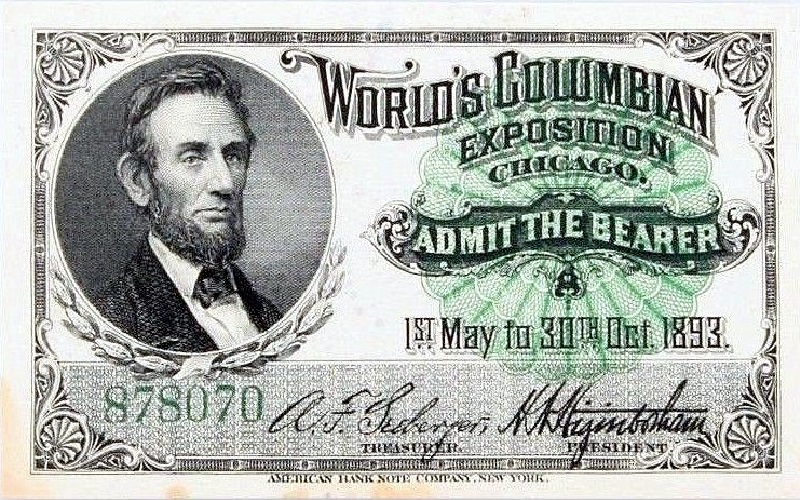
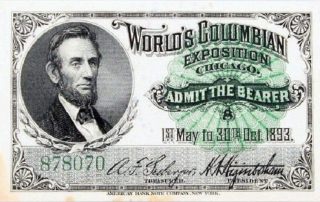
Horace Tucker ran a tight ship. As Superintendent of the Department of Admissions for the 1893 World’s Columbian Exposition, Tucker had to account for every person who entered the fairgrounds. In order to pass through an entrance gate, everyone needed to supply either a ticket or a complimentary pass. Everyone. A Special Pass to the 1893 World’s Columbian Exposition included the printed signature of Horace Tucker, Superintendent of the Department of Admissions. [Image from private collection.] Adlai [...]
By Scott|2024-11-28T08:37:22-06:00June 14th, 2023|Categories: HISTORY|Tags: , , , |0 Comments

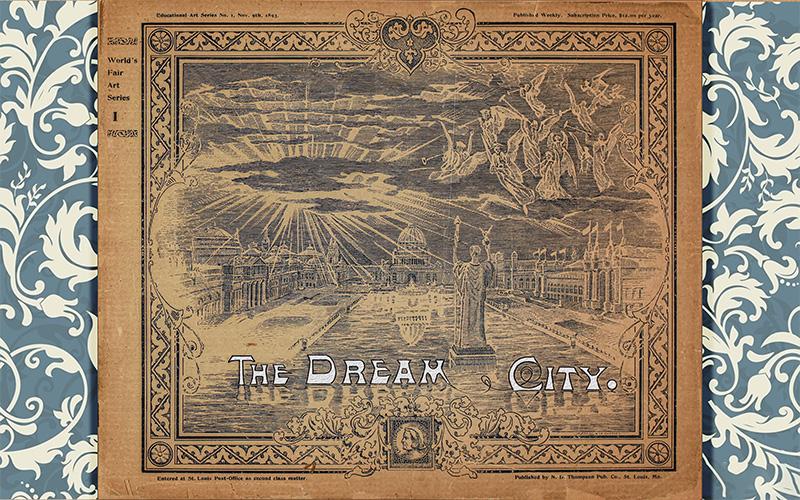
The “Dream City” of 1893

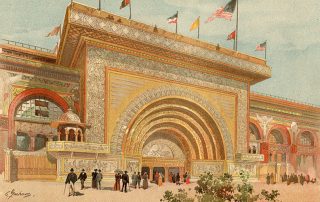
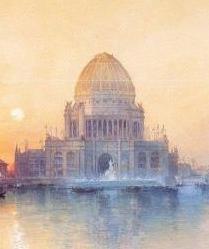
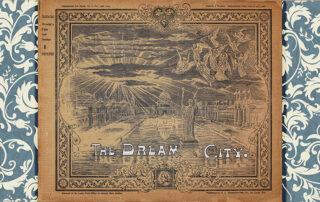
“Then or now, no words can express the beauty of the Dream City, for it is beyond even the unearthly glamour of a dream.” — Candace Wheeler “The White City” is the most common moniker given to the 1893 World’s Columbian Exposition in Chicago. This nickname—referring to the uniform alabaster color of most of the main exhibition palaces—was coined by H. C. Bunner in his essay “The Making of the White City” (Scribner’s October 1892). A view of a [...]

By Scott|2023-03-19T13:22:01-05:00March 20th, 2023|Categories: HISTORY|Tags: |1 Comment

Fabulous Fungi at the Fair

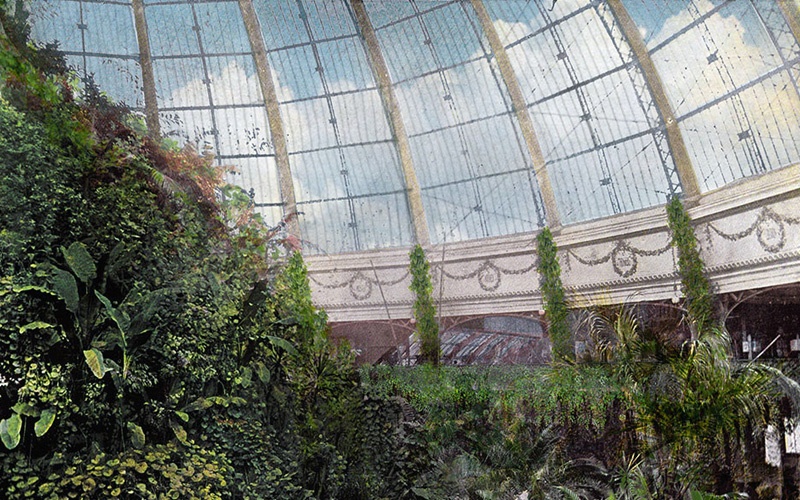
Avert your eyes from a post-apocalyptic future in which fearsome fungi destroy civilization and instead look back at some marvelous mushrooms at the 1893 World’s Fair. George Hiller with his mushroom bed in the dome gallery of the Horticultural Building at the 1893 World’s Fair. [Image from the Chicago Tribune Jan. 22, 1893.] The January 22, 1893, issue of the Chicago Tribune reported on “Mushrooms at the Exposition” having “a bed in the Horticultural Building well worth seeing”: [...]

By Scott|2023-03-14T06:54:04-05:00March 12th, 2023|Categories: HISTORY|Tags: , , |0 Comments

Hiding the pickle at the 1893 World’s Fair

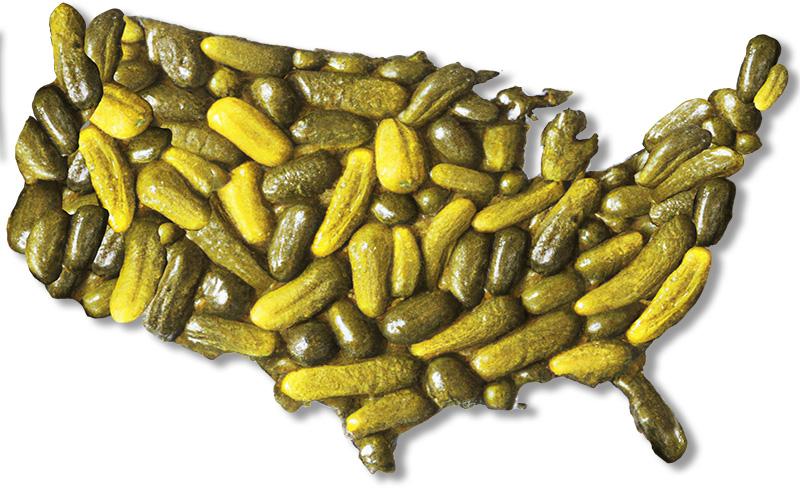
The dramatic merchandizing showcased at the 1893 World’s Columbian Exposition included a quirky subset of exhibits that might be described as “a blank made out of blank.” Much of it involved playing with food. Visitors could admire a Liberty Bell made out of citrus fruit, a Knight on horseback made out of prunes, a landscape painting made out of cereals and grasses, and a Venus de Milo statue made out of chocolate. One tasty display that was promised to [...]

By Scott|2022-11-16T15:32:42-06:00November 14th, 2022|Categories: HISTORY|Tags: , |0 Comments

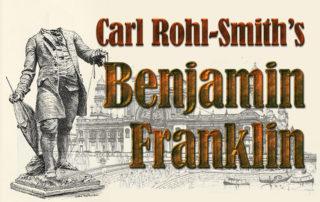
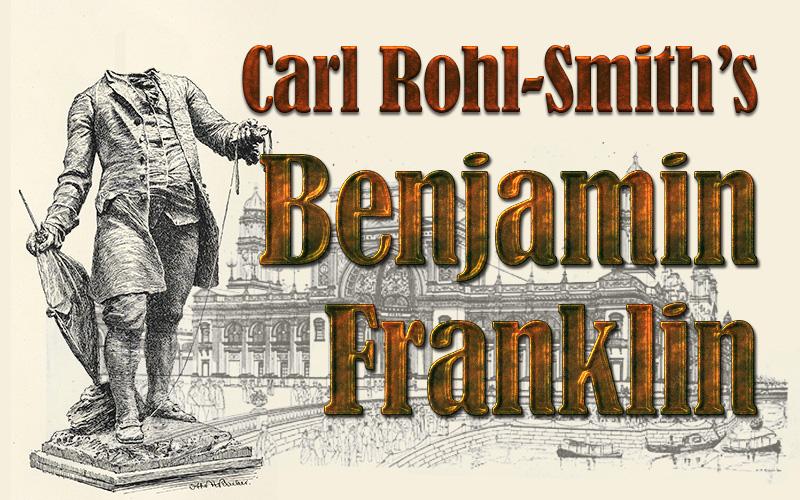
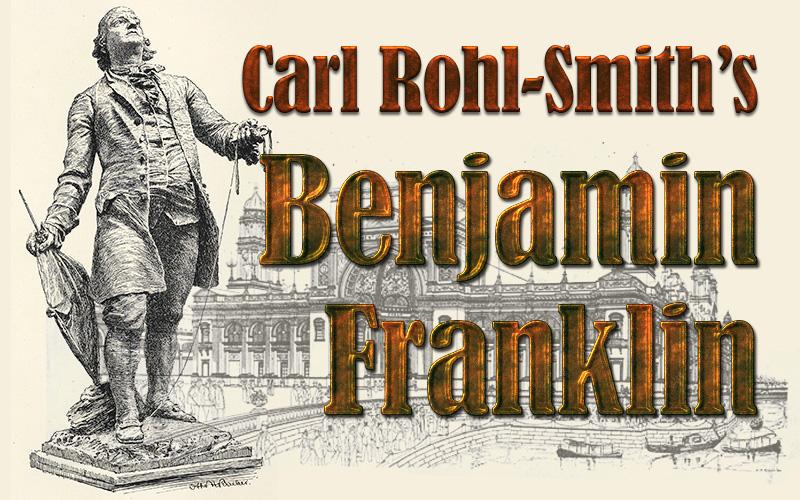
The Plaster Lighting Catcher of the 1893 World’s Fair: Carl Rohl-Smith’s Benjamin Franklin statue (Part 2)

[Part 1 of this article describes the commission and construction of Carl Rohl-Smith’s statue of Benjamin Franklin for the Electricity Building at the 1893 World’s Columbian Exposition.] “I begin to be almost sorry I was born so soon, since I cannot have the happiness of knowing what will be known one hundred years hence.” —Benjamin Franklin, July 27, 1783 The capital of the world vanished like a sweet dream after the fairgrounds of the 1893 World’s Columbian Exposition in [...]

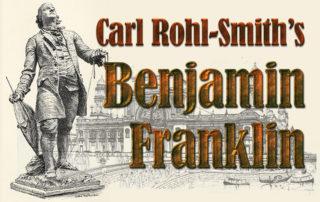
The Plaster Lighting Catcher of the 1893 World’s Fair: Carl Rohl-Smith’s Benjamin Franklin statue (Part 1)

“The scientists says that electricity is life. Then Jackson Park is of a truth a living thing.” — H. D. Northrop, The World's Fair as Seen in One Hundred Days (1893) A crowd of fans sporting blue and red poured out of the new Franklin Field in Philadelphia on the first day of October in 1895, a warm and sunny start to the college football season. Elated with the Quaker’s 40–0 victory over the visiting team from Swarthmore College, [...]

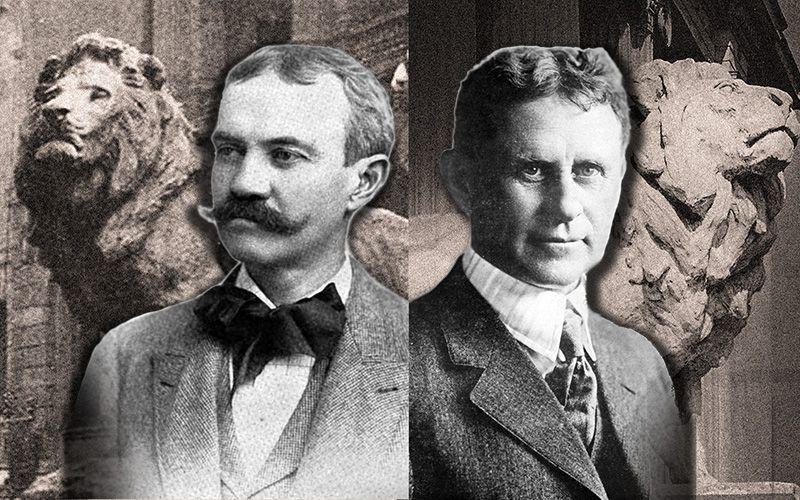
Did the Art Institute of Chicago lions come from the 1893 World’s Fair? (Pt 2)

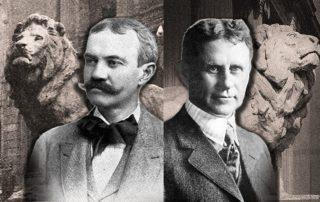
The pair of lion sculptures by Edward Kemeys that stand in front of the Art Institute of Chicago (AIC) are not cast from sculptures at the 1893 World’s Fair. This misinformation, which appears to have originated in the late 1980s, now permeates descriptions of these iconic Chicago mascots in institutional, popular, and scholarly sources. A set of sixteen lion sculptures stood at the entrances to the Palace of Fine Arts at the World’s Columbian Exposition (WCE), and numerous contemporary sources credit their authorship to A. Phimister Proctor and Theodore Baur (not Kemeys). More importantly, the designs of Kemeys’ AIC lions clearly do not match any of the WCE lions.

Did the Art Institute of Chicago lions come from the 1893 World’s Fair? (Pt 1)

The pair of lion sculptures by Edward Kemeys that stand in front of the Art Institute of Chicago (AIC) are not cast from sculptures at the 1893 World’s Fair. This misinformation, which appears to have originated in the late 1980s, now permeates descriptions of these iconic Chicago mascots in institutional, popular, and scholarly sources. A set of sixteen lion sculptures stood at the entrances to the Palace of Fine Arts at the World’s Columbian Exposition (WCE), and numerous contemporary sources credit their authorship to A. Phimister Proctor and Theodore Baur (not Kemeys). More importantly, the designs of Kemeys’ AIC lions clearly do not match any of the WCE lions.

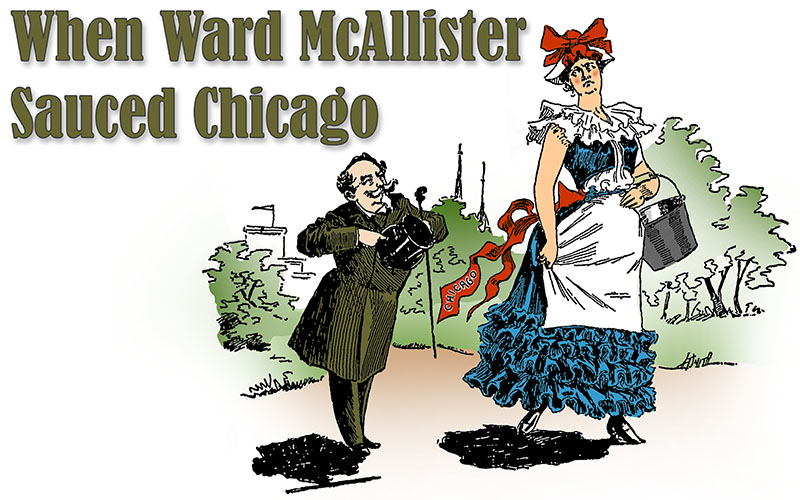
When Ward McAllister Sauced Chicago, Part 5

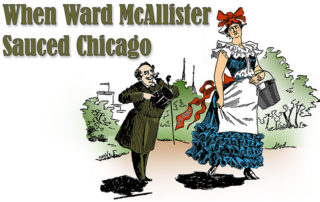
Dessert: Chilled Relations Continued from Part 4. “I have never called Chicago a pork-packing town.” —Ward McAllister As Opening Day of the 1893 World’s Fair approached, Chicago busied herself with final preparations for hosting millions of guests from around the world. The Exposition would be the biggest party ever thrown, and the names of many dignitaries populated the guest list. Royalty rolled down the Midway Plaisance when the Princess Eulalia, Infanta of Spain, visited the 1893 World’s Fair [...]

By Scott|2022-03-17T20:14:18-05:00March 18th, 2022|Categories: HISTORY|Tags: , , , |1 Comment

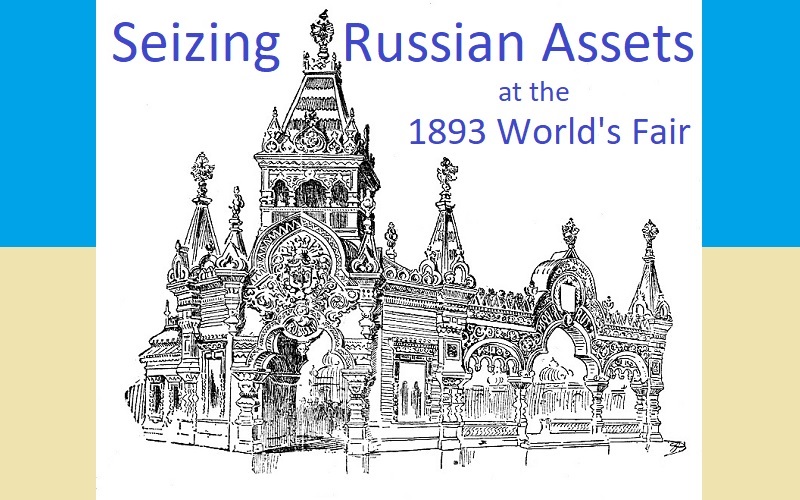
Seizing Russian Assets at the 1893 World’s Fair

Arriving unannounced and dressed in civilian clothing, United States government officials attempted to seize Russian assets in Chicago. In retaliation of the invasion, the Russians abruptly withdrew from a major international alliance. The year was 1893. The World’s Columbian Exposition was a trade show on a colossal scale. Foreign countries and businesses sent to the World's Fair in Chicago an enormous quantity of goods to display in the great halls of the White City. Though ostensibly exhibits, many of [...]

By Scott|2022-03-12T07:08:10-06:00March 12th, 2022|Categories: HISTORY|Tags: , , |1 Comment

When Ward McAllister Sauced Chicago, Part 4

Third Course: The Head Butler Serves Another Helping Continued from Part 3. “Mr. McAllister, with ill-concealed triumph, proceeds this week to rub salt into the wounds so freshly made.” —The New York World, April 16, 1893 His thick sauce decidedly unappetizing for Chicago’s taste, Ward McAllister surveyed the indigestion caused by his arrogant advice column targeted at the city about to host the 1893 World’s Columbian Exposition. Nathan Lane portrays Ward McAllister in HBO’s period drama The Gilded [...]

By Scott|2022-03-18T08:50:17-05:00March 4th, 2022|Categories: HISTORY|Tags: , |1 Comment

When Ward McAllister Sauced Chicago, Part 3

Second Course: Chicago Bites Back Continued from Part 2. “The World’s Fair cannot help but open the eyes of our Western Natives to our superiority.” —Ward McAllister Would Chicago frappé its wine too much? Certainly not with the rising temperatures caused by Ward McAllister’s sanctimonious sermon on proper entertaining during the 1893 World’s Fair. Chicago newspapers launched a vigorous counterattack in the days following the publication of McAllister’s interview in the New York World on April 9, 1893. [...]

By Scott|2022-03-04T07:14:16-06:00February 25th, 2022|Categories: HISTORY|Tags: , , , , , |1 Comment

When Ward McAllister Sauced Chicago, Part 2

First Course: The Frappé Fracas Continued from Part 1. “A new and amusing feature of life in this Republic is the war between Chicago and Mr. Ward McAllister.” —New York World, April 16, 1893 Ward McAllister, arbiter of New York Society. [Image from Society As I Have Found It (Cassell & Co., 1890).] The first champagne cork flew across Chicago Society’s nose on April 9, 1893, in the pages of the New York World. Ward McAllister set out [...]

By Scott|2022-02-25T16:00:16-06:00February 18th, 2022|Categories: HISTORY|Tags: , , , |5 Comments

When Ward McAllister Sauced Chicago, Part 1

Appetizer: New York’s social dictator “The real Chicago, which works and hustles and brags about the Fair, cares nothing about McAllister or what he says.” —The New York World, April 16, 1893 He has been called “New York society’s panjandrum of lavish entertaining,” “a greater official than the mayor, a custodian of the ultra-fashionables,” a “flamboyant and outspoken figure,” the “foremost consultant in pleasure” and a “master of punctilio and snobbery.” Others named him “the Autocrat of Gotham’s 400,” [...]

By Scott|2022-03-02T15:00:43-06:00February 18th, 2022|Categories: HISTORY|Tags: , , |2 Comments

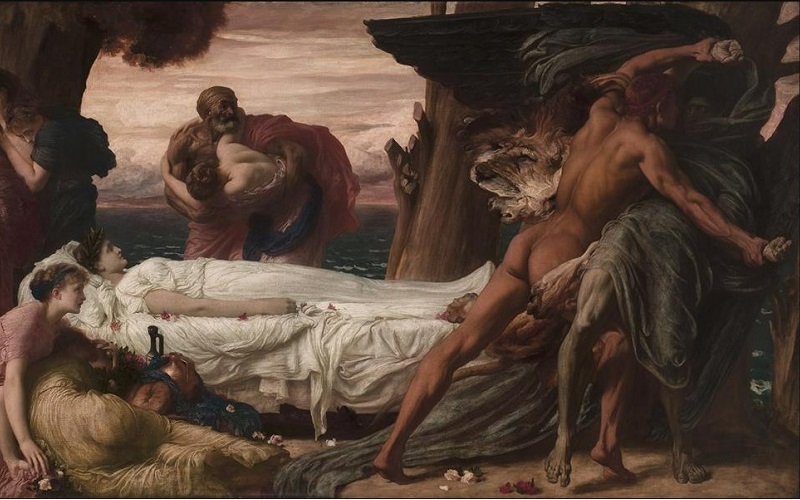
When Miss Inquisitive Poked Hercules at the 1893 World’s Fair

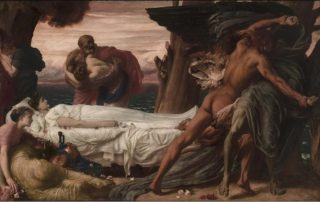
For six months in 1893, much of the world’s greatest artworks were on exhibit in the Art Place at the World’s Fair in Chicago. Not everyone in town knew how to behave themselves around it. The Palace of Fine Arts by Childe Hassam. Within weeks of the opening of the Columbian Exposition, one oil painting was nearly damaged by an overly enthusiastic visitor to the galleries. Hercules Wrestling with Death for the Body of Alcestes was one [...]

By Scott|2023-04-09T09:01:06-05:00January 25th, 2022|Categories: HISTORY|Tags: |0 Comments

“The eighth wonder of the world” Gilded Age author Charles Dudley Warner extols the 1893 World’s Fair

“The bigger Chicago is, the more important this world becomes.” —Charles Dudley Warner American essayist and novelist Charles Dudley Warner (1829–1900) is perhaps best remembered as the co-author with Mark Twain of The Gilded Age: A Tale of Today. Their 1873 novel satirizes the greed and political corruption endemic in the United States after the Civil War. The “Gilded Age” moniker eventually came to describe the era of excess and deception in late-nineteenth-century America. The pinnacle of Gilded Age [...]

By Scott|2022-01-24T06:08:30-06:00January 24th, 2022|Categories: HISTORY|Tags: , , |0 Comments

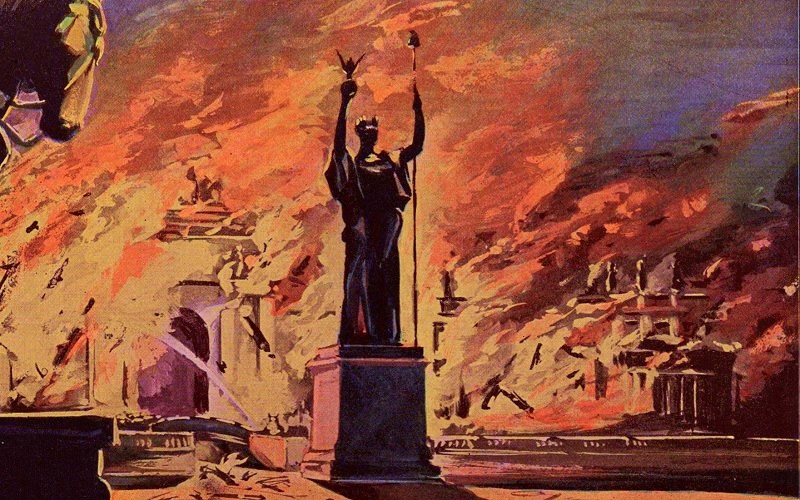
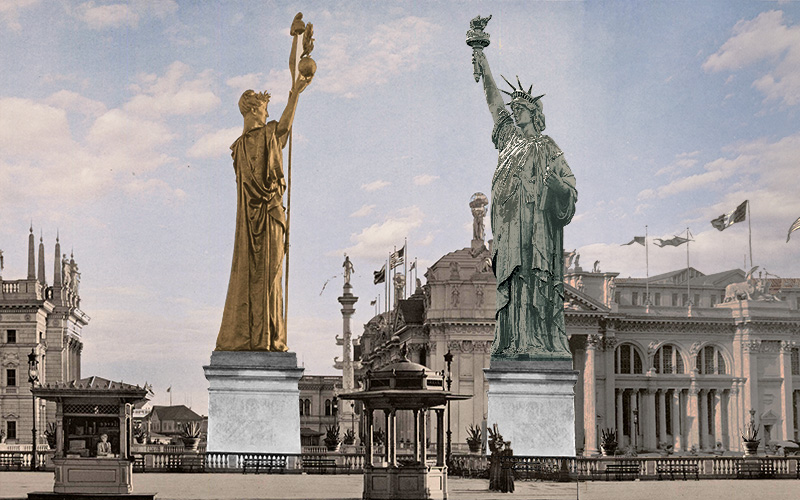
Death of the Republic: The fiery end to the golden colossus of the 1893 World’s Fair

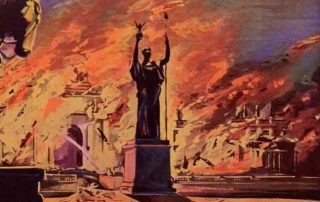
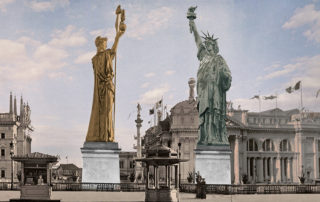
They toppled the Republic at dawn on August 28, 1896. As the first rays of the sun spread across Lake Michigan and into Jackson Park, a funeral pyre lit inside the colossus began to spread up the structure. A flash of light soon appeared in her raised left arm. On a pedestal in the lagoon, the ghostly goddess stood with impassive dignity as muffled cracking within her heralded impending doom. A halo of yellow light formed about her head, [...]

Frédéric Auguste Bartholdi’s Visit to the 1893 Columbian Exposition in Chicago, Part 3

Continued from Part 2 Frédéric Auguste Bartholdi in 1880. Charmed with the wonders of the White City As Frédéric Auguste Bartholdi prepared to depart Chicago, he was leaving behind his name with the son of a new friend, and he was leaving behind his statue of Washington and Lafayette with an uncertain future. Although Bartholdi reportedly had planned for only a two-week sojourn in Chicago, he had stayed for three. On the afternoon of Sunday, September 24, [...]

By Scott|2024-08-18T14:50:15-05:00July 7th, 2021|Categories: HISTORY|Tags: , , |1 Comment

Frédéric Auguste Bartholdi’s Visit to the 1893 Columbian Exposition in Chicago, Part 2

Continued from Part 1 Frédéric Auguste Bartholdi in 1880. “I come to see the American side of the Fair” On September 10, 1893, Frédéric Auguste Bartholdi and his wife Jeanne-Émilie arrived in Chicago and settled into the Hotel Metropole. This hotel stood on Michigan Avenue at 23rd Street, just south of the tony Prairie Avenue District called home by many of Chicago’s elite citizens, including Marshall Field, George Pullman, Ferdinand ("Ferd") W. Peck, and John Jacob Glessner. [...]

Frédéric Auguste Bartholdi’s Visit to the 1893 Columbian Exposition in Chicago, Part 1

“My only ambition has been to engrave my name at the feet of great men and in the service of grand ideas.” —Frédéric Auguste Bartholdi Frédéric Auguste Bartholdi in 1880. Most monographs about Frédéric Auguste Bartholdi conclude his story with the 1886 unveiling ceremony for his Statue of Liberty in New York Harbor. A lesser-known chapter in the French sculptor’s life involves his next and final trip to the United States in 1893, a six-week visit from [...]

Go to Top