
RECENT POSTS ABOUT THE HISTORY OF THE COLUMBIAN EXPOSITION’S BUILDING, FAIRGROUNDS, EXHIBITS, EVENTS, AND PEOPLE.
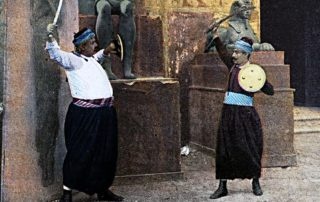
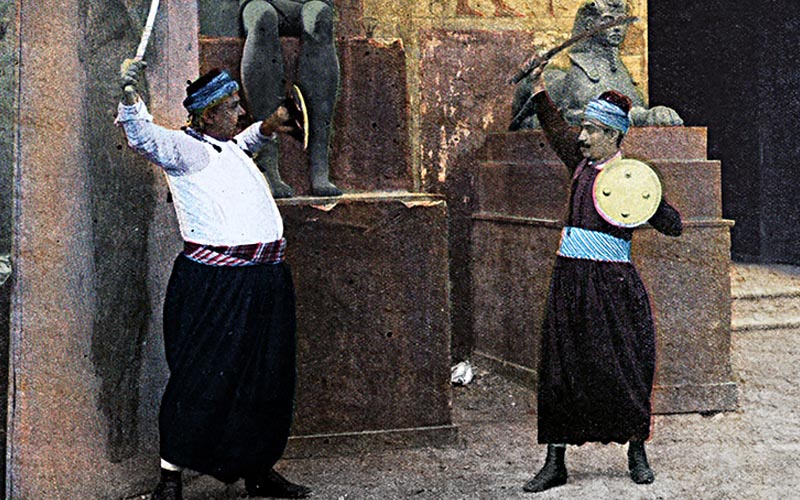
PICTURESQUE WORLD’S FAIR – Egyptian Swordsmen (p. 87)
PICTURESQUE WORLD’S FAIR. AN ELABORATE COLLECTION OF COLORED VIEWS Page 87 – EGYPTIAN SWORDSMEN EGYPTIAN SWORDSMEN.— Among the attractions of a Street in Cairo were a number of swordsmen, some of them very expert in their profession. Their weapons were not of the style in use among Europeans and Americans, but resembled Japanese swords somewhat and had no guard above the hand grip. The blades were not, however, used much in a defensive way, that being left to the small circular buckler or target held by each combatant in the left hand. Given claymores instead of the odd blades [...]

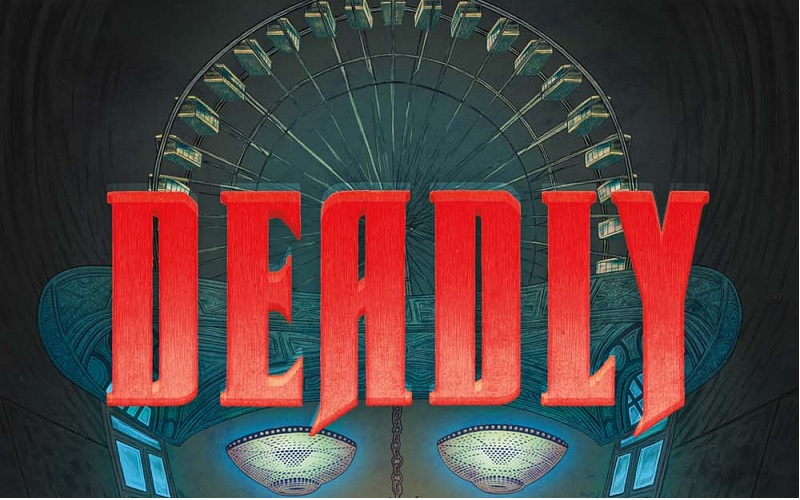
Sept. 13-Nov. 4, 2019: DEADLY, a New Musical Set at the 1893 World’s Fair (Los Angeles)
A new musical set at the 1893 World’s Fair makes its world premiere at the Sacred Fools Theater Company of Los Angeles this fall. Deadly, written by Vanessa Claire Stewart, with music by Ryan Thomas Johnson, explores the chilling events of the “murder castle” operating near the grounds of the Columbian Exposition. The twin stories of the Fair and the serial killer, which were the subject of Erik Larson’s dramatic non-fiction book The Devil in the White City (2003), have been a popular subject for theater and dance. A comedic show ran in Indianapolis this summer, and a 2014 ballet [...]
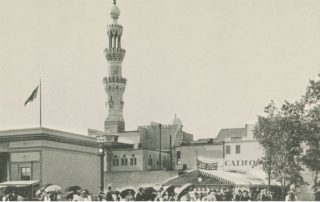
Oct. 21, 2019- May 2021: American Medina-Stories of Muslim Chicago (Chicago History Museum)
Some of the earliest Muslim communities in Chicago came for the 1893 World’s Columbian Exposition and on the Midway Plaisance were several of the first mosques in the city. The Chicago History Museum opens a new exhibit “American Medina: Stories of Muslim Chicago” on October 21, 2019. CHM notes that “the intention of this exhibition is to record the diverse stories and life experiences of Muslim people living in Chicago in order to build connections in our communities through listening and understanding.” The exhibit is included with museum admission and runs through May 2021. Interior of Turkish Mosque. [...]
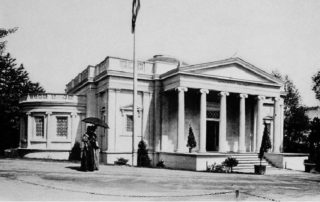
Oct. 19-20, 2019: Open House Chicago Features 1893 World’s Fair Connections
Vestiges of the 1893 World’s Columbian Exposition can be found scattered around the globe … if you know where to look. Several sites related to the World’s Fair are included in the 2019 Open House Chicago, held on October 19-20, 2019: Decorators Supply Corp. (3610 S. Morgan St.) manufactured cast ornamental plaster that helped create the mouldings for the buildings of the "White City" at the 1893 World's Fair. St. John Cantius Roman Catholic Church (825 N. Carpenter St., Chicago) features a High Altar and statuary that can be traced back to the 1893 World's Fair. Second Church of Christ, Scientist, [...]

PICTURESQUE WORLD’S FAIR – The Curious Grain Picture (p. 86)
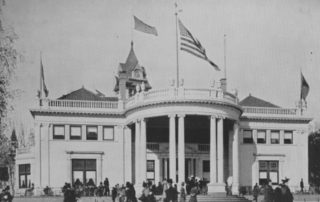
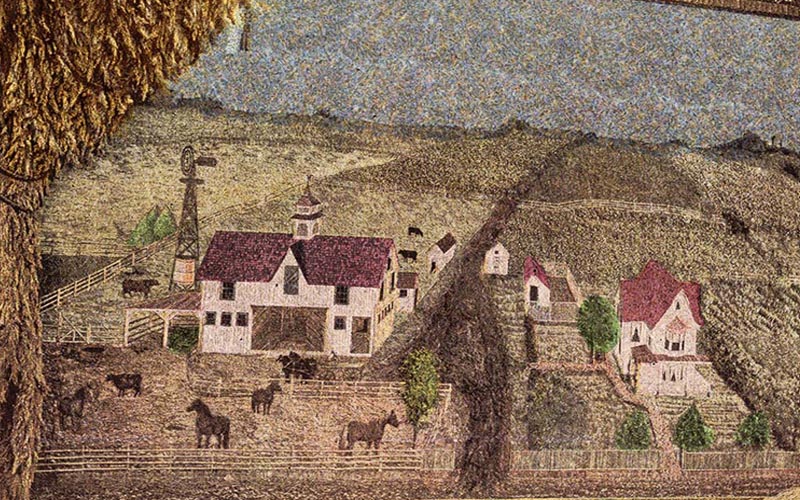
PICTURESQUE WORLD’S FAIR. AN ELABORATE COLLECTION OF COLORED VIEWS Page 86 – THE CURIOUS GRAIN PICTURE THE CURIOUS GRAIN PICTURE.—There were many fine exhibits in the big Illinois Building, many novel displays and a great showing of objects with what might be called an agricultural tendency, but the throng was always greatest at one particular point, that being immediately in front of what became known popularly as " The Grain Picture." The picture represented a typical, well-conducted Illinois prairie farm of one hundred and sixty acres, and its peculiarity was that it was not painted at all, but was [...]
Oct. 13, 2019: The Vanishing City–Excavating the World’s Fair (Glessner House)
Glessner House is hosting a talk on "The Vanishing City: Excavating the World’s Fair of 1893" on Sunday, October 13, 2019, from 4-5 pm. Rebecca Graff, assistant professor of anthropology and chair of the American studies at Lake Forest College, divulges what is hiding beneath the future Obama Presidential Center site in Chicago. Professor Graff will discuss her archaeological and archival research focused on the Fair’s ephemeral “White City” and Midway Plaisance. The results of the excavation in Jackson Park revealed a robust archaeological signature of the extensive sanitary infrastructure of the Fair and, surprisingly, delicate plaster remains of [...]
First to the Fair
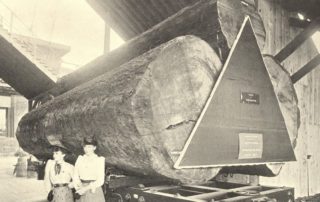
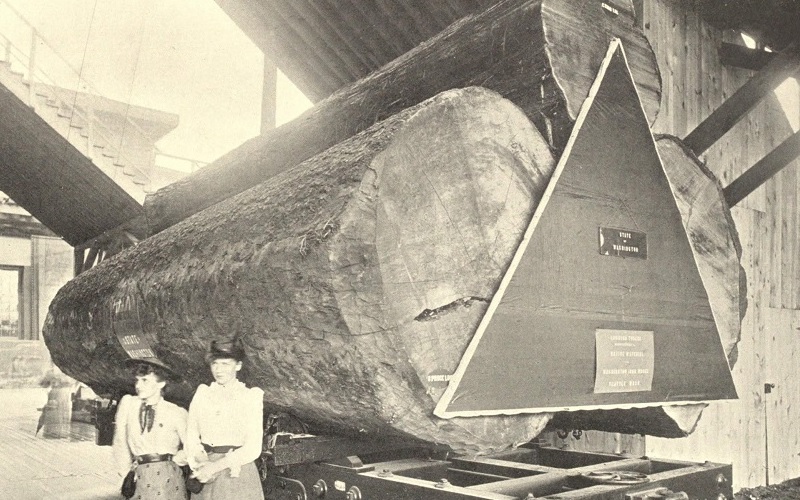
At the 1893 World’s Fair were displayed many “firsts,” including the largest enclosed space ever built, the first electric railway, and the first mechanical dishwasher. So what were the first exhibits to come to the Columbian Exposition? The two notices below, from the June 1891 and February 1892 issues of World’s Columbian Exposition Illustrated, reveal that Washington State and Japan sent the first American and first foreign exhibits to Chicago. This was quite early, considering that few of the buildings even stood on the fairgrounds at the time. Timber display in the Washington State Building. [Image from Shepp, [...]
Days of Labor
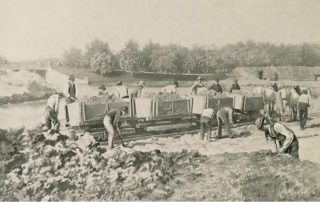
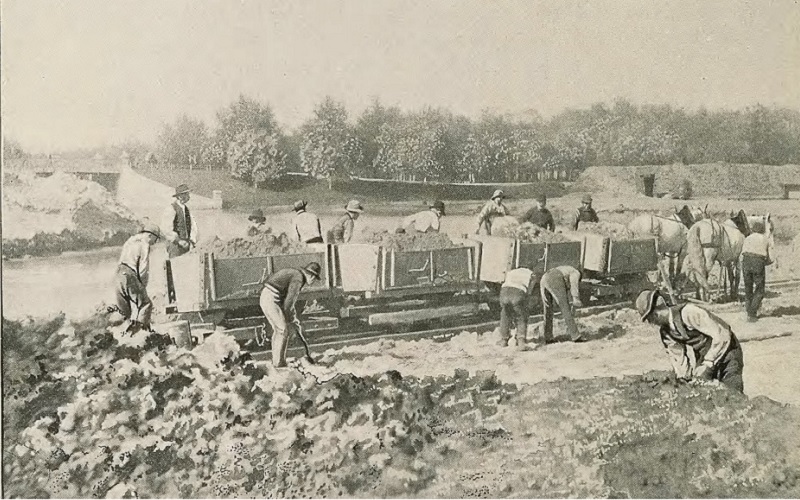
Laborers working to landscape Jackson Park in 1891. In the rear left of the frame is the bridge connecting the Lagoon and the North Pond. It still stands today as the Clarence Darrow Memorial Bridge. [Image from World's Columbian Exposition Illustrated June 1891.]

Sean Masterson’s Magic from the Midway
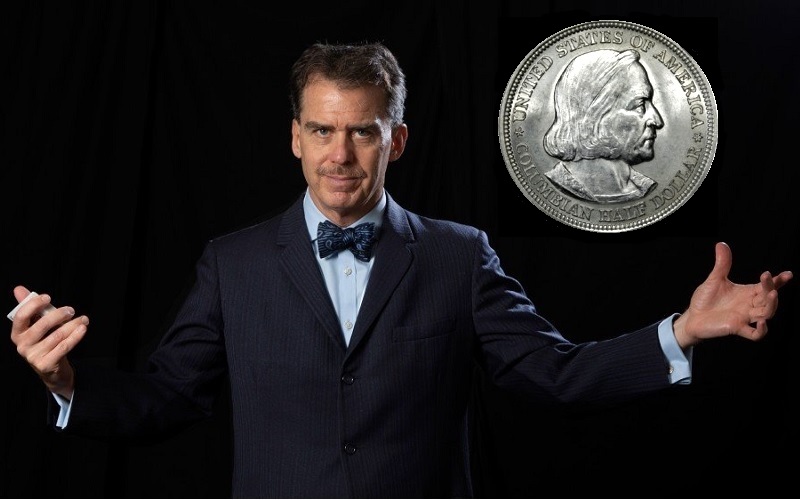
A story about the Midway Plaisance of the 1893 World’s Columbian Exposition weaves its was through a Chicago magic show. Sean Masterson’s Timeless Magic blends expert sleight-of-hand trickery, quirky humor, and a personal detective story centering around a World’s Fair commemorative coin. Masterson shares with his audience his quest to discover the origin of his coin, taking us on a tour of several magicians who worked on the Midway and in Chicago at the time of the Fair. (You’ll know at least on their names.) Along the way, Masterson enchants with classic and inventive magic acts, audience participation, one [...]
Frederick Law Olmsted and the Spark of Genius
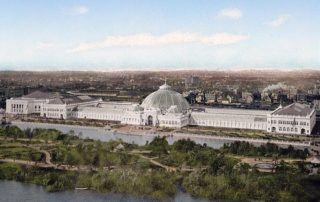
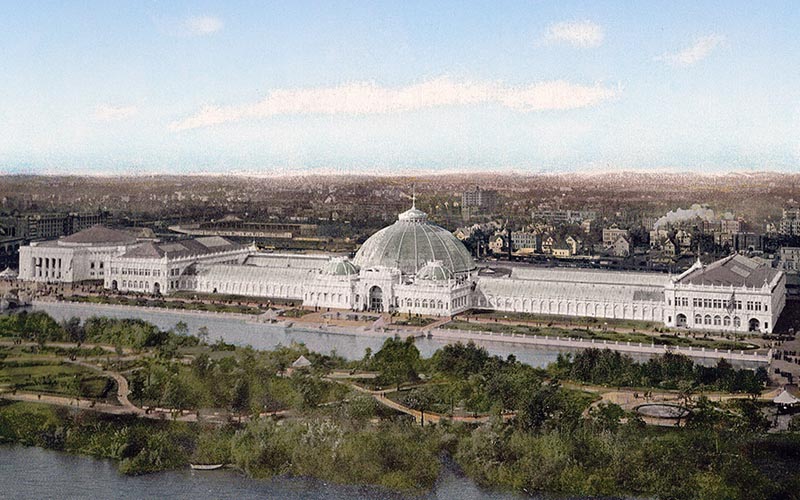
The Wooded Island in the fairgrounds of the 1893 World's Columbian Exposition. On the anniversary of the death of Frederick Law Olmsted (April 26, 1822 – August 28, 1903), we endeavor that the memory of his name and personality is not dimmed in the passage of years. This tribute to Olmsted’s design of the 1893 World’s Columbian Exposition comes from the May 3, 1893, issue of Garden and Forest, written just after Opening Day on the fairgrounds. In the throng who witnessed on Monday the Columbian Exposition few probably realized that the harmony of the scene and the [...]