
RECENT POSTS ABOUT THE HISTORY OF THE COLUMBIAN EXPOSITION’S BUILDING, FAIRGROUNDS, EXHIBITS, EVENTS, AND PEOPLE.
Season’s Readings: 2021 Books about the World’s Columbian Exposition
2019 brought several additions to the World’s Columbian Exposition bookshelf.
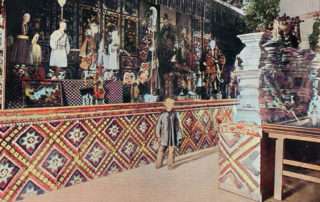
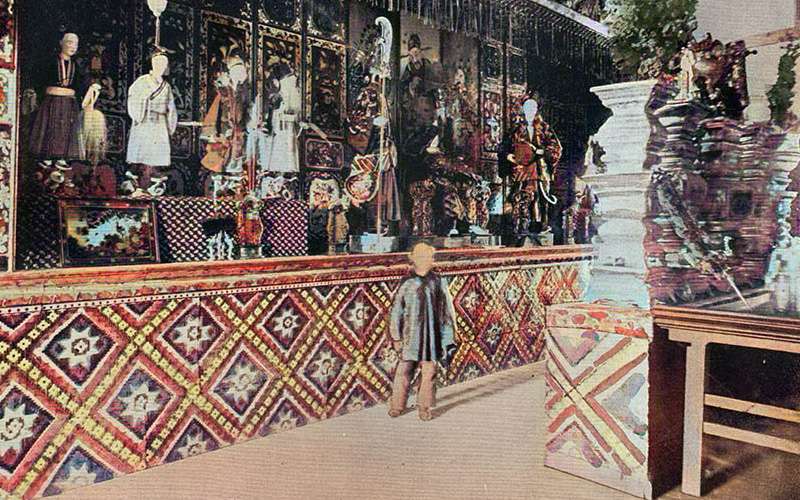
131. Picturesque World’s Fair – Interior of the Chinese Joss House
INTERIOR OF THE CHINESE JOSS HOUSE.—Even conservative and ancient China did not keep away from the World's Fair entirely, though the exhibit made was the result of private enterprise, the Chinese government manifesting no great interest in the friendly reunion of the rest of the world. What was known as the Wah Mee Exposition Company had the energy as well as the capital to erect a Chinese Village in the Plaisance, and the Theatre, Joss House, Garden and Café there proved attractions to the multitude sufficient to make the venture one not to be regretted by the spirited investors. [...]
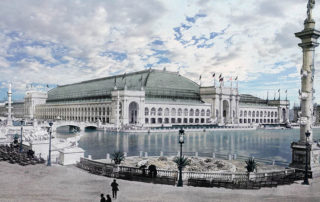
“Process exhibits” at the 1893 World’s Fair
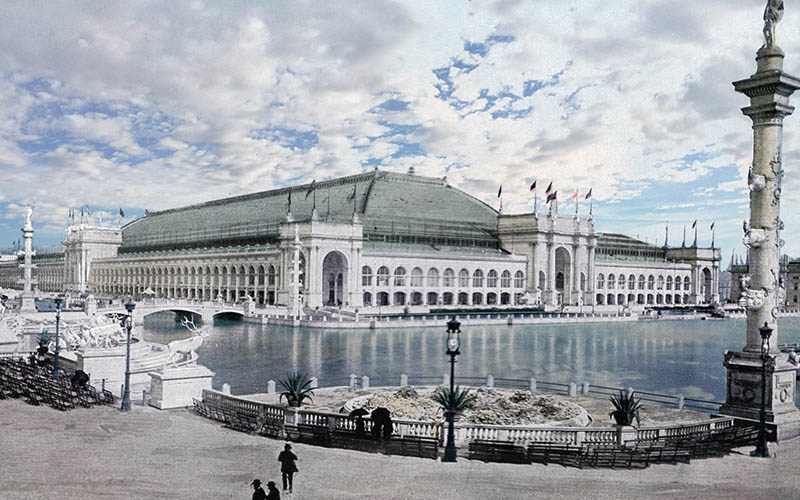
A new article posted at History.com explores the evolution of how manufacturers exhibited their products at expositions. In “How Early World Fairs Put Industrial Revolution Progress on Display,” Elizabeth Yuko describes how exhibitors at the 1893 World’s Columbian Exposition used “process exhibits” to give fairgoers “the chance to witness firsthand how everything from glass to shoes to foods were made.” A view looking north along Columbia Avenue in the Manufactures and Liberal Arts Building. [Image from The Graphic History of the Fair. Graphic Co., 1894.]
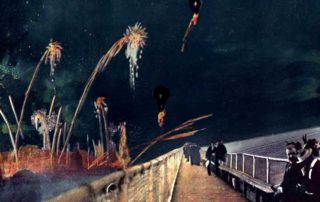
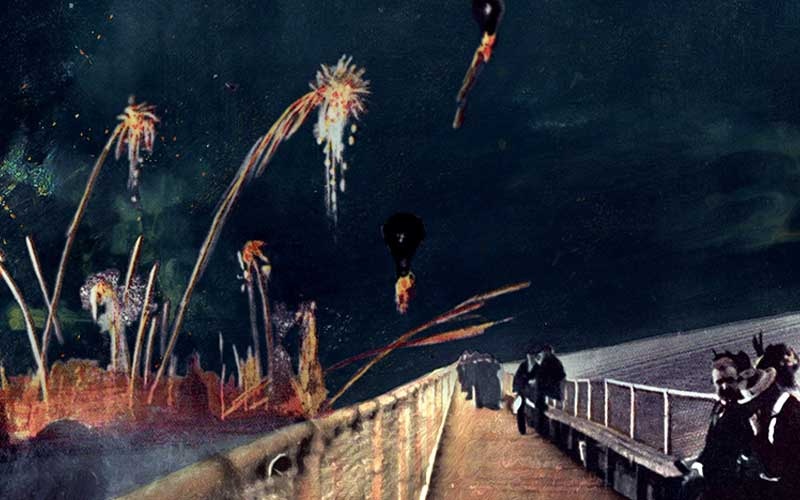
130. Picturesque World’s Fair – Fire-Works July 4th from the roof of the Manufactures Building
FIRE-WORKS JULY 4th FROM THE ROOF OF THE MANUFACTURES BUILDING.--A view of just such quality as was never had before and may not be had again for a long time was gained by those of the World's Fair visitors who witnessed a fire-works display from such vantage ground as the roof of the Manufactures Building afforded. Upon that great area in mid-air a host of people could be assembled and, on the warm summer nights, thousands improved the opportunity for a delightful experience. To the east stretched away the lake as a background for the brilliant display, sometimes, on [...]
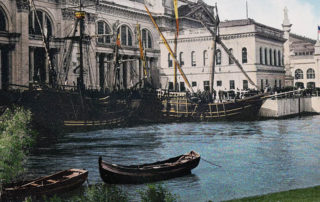
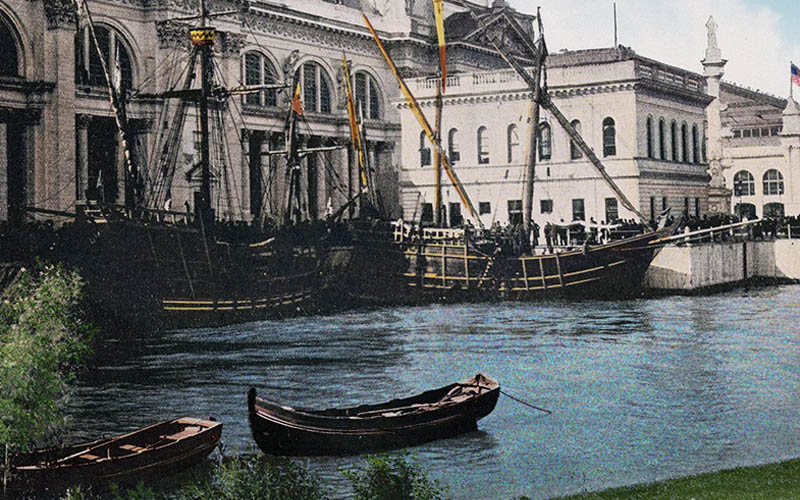
129. Picturesque World’s Fair – The Spanish Caravels – Pinta and Nina
THE SPANISH CARAVELS, " PINTA" AND " NIÑA."—The Spanish Caravels should have had their names painted on their sides to distinguish them apart; at least, so thought many of the visitors to the Fair; for their build was singularly alike with the " Santa Maria " and " Pinta." The " Niña " was distinguishable enough, as she had no raised deck at the bow, did not overhang like the others, and had no square sails of the ordinary type, only the long rakish-looking yards which hung slantwise of the masts with a sort of Lascar, piratical sweep to [...]
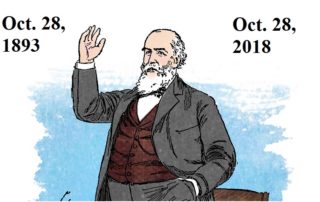
1893 World’s Fair ends in tragedy
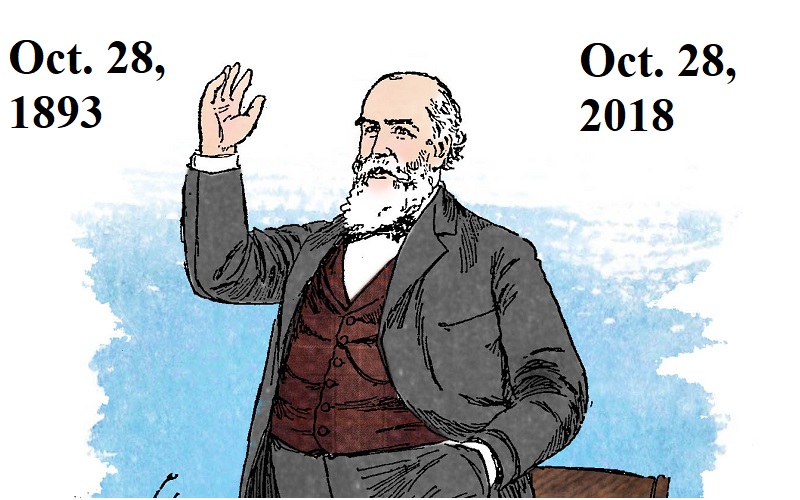
The World's Columbian Exposition closed on October 30, 1893. The Chicago Sun-Times recalls the tragedy that cast a shadow over the planned, but cancelled, closing ceremonies. The full story is available at "World’s Fair ends in tragedy".
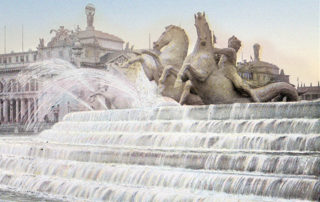
128. Picturesque World’s Fair – The Falls of the Columbian Fountain
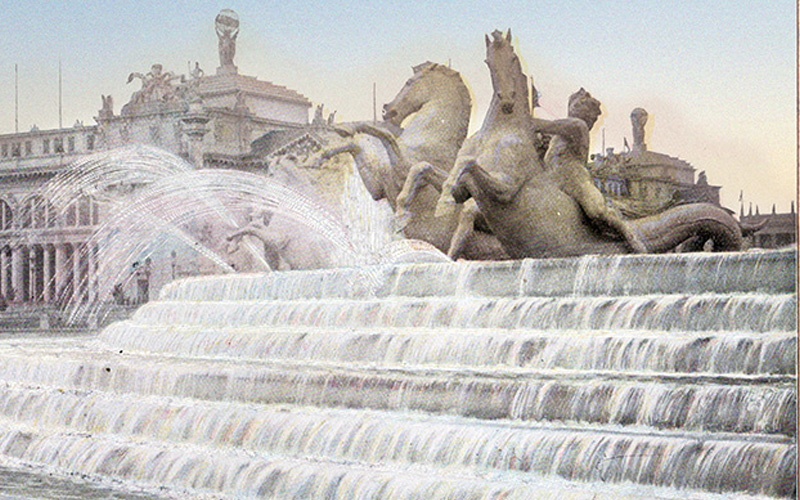
THE FALLS OF THE COLUMBIAN FOUNTAIN.—Viewed from its front, and at a point not remote, the overflow of the Columbian Fountain afforded the spectacle of one of the most charming of'cataracts. The mass of water tumbled down from level to level in a great foaming semi-circle, until, finally, it plunged into the Grand Basin, a white sheet impress-ive in its beauty. Wider than the famous Falls of Minnehaha, though with not quite so much descent, the falls of the fountain reminded hosts of people of that pretty spectacle in Minnesota which Longfellow made so celebrated. "A table-cloth of pure [...]

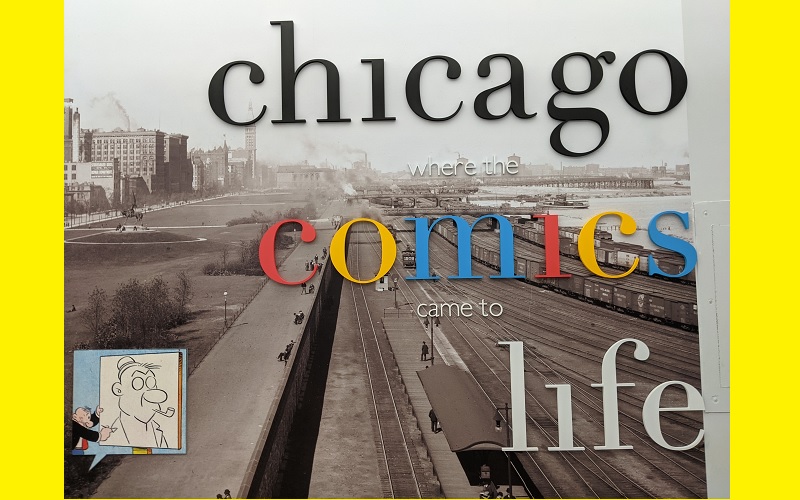
Jun. 19, 2021–Jan. 9, 2022: “Chicago: When the Comics Came to Life” (Chicago Cultural Center)
Chicago’s role in the development of the early comic strip is the focus of a temporary exhibit at the Chicago Cultural Center. Curated by artist and author Chris Ware, and Chicago Cultural Historian Emeritus, Tim Samuelson, “Chicago: When the Comics Came to Life” features the works of prominent Chicago artists and publishers from circa 1880 to 1960, with most artifacts coming from the curators’ personal collections. The vibrant and colorful story of the history of comics runs through the White City of the 1893 World Fair in Chicago. The first appearance of color comics printed in the United States [...]
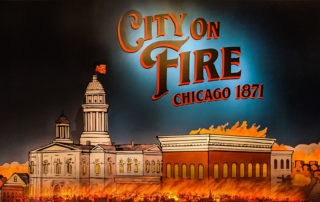
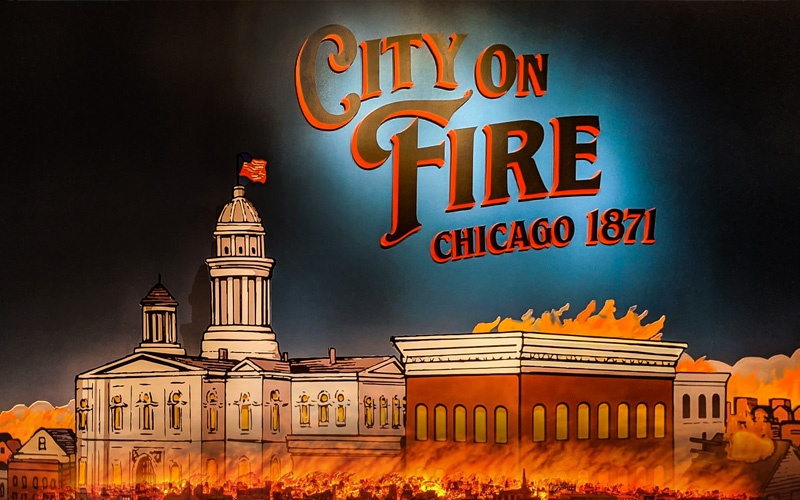
Oct. 8, 2021: “City on Fire” opens at the Chicago History Museum
Embers of the Great Chicago Fire continue to smolder. Stories of tragedy and triumph from October 8–10, 1871, and the years of rebuilding that followed have been cause for somber remembrance and jubilant celebration throughout the years, including at “Chicago Day” held at the 1893 World’s Columbian Exposition. To commemorate the 150th anniversary of the Fire, the Chicago History Museum has opened a new permanent exhibit, “City on Fire: Chicago 1871." Several displays and artifacts connected to the 1893 World’s Fair are featured. “City on Fire” focuses on the experiences of several survivors of the conflagration, including ten-year-old Fannie [...]
127. Picturesque World’s Fair – Eastern Portal of Machinery Hall
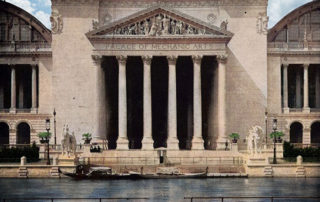
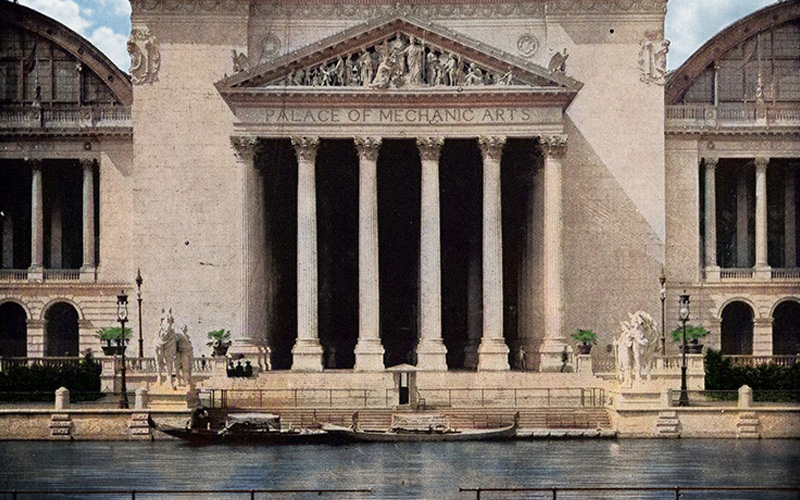
EASTERN PORTAL OF MACHINERY HALL.—The view here given is an admirable one of the eastern entrance to Machinery Hall and makes plain the remarkable architectural style of that great edifice. The entrance has been described at length, but only such a view as this, the reproduction of a photograph taken from the Agriculture Building at a point directly across the canal, could bring out the charming details. The portico of this entrance was a popular resort because here was a regular stopping place for the boats, a couple of gondolas which are in the picture showing where the landing [...]