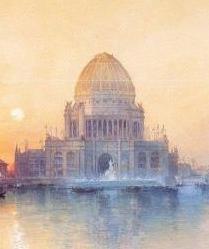
The Columbian Exposition as a New World Fable
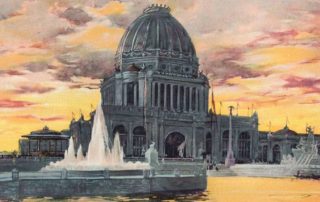
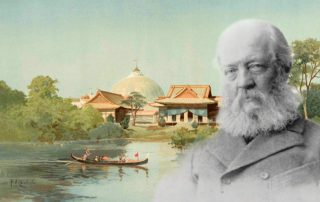
“A New World Fable” by Hjalmar Hjorth Boyesen describes the 1893 World’s Fair as a “wealth of achievement” that promises to be “an elevating influence which will endure beyond the present generation.”
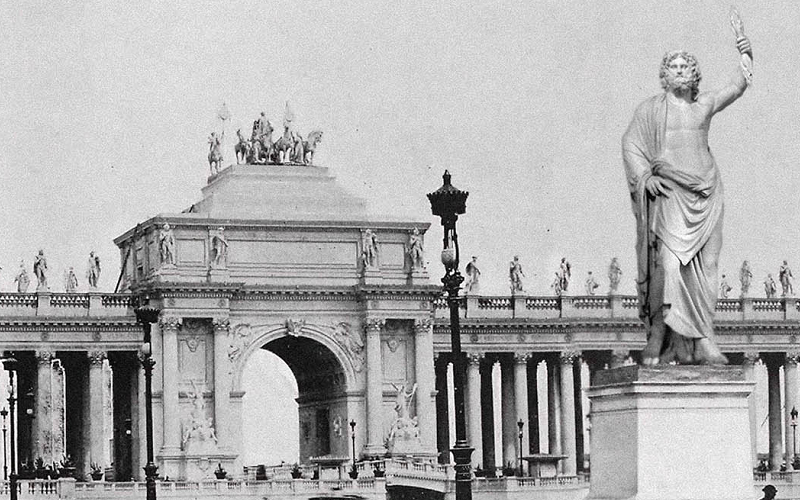
At a banquet held in Chicago on January 10, 1891, Chief of Construction Daniel Burnham made this patriotic appeal to the architects of the World’s Columbian Exposition: “Gentlemen, 1893 will be the third great date in our country’s history. On the two others, 1776 and 1861, all true Americans served, and so now I ask you to serve again!" [from Martin, Justin Genius of Place: The Life of Frederick Law Olmsted. Hachette Books, 2011.] On August 14, 1891, Prof. David [...]
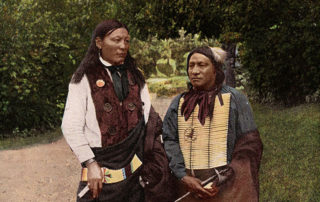
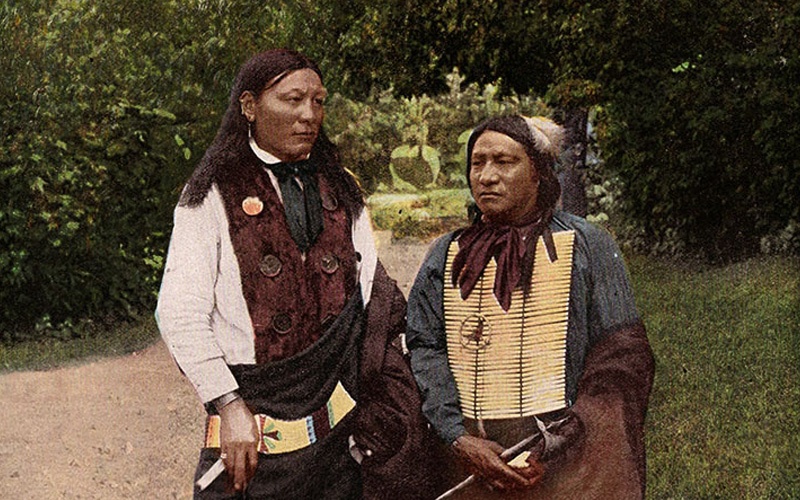
MEDICINE" AND " PLENTY HORSE," SIOUX INDIAN CHIEFS.- The typical Indian Village on the Plaisance was not so much of a novelty as a study for American visitors to the Fair. They had seen Indians enough, but they had never seen members of widely separate tribes grouped together and so affording opportunity for comparison. To foreigners all were interesting, as savage races from abroad were to us, but to the American the contrast was the curious thing. It was [...]
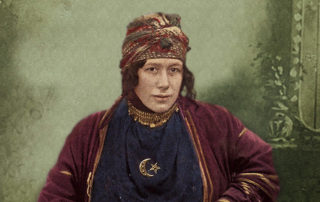
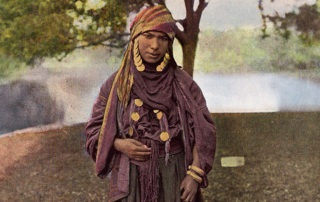
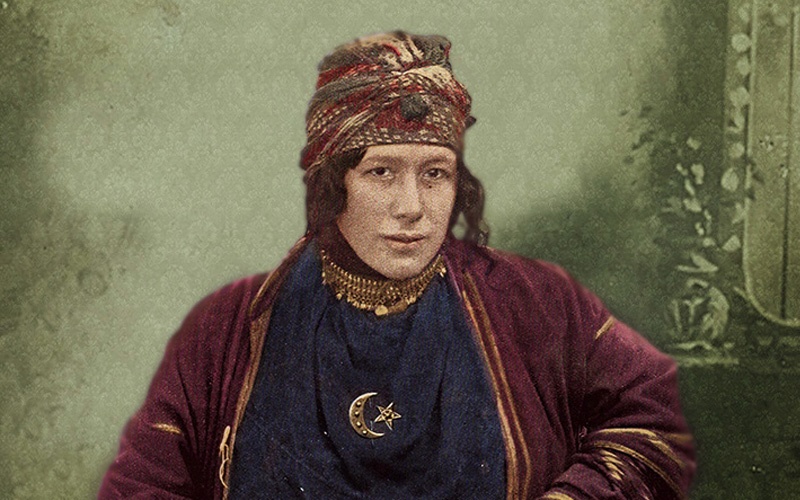
NIZAHA, A WOMAN OF NAZARETH.— Hardly what one would expect in appearance was Nizaha, a woman with the Bedouins, who came from the locality reverentially considered by all the Christian world as the birthplace of Christ. It will be observed that in sitting for her photograph Nizaha did not forget her hands and handkerchief and that, with the left hand especially, as it is spread out against her side, a somewhat startling effect is produced. The rings are shown [...]
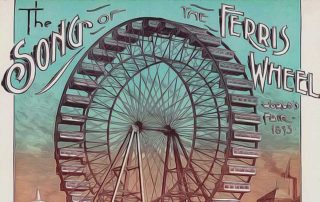
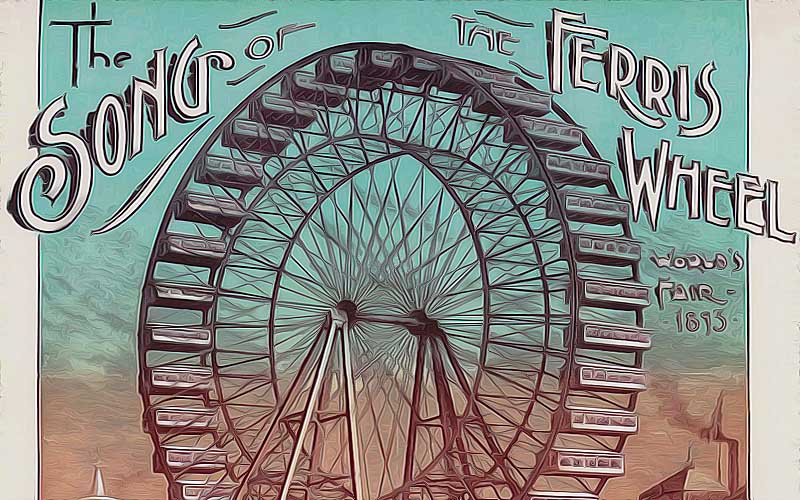
The great Ferris Wheel on the Midway Plaisance of the World’s Columbian Exposition opened to the public on June 21, 1893. The following account comes from Mrs. Julia Waugh, whose letter describing her ride on the Ferris Wheel was published in the July 7, 1893, issue of the Crawfordsville (IN) Weekly Journal. She notes that her “memorable trip” was taken the second day after the opening of the attraction, when 1,000 tickets were purchased in the first two hours. [...]
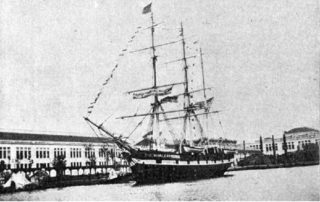
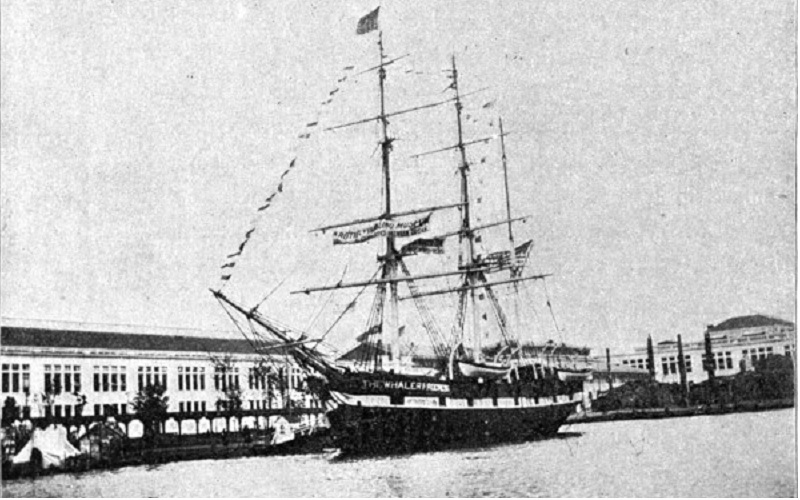
The excerpt below, from The Century World’s Fair Book for Boys and Girls by Tutor Jenks (Century Co., 1893), describes the whaling bark Progress exhibited at the 1893 World’s Columbian Exposition in Chicago. The authentic whaling ship from New Bedford, Massachusetts, was moored in the South Pond and served as a floating museum of the fading whaling industry. A view of the Anthropology and Ethnology exhibits along the South Pond of the 1893 World's Fair, showing the whaling [...]
June 8, 1893 was “Princess Eulalia Day” at the World’s Columbian Exposition. Attendance swelled to around 169,000 visitors—the largest yet. Most were eager to catch a glimpse the Infanta from Spain as she toured the fairgrounds. A report from that day reprinted below (originally published in the July 12, 1893, issue of Garden and Forest) makes only a passing mention of the royal guest. Instead, the author focuses on the natural and man-made beauty of the 1893 World’s Fair, while [...]
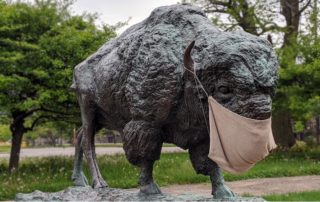
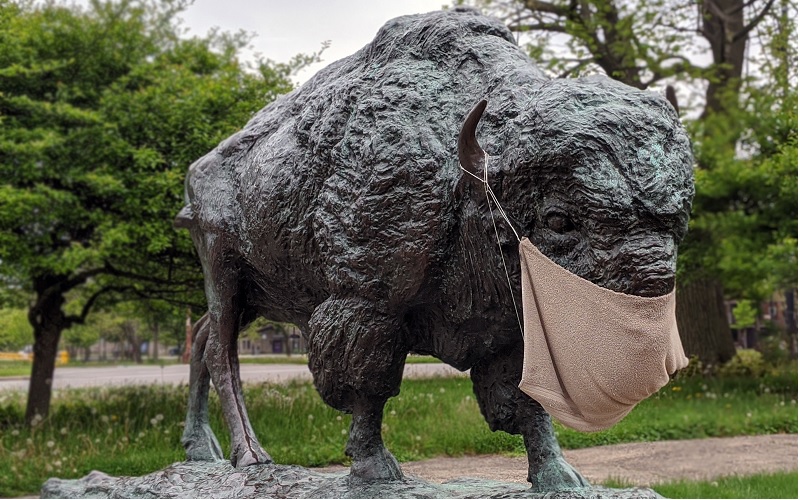
Edward Kemeys' buffalo sculptures for the 1893 World's Fair "possess that touch of the ideal—that suggestion of the soul—which, lacking in the real animal, is bestowed by the magic of art."
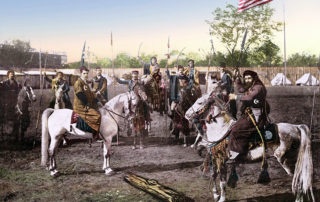
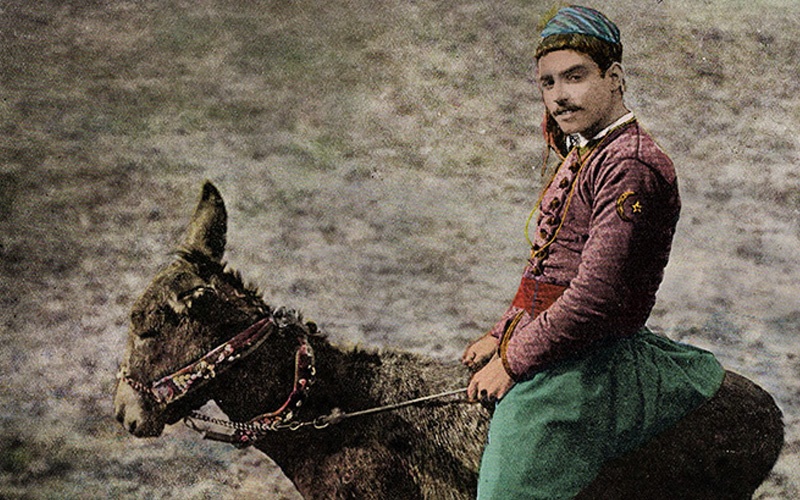
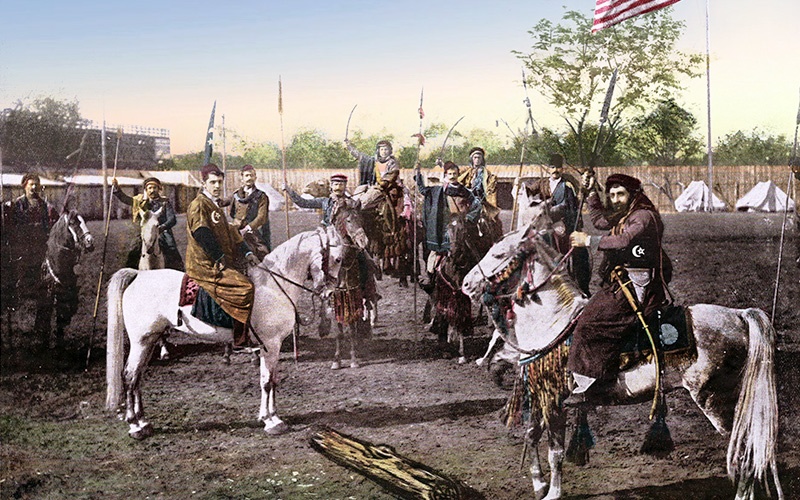
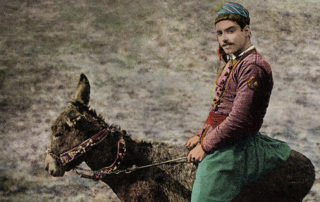
ARABIAN HORSES AND RIDERS.—Ottoman's Arab camp, or the "Wild East Show' as it was finally called, was one of the World's Fair enterprises which, with various striking features, was yet financially unsuccessful. The Bedouins, with their families and equipments, were brought to Chicago by a private company, and the original intention of the promoters of the enterprise was to exhibit them in a park near the Exposition, but this design was, for some reason, impossible of execution, and the [...]
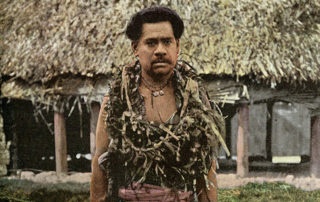
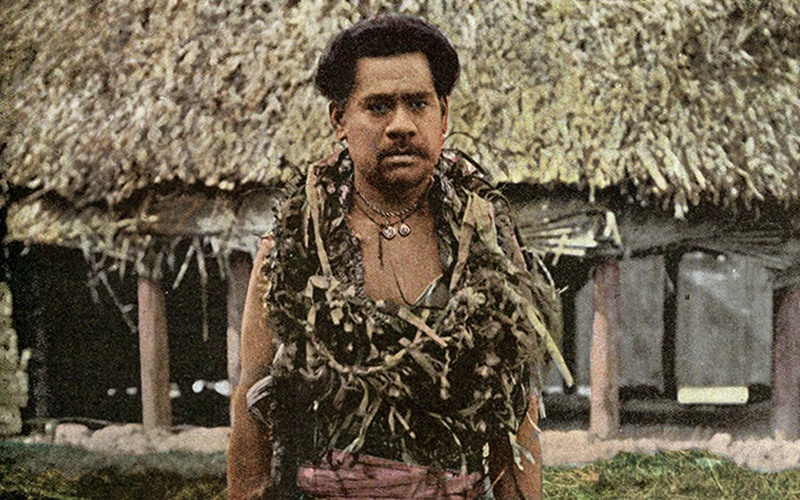
PASELEO, A SAMOAN CHIEF.—Splendid specimens of manhood and womanhood physically were the Samoans at the Exposition, and comment was as general upon their fine proportions as upon their intelligence and courtesy of demeanor. It may be that a remembrance of this time when Samoans imperiled their lives so recklessly in aid of the crews of American warships wrecked in the great hurricane at Apia had something to do with the good will shown, but, whatever the cause, the Samoans [...]
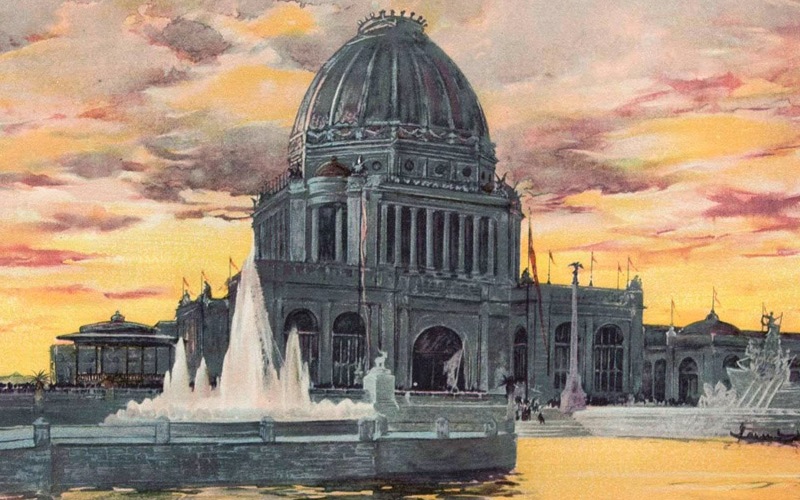
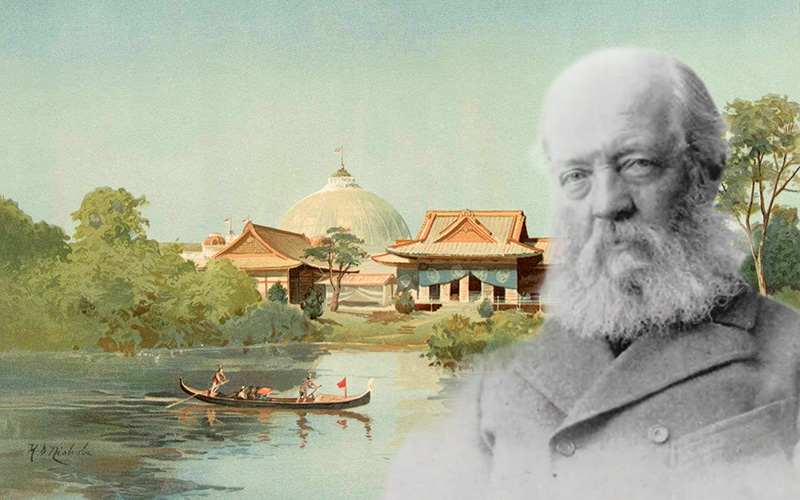
Equaling or surpassing the grandeur of the White City palaces were the awesome scenic grounds of the 1893 World’s Columbian Exposition. The eminent landscape architect Frederick Law Olmsted, who had laid out New York's Central Park and the Chicago suburb of Riverside, transformed Jackson Park (“the least park-like ground within miles of the city”) into a garden of stunning beauty enjoyed by tens of millions of visitors. In this report to the American Institute of Architects (published The American [...]
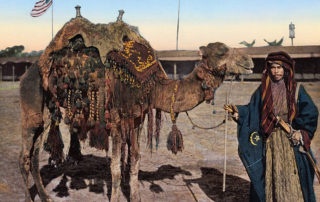
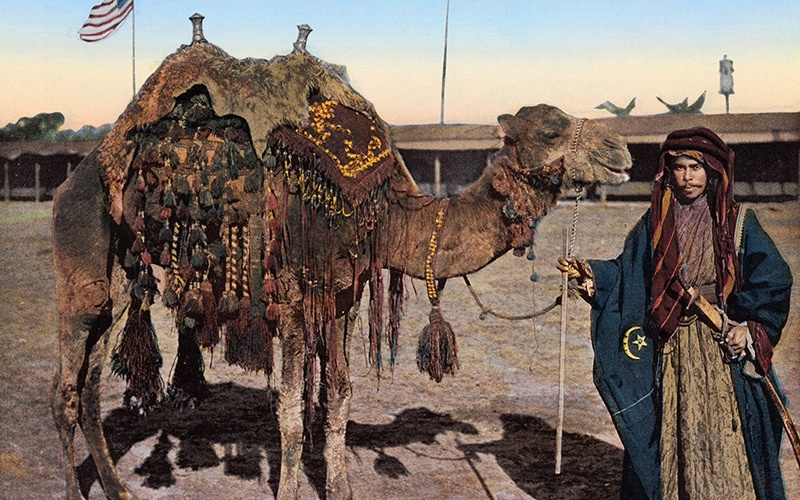
KALEIFE AND HIS DROMEDARY.—The Bedouin and the dromedary, "the ship of the desert," were very much in evidence at the Ottoman's Arab camp, or "Wild East Show ' The "ship" when under full sail around the encampment was gorgeously decorated, and his driver was not less brightly appareled. Why in a region as warm as the desert is supposed to be so much covering should be deemed a necessity is hard to say, but on all state occasions both [...]
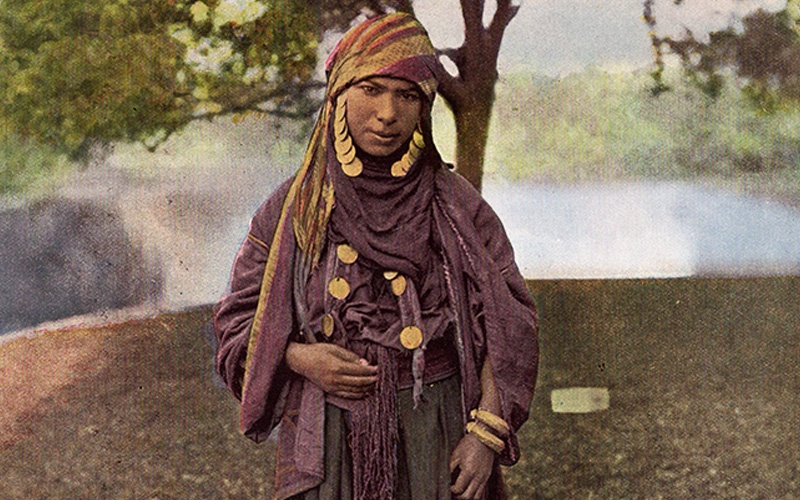
FETTOME, A BEDOUIN WOMAN.—Much as has been written about the Arabs and their wild life upon the North African plains, descriptions have been, as a rule, confined mostly to the men and how the woman of the desert lives, moves and has her being has been left largely to the imagination. So it came that the Bedouin women, at the Columbian Exposition, were looked upon with a good deal of curiosity and were found to be by no means [...]
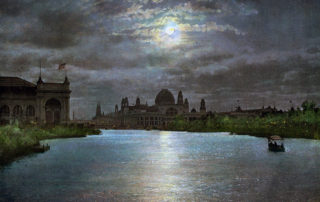
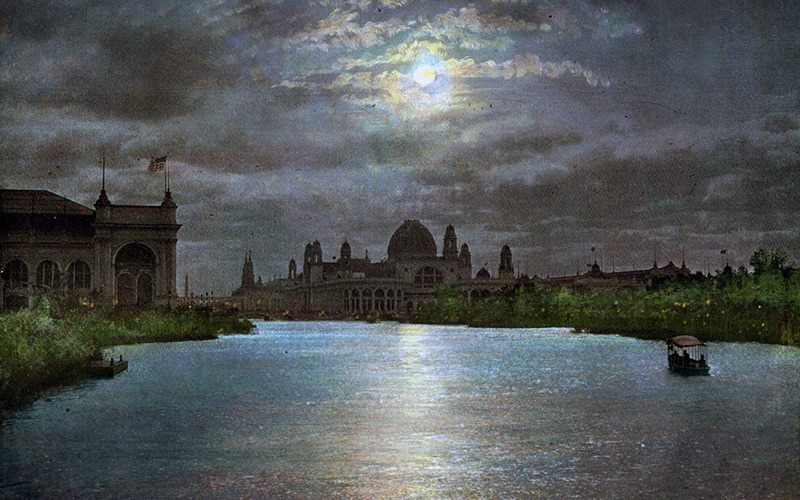
In honor of World Poetry Day, we offer this whimsical verse from the pen of popular newspaper poet Nixon Waterman, published in the December 1892 issue of Illustrated World's Fair. THE MAN IN THE MOON by Nixon Waterman The man in the moon, as he sails through the sky, Can't help but to turn an admiring eye, And linger a while as he passes the site Of that perfectly wonderful City of White. And he says to himself, "All [...]
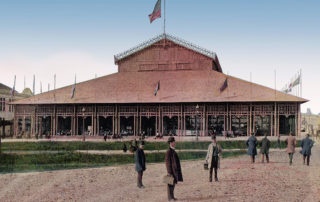
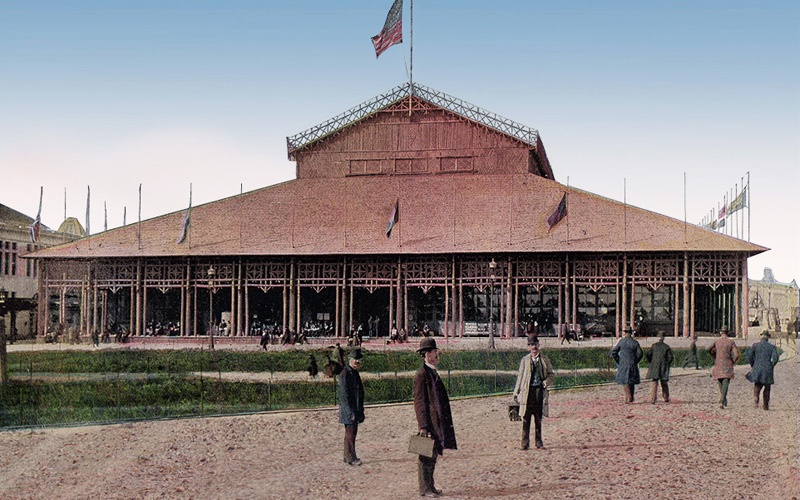
THE FORESTRY BUILDING.— None among the many department structures on the Fair grounds was built with more regard for what was symbolic of its uses than the Forestry Building. It stood very near the southeastern corner of the grounds and its eastern frontage was upon Lake Michigan. Its dimensions were five hundred by two hundred feet, and it had a central height of sixty feet. It was made entirely of wood, not even a nail being used but wooden [...]
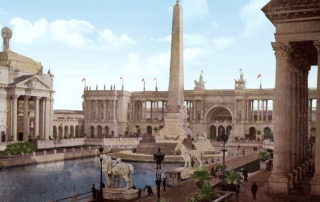
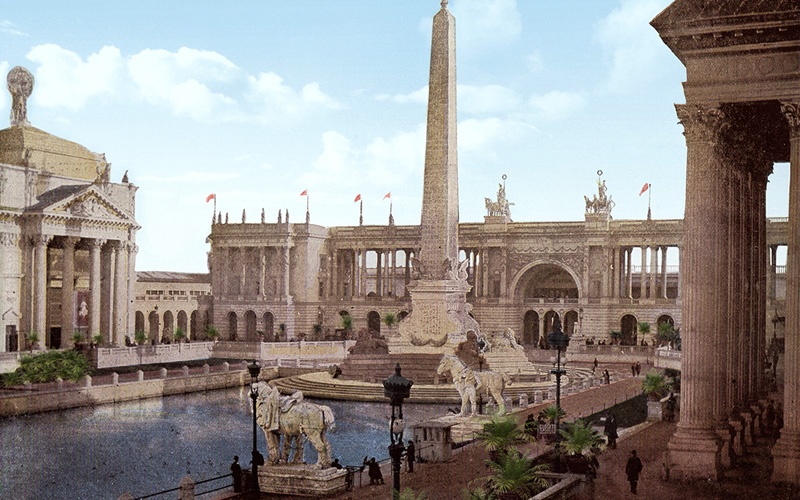
THE OBELISK AND SOUTHERN COLONNADE.—A fitting termination made to the view south on the South Canal was formed by the Southern Colonnade with the Obelisk in front. The Obelisk was history repeated in stone, or at least in its imitation, for it was a reproduction of the famous Cleopatra's needle, the original of which, thousands of years old, was presented by the Khedive of Egypt to the United States and is now a prominent object in Central Park, in [...]
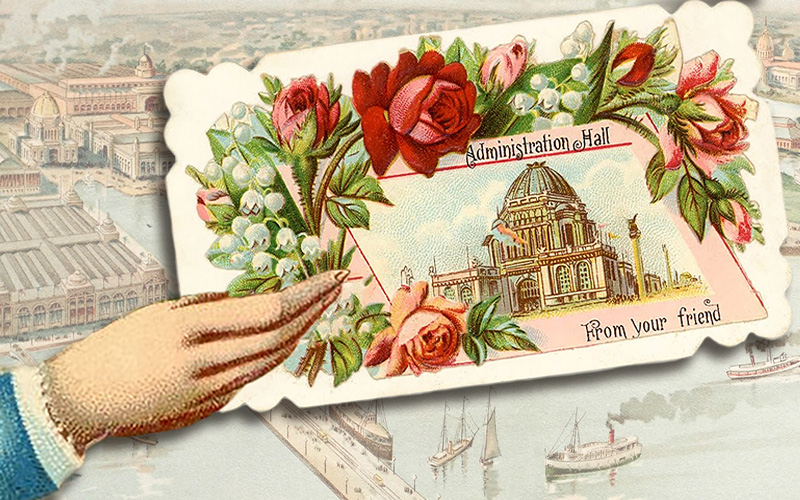
Here is a Valentine’s Day verse from Harriet Monroe’s Valyria and Other Poems (A.C. McClurg & Company, 1892), which she dedicated to the memory of architect John Wellborn Root. FOR JOHN PAUL Who sent roses on St. Valentine's day. Stay, sweet roses, stay but a day, Breathe me your souls ere your leaves decay. That over the air to my valentine I may waft him a perfume as rich as wine, That shall charm his desire to some dear [...]
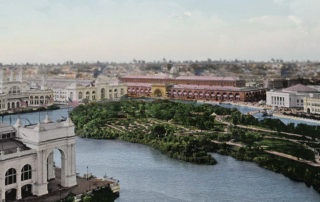
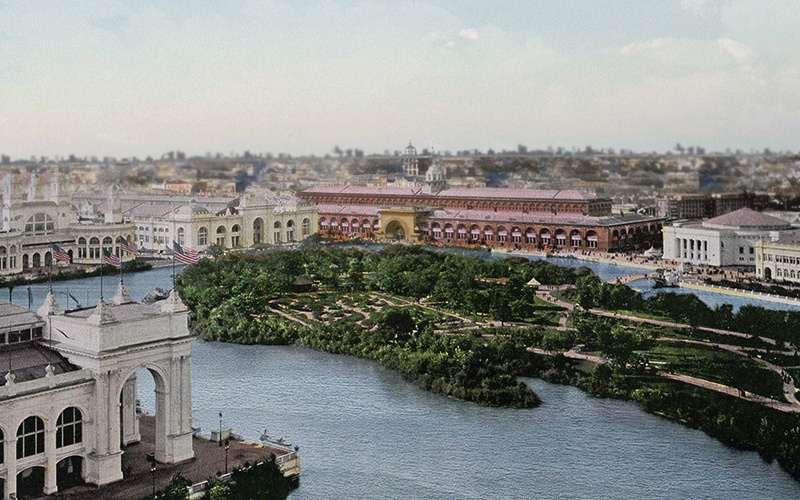
SOUTHWEST, FROM THE GOVERNMENT BUILDING—The view southwest from the roof of the United States Government Building embraced a great number of attractive objects. The east lagoon and more than half the Wooded Island appeared conspicuously in the foreground, and there was no elevated place in the grounds from which the island and lagoon could be seen together that did not command a sight worth seeing, for any lover of the beautiful. To the left, immediately m front, is the [...]
Although little has been written about them, rats must have been present on the fairgrounds of the 1893 World’s Columbian Exposition. Rats also contributed to a unique Columbian Exposition product. The excerpt below, from “Traps Suited to the Rat’s Taste” published in the November 4, 1894, issue of the Philadelphia Times, describes commercial rat traps having themes related to the Midway Plaisance: It seems like rats are like persons. Some like one kind of trap and some another; just [...]
THE JAVANESE AT HOME.— In their home life the Javanese are said to be a simple and happy people, and this will be readily believed of them by those who were in the Javanese Village at the Fair frequently enough to note the home demeanor of its occupants. They were most interesting, these gentle Javanese, and, in certain ways and habits and views of life, quite unlike any other people in the world, so fax as the Fair afforded [...]