


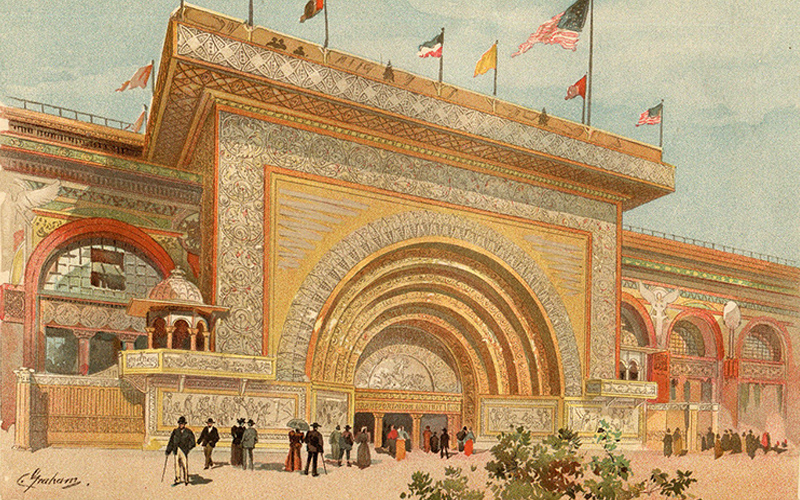
Charles H. Dennis (1860–1943) served as the managing editor of the Chicago Record during the 1893 World’s Fair and likely penned these thoughts about the architectural wonders of the Exposition.
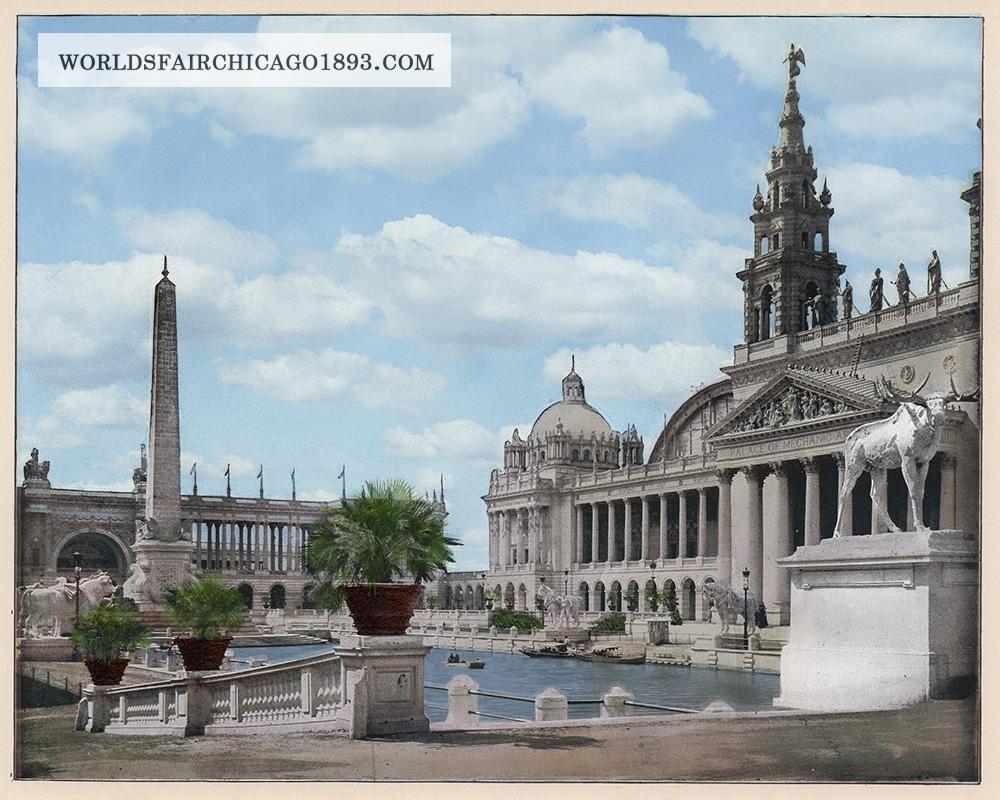

Exhibits and Their Shelters
Theoretically the prime object of a World’s Fair is the exposition of the various products and the progress of man’s handiwork. For purposes of protection and shelter these exhibits must be roofed over and inclosed; buildings must be constructed to house them, the housings being presumably incidental and ancillary to the things exhibited and serving as a means to an end.
In previous fairs this has been largely the case, the idea of making the buildings themselves a mean feature of the display being exemplified in only the most recent world’s expositions.
It would be useless to deny that at Jackson Park the actual material thing of exhibit, great and attractive as they may be, or subsidiary to the external aspects of the Fair. The park is now essentially a garden of architectural splendors into which have been collected specimen products of all arts and sciences. So far as interest goes the exterior of the display is on a par with that and it pointed down there surpasses it.
The brightest and most enduring memory of the Exposition will be the avenues lined with palaces, of the wooded island, the shining lagoons and the court of honor. They comprise the salient features that distinguish the Fair from its predecessors.
And they will be most influential in determining the characters of later fairs, whatever be the nations which have the courage to attempt them.
SOURCE
“Exhibits and Their Shelters” Chicago Record Jun. 14, 1893, p. 4.